Jicoo the Floating Bar is not selling tickets. The Tokyo Bay bar boat suspended its public sailings from April 2023, the notice is still on the operator's boarding page as of September 2026, and only private charters for 20 or more are being taken. What follows is what the ¥3,000 floating pass actually bought, and what to board instead.
Jicoo Floating Bar Tokyo: Suspended Since 2023 – Jicoo the Floating Bar has run no public sailing since 2023.
What ¥3,000 bought aboard the Himiko, and the Tokyo Bay cruise to book now, from Tokyo Trip Guide.
Jicoo the Floating Bar has not sold a walk-on ticket since January 2023.
The Tokyo Bay bar boat suspended its regular service from April 2023, and that notice was still sitting on the operator’s boarding page when we checked it for Tokyo Trip Guide on 6 September 2026.
Private charters are still quoted by email; scheduled sailings are not.
- Bottom line: the Hinode Pier to Odaiba shuttle that most pages still describe had already been replaced before the bar closed.
- Still bookable: a private charter for 20 or more, in an 18:00 to 21:30 window.
- Board instead: the Tokyo Symphony Cruise after dark, or the Sumida River water bus in daylight.
Trip Essentials
Tokyo Travel Add-ons
Equip yourself for the ultimate Tokyo adventure with the following add-ons, curated just for you.
Is Jicoo the Floating Bar Still Running?
Jicoo the Floating Bar is not running scheduled sailings, and no restart date has appeared in more than three years.
The last regular departures on the operator’s own calendar were Friday and Saturday nights in January 2023, and the suspension notice went up from April 2023.
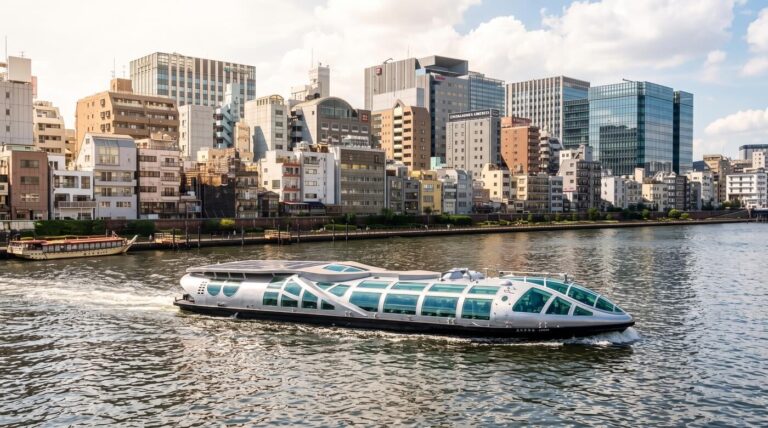
Tokyo Cruise Ship Co. (東京都観光汽船) still operates the vessels, which is why the Himiko keeps working the Sumida River in daylight while its night identity stays dark.
Two changes happened before the closure, and almost nothing online reflects either.
Jicoo moved its boarding pier from Hinode Pier to Waters Takeshiba, a different address 6 minutes on foot from Hamamatsucho Station.
It also dropped Thursdays and stopped calling at Odaiba Seaside Park, so the half-hourly shuttle that gives this page its title stopped running years before the bar itself did.
The Google listing still shows 4.6 stars from 42 reviews, and nearly every one of them was written before 2023.
What ¥3,000 Bought on the Final Schedule
¥3,000 bought a Jicoo floating pass on the last published schedule, and it did not include a drink.
The pass covered unlimited loops of about an hour from Waters Takeshiba on Friday and Saturday nights, with departures at 18:00, 19:00, and 20:00, and it stayed valid until you stepped ashore.
Cocktails ran roughly ¥700 to ¥800 at the bar, paid as you ordered.
The older Hinode Pier arrangement was cheaper and ran later.
A pass cost ¥2,500, then ¥2,600, and the Himiko crossed to Odaiba Seaside Park every half hour with the last boat docking back at Hinode at 23:00.
Event nights with a DJ or a live act were priced at ¥3,600 to ¥4,000 and did include one drink.
The floating bar label misled people in two specific ways.
There was no food at all, only a drinks list, so you ate before you boarded or you did not eat.
And the boat was 20 and over, with a dress code that turned away men in sandals or shorts.
Sixty Minutes Aboard the Himiko
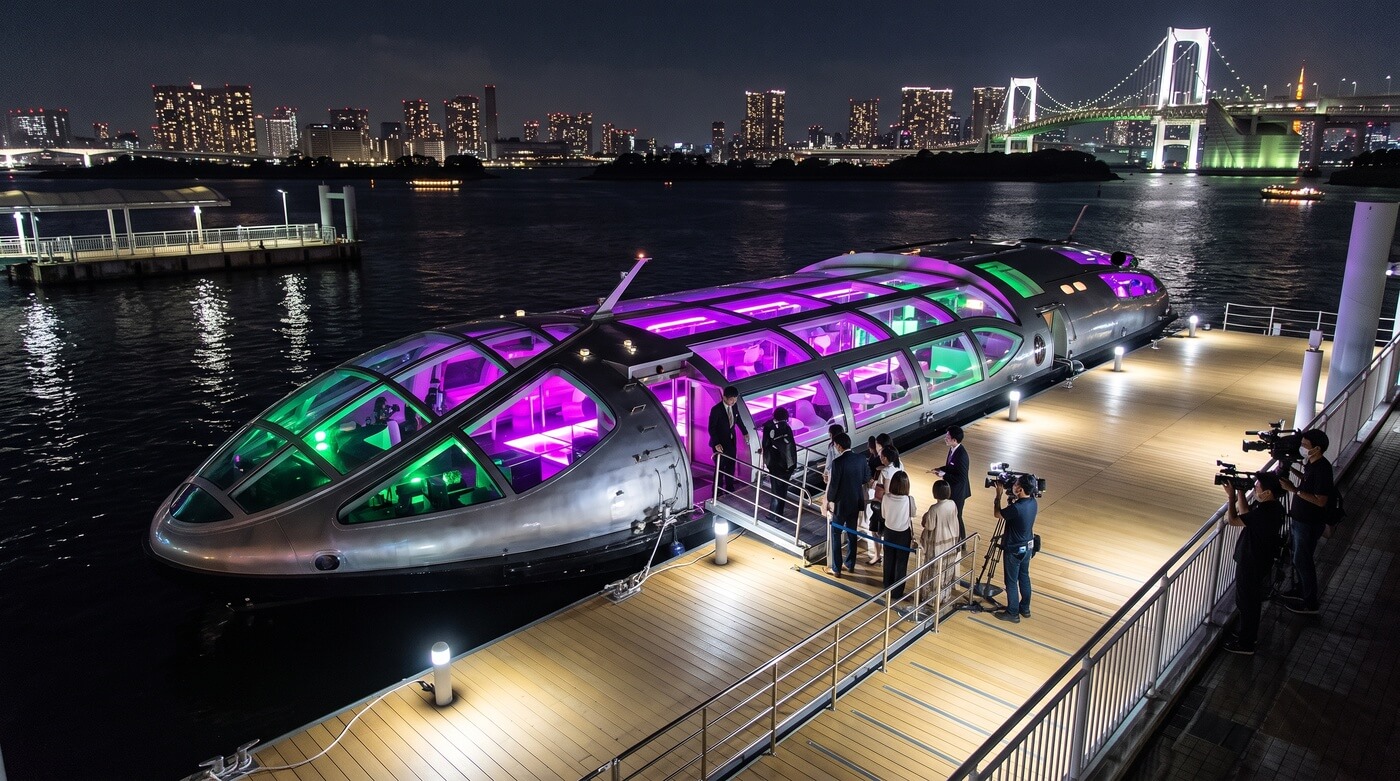
The Himiko is a 2004 Leiji Matsumoto design, 114 gross tons and 30.5 metres long, and its glazing rather than its bar list is what made a Jicoo pass worth ¥3,000.
Almost every surface above the waterline is window, including large panels overhead, and unlike the newer Hotaluna there is no rooftop deck.
You watch Tokyo Bay from sea level through glass, which sounds like a downgrade and is not.
Boarding opened ten minutes before each departure and no seat was reserved, 70 of them on a hull rated for about 80 passengers.
The first people up the gangway effectively picked the night for everyone else.
Announcements were minimal: the Galaxy Express 999 character narration that plays on the daytime water bus gave way to a DJ or a lounge set, at a volume that still let a table talk.
Leaving Waters Takeshiba, the first thing on the water is the unlit tree line of Hama-rikyu Gardens off to one side, the only dark patch on the whole route.
Then Takeshiba Wharf and the passenger terminal, the Tokyo Tower lattice glowing inland, Hinode Pier sliding past on the same shore, and finally Shibaura Wharf, where the container cranes stand floodlit over the water.
The bay opens out.
Rainbow Bridge is ahead.
The Rainbow Bridge Pass From Underneath
Rainbow Bridge is the photograph everyone takes on this route, and the angle is the reason.
You approach with the whole lit span filling the forward windows, then pass directly beneath it and look up through ceiling glass at the underside of the deck: girders, service lighting, the Yurikamome track structure, the parts of the bridge nobody photographs.
Thousands of people cross Rainbow Bridge every night.
Very few have seen its belly.
Past the bridge the boat runs along Odaiba Seaside Park, with the Statue of Liberty replica lit on the promenade and the Odaiba waterfront stacked behind it, then turns and does the whole thing again in reverse.
Where to Sit on a Boat With 70 Seats
Sit on the landward side heading out, which puts Tokyo Tower, the Takeshiba terminal, and the Shibaura cranes on your window for the first half of the loop.
Seats were unreserved and the pass let you stay aboard, so the sensible move was to swap sides on the return leg rather than commit to one view for the night.
The one genuine complaint is reflections.
With the cabin lights up, the windows throw the room back at you and phone photos come out full of ceiling lamps, which is why the timing below mattered more than the seat.
Why the Last Sailing Beat the First
The 20:00 departure was the one worth taking, because Jicoo dimmed the interior lights on the final run of the night.
With the cabin dark the glass stops reflecting, and the Odaiba illuminations, the bridge lighting, and the working lamps along Shibaura come through clean.
Season changed the value of the same ¥3,000 more than anything else did.
Sunset falls before 16:40 in late December, so all three departures were true night sailings; in June it is still light past 19:00, and the first two loops were dusk cruises that only the last one improved on.
Winter also brings the clearest air over the bay.
Weather cancelled Jicoo sailings rather than spoiling them.
The operator called boats off for typhoons and heavy weather and asked passengers to phone on the day for the current schedule, with no published wind threshold and no stated refund rule, which is the sort of gap you accept on a ¥3,000 ticket and would not on a ¥15,000 one.
Plain rain was survivable in a way it is not on an open deck: with no rooftop there was nothing to close, and a wet night cost you only streaked glass.
A 21:00 return also put you back at Hamamatsucho with room to spare, which is more than you can say for anyone still out when the last trains stop running.
Chartering the Hotaluna for a Group of 20
The only Jicoo product still on sale is a private charter, and the boat on offer is the Hotaluna rather than the Himiko.
Charters run in an 18:00 to 21:30 window, the published minimum is 20 people, and enquiries go through the website contact form rather than the freephone number.
The Hotaluna is the bigger sister: a 2012 hull, 167 gross tons, 40 metres by 9, rated for about 120 passengers, with gull wing doors and the open rooftop deck the Himiko never had.
For a wedding after-party or a company night out it is a real option, and close to the only way to get a Matsumoto-designed vessel to yourself.
For two people it makes no sense.
No price is published, quotes come case by case, and you would be chartering a 40 metre boat to have a drink.
Book the Symphony Cruise Instead
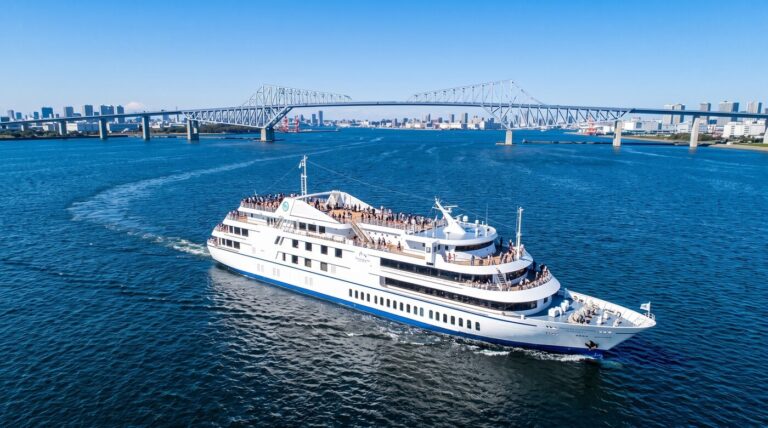
Book the Tokyo Symphony Cruise from Hinode Pier if you want an evening on Tokyo Bay you can actually reserve.
Boarding starts at ¥1,800, it sails the same stretch of water past Rainbow Bridge, and unlike Jicoo it serves food, takes bookings, and admits under-20s.
Hinode Pier is 3 minutes from Hinode Station on the Yurikamome, the pier Jicoo used for most of its life.
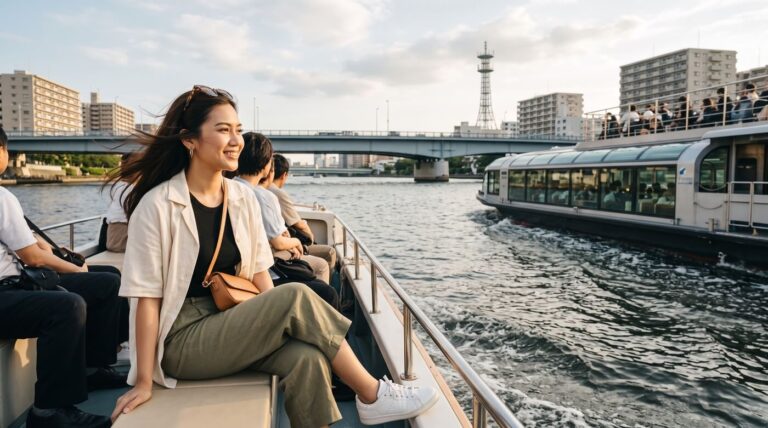
If you want the water in daylight and the lowest fare, the Sumida River water bus answers instead.
The ¥1,180 Asakusa to Hama-rikyu sailing already contains the garden’s admission, which makes it roughly a third of a Jicoo pass with a garden attached; it also finishes long before dark and nobody pours you anything.
On the Hinode to Odaiba leg the water bus sometimes runs the Hotaluna with its rooftop deck open, which is the one thing Jicoo could never offer.
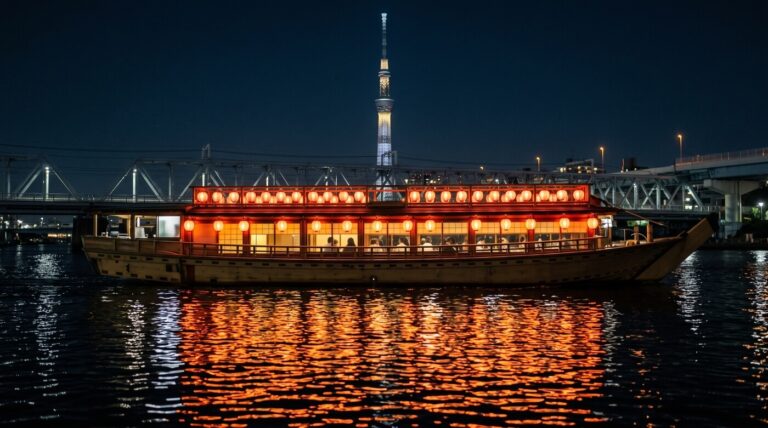
For food and drink together on the water, book a yakatabune, the low-slung traditional dinner boat that serves tempura and beer while it sits off Odaiba.
That is the evening most people picture when they search for Jicoo, and it is the one Jicoo never provided.
Pairing Waters Takeshiba With Odaiba After Dark
Waters Takeshiba still earns the walk with Jicoo dark, because the same pier launches the daytime water bus and sits 6 minutes from Hamamatsucho Station on the JR Yamanote and Keihin-Tohoku lines.
Ride the boat down to Odaiba in the afternoon, then stay for the evening instead of turning around at the pier.
Odaiba after sunset gives you the Rainbow Bridge view from the promenade at Odaiba Seaside Park, the Statue of Liberty replica lit on the waterfront, and the Unicorn Gundam standing outside DiverCity, which lights up and runs its transformation sequence in the evening.
Odaiba-kaihinkoen Station on the Yurikamome is 5 minutes’ walk from the park.
The other version keeps you on the river.
Come down from Asakusa by boat, step off at Hama-rikyu Gardens, and walk into Ginza for dinner, which is the spine of this couples’ plan built around three tight geographic loops.
Takeshiba, Hinode, and Odaiba Seaside Park all sit on that same water bus network, so every pier Jicoo ever used is still open even though the bar is not.