Shinagawa dinner boat, ¥14,000 all in with tempura fried on board
Operating
★★★★★4.7(287 reviews)
From ¥13,000
1-16-8 Kitashinagawa, Shinagawa-ku, Tokyo
Good to know:
Funasei operates year round for charter sailings of 20 or more guests. Small-group shared (joriai) sailings are intermittent rather than daily, released roughly a month ahead, and frequently unavailable on weekends because charters fill the fleet first.
Check the operator's live status
The rooftop deck on a Tokyo yakatabune opens only while the boat is stopped, which is the single fact that shapes the whole evening.
Funasei, the Shinagawa operator running these boats since 1949, charges ¥14,000 per person for its cheapest shared sailing, and that one figure covers boarding, a ten course meal with tempura fried in the galley while you are moving, and free flow drinks for the full 150 minutes.
Fares took effect on 15 April 2026 and carry no weekend or peak surcharge.
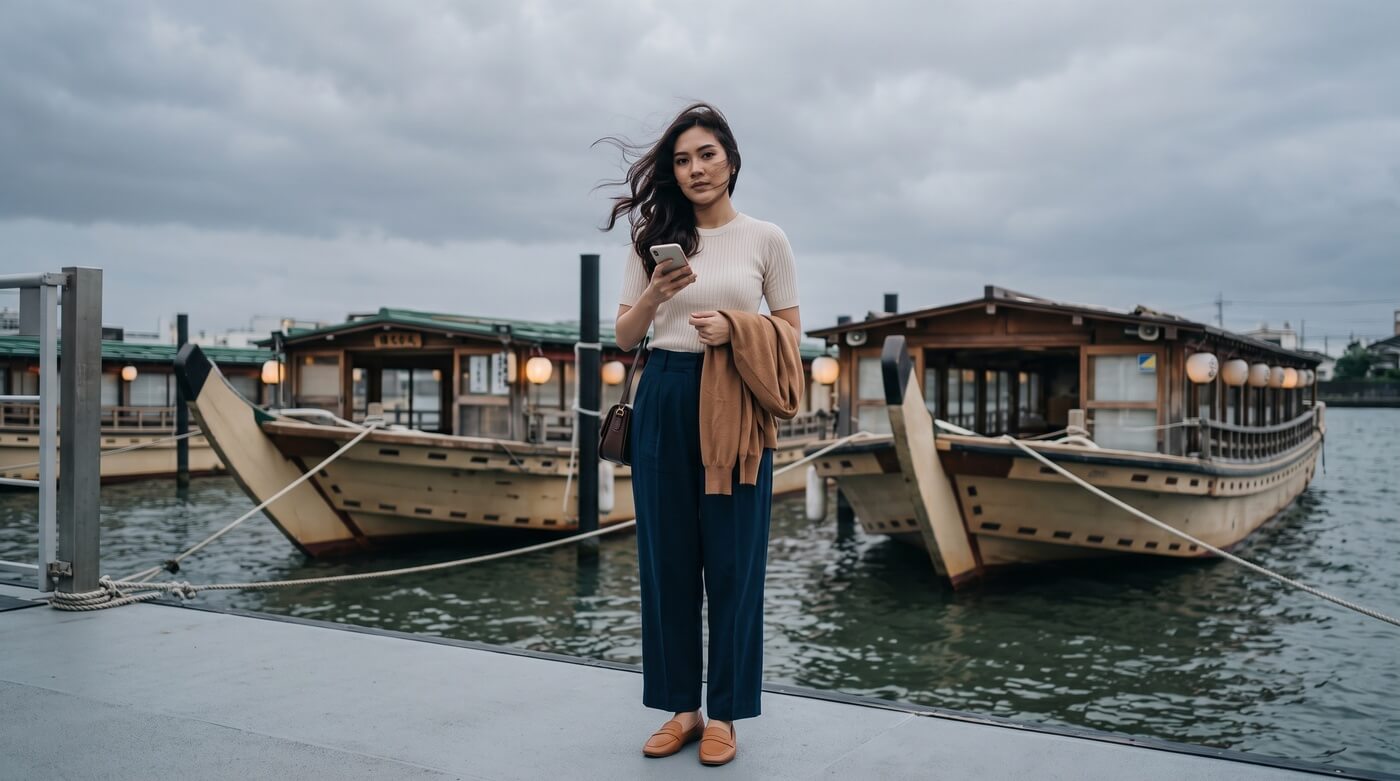
Boarding is at Funasei’s private pier at 1-16-8 Kitashinagawa, ten minutes on foot from Keikyu Kitashinagawa Station and about thirteen from Shinagawa Station.
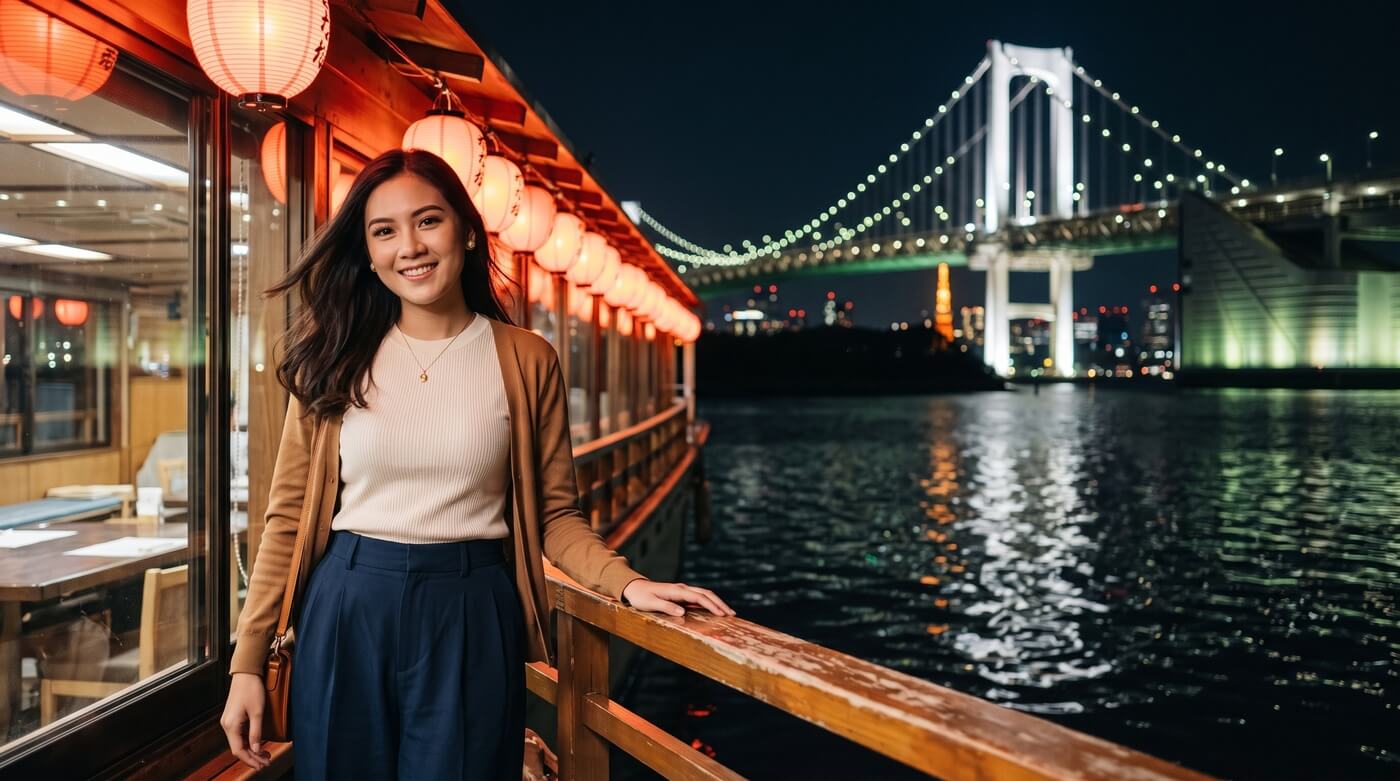
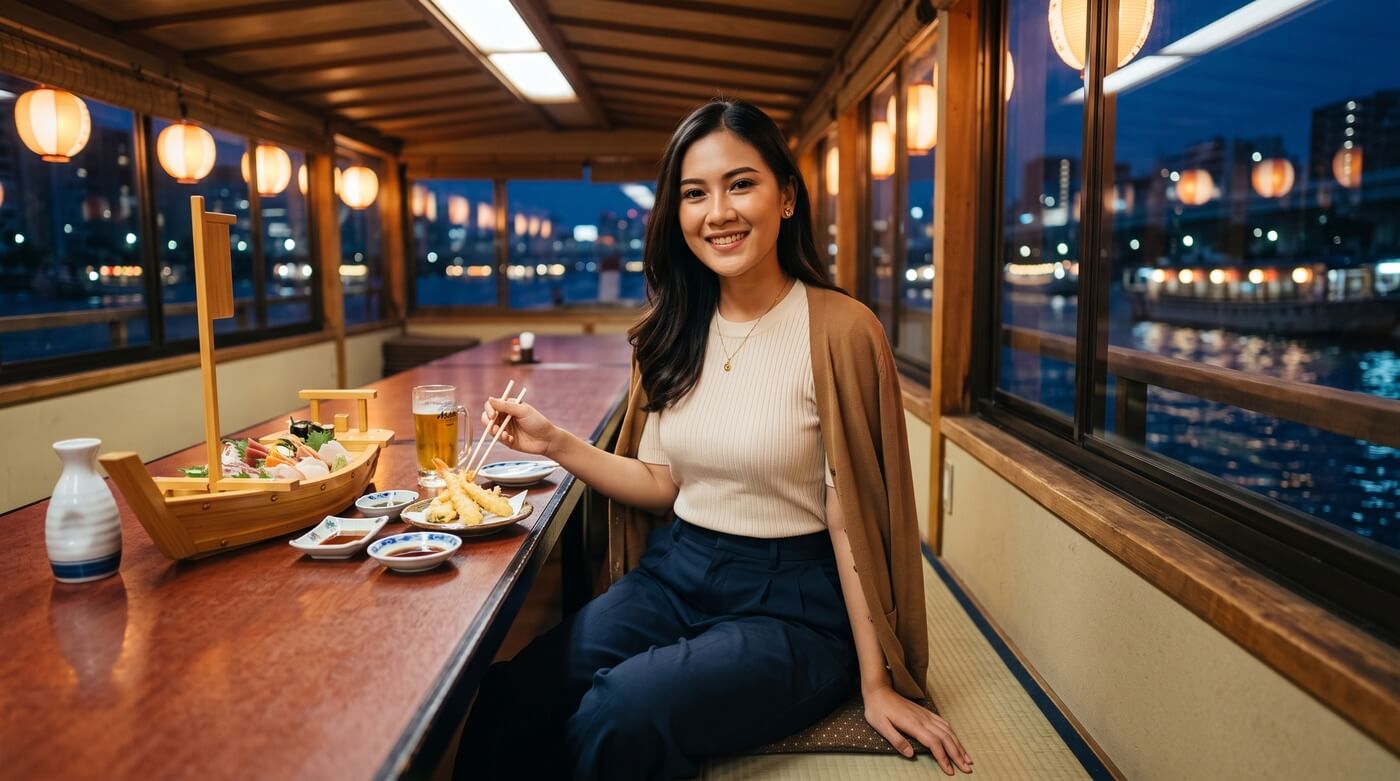
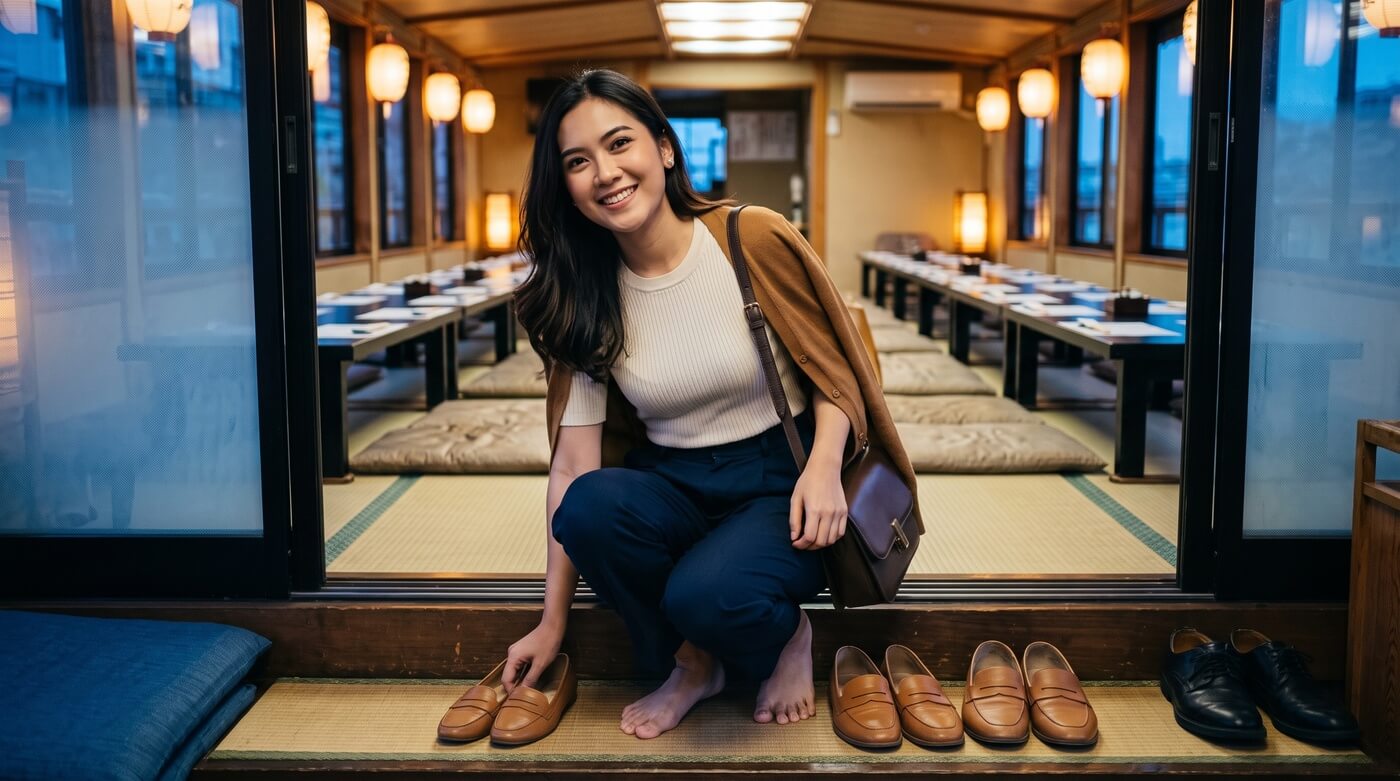
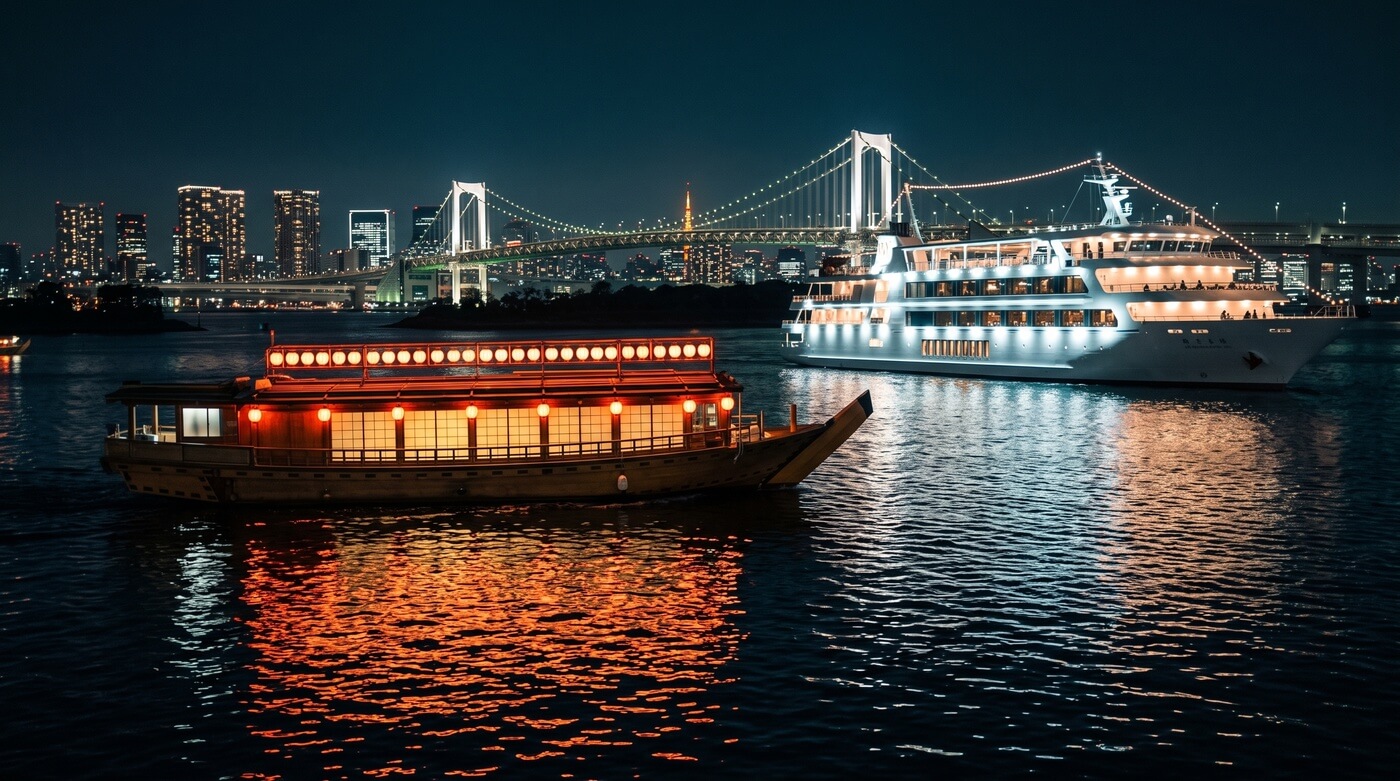
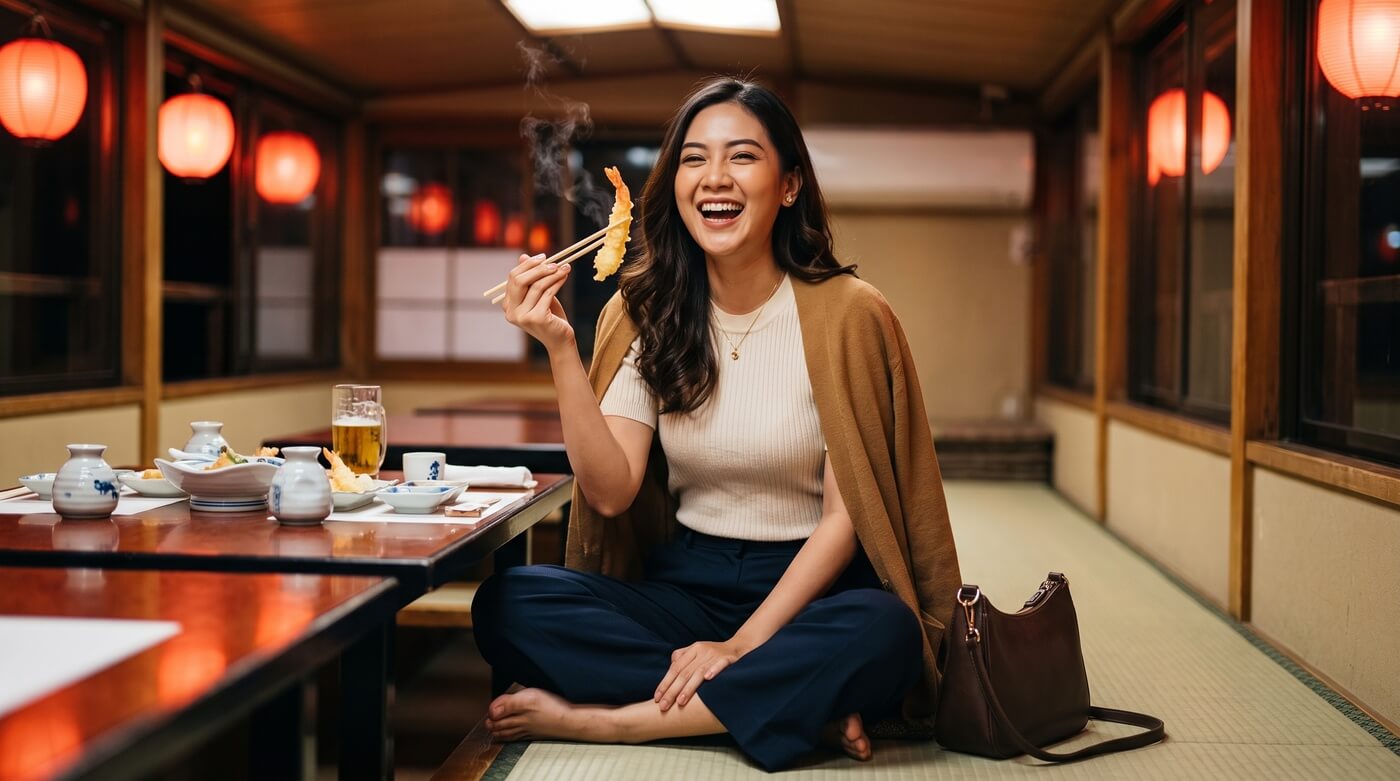
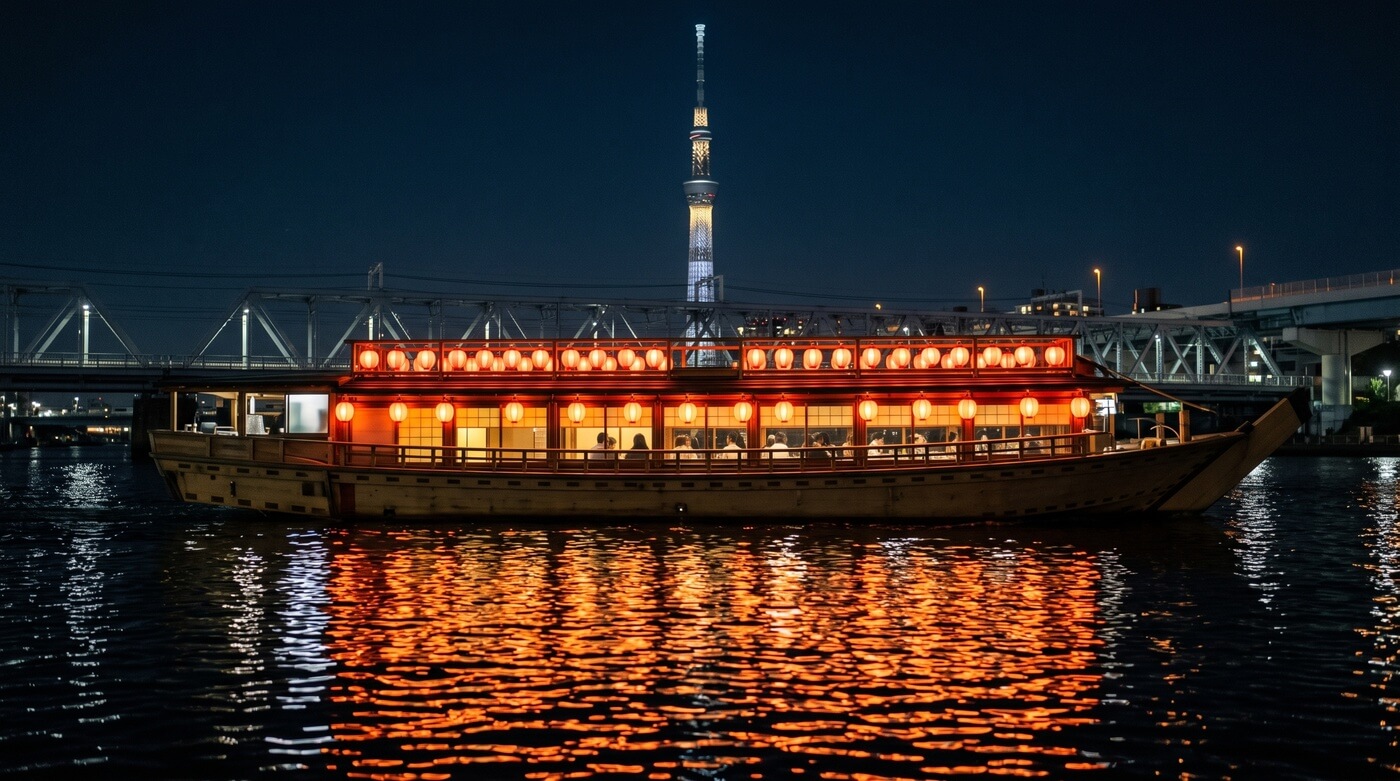
Shoes come off at the gangway, you sit at a low lacquered table with a sunken horigotatsu well beneath it, and the boat loops out into Tokyo Bay past Odaiba, stops beneath the illuminated Rainbow Bridge, then returns to the same pier.
Nobody disembarks at Odaiba.
Funasei sails year round for charters of 20 guests or more.
The small group shared sailings that take just two people are released roughly a month ahead and frequently never open on weekends, because charters fill the fleet first.
Check the operator calendar before building an evening around this.
Tokyo Yakatabune Boat Cruise fares from ¥14,000 all in with tempura and free flow drinks, plus sailing times, piers and booking tips from Tokyo Trip Guide.
Everything below was checked against Funasei’s own fare notice and shared boat calendar on 5 September 2026. The fares are current, the service is running, and the one thing likely to derail your plan is not the price.
TL;DR
Hide
Funasei's cheapest shared sailing costs ¥14,000 per person, tax included, covering boarding, a ten course meal, and free flow drinks across 150 minutes. Prices took effect 15 April 2026 and carry no weekend surcharge.
Shared boats take two people but do not run daily. Dates open roughly a month ahead and frequently never open on weekends, because charters fill the fleet first.
A charter needs 20 guests and drops to ¥13,000 per head, so a party of 20 pays less each than a couple does, with karaoke included.
The rooftop deck opens only while the boat is stopped near the Rainbow Bridge. The rest of the sailing is spent at a low horigotatsu table indoors, facing your food rather than a window.
Rain sails, wind cancels. Only earthquake, tsunami, storm, or strong wind stops a departure, with notice by email, and check-in closes 30 minutes before boarding with no refund for late arrivals.
Symphony Tokyo Bay charges the same ¥14,000 for dinner but serves a plated Western course with drinks billed separately. Edomae Kisen's monjayaki boats start at ¥7,900.
Funasei accommodates no allergies, vegetarian, or dietary requests. Amitatsu in Asakusa runs a vegetarian yakatabune menu with advance notice and is the better booking in that case.
Trip Essentials
Tokyo Travel Add-ons
Equip yourself for the ultimate Tokyo adventure with the following add-ons, curated just for you.
A Tokyo Yakatabune Boat Cruise earns its ¥14,000 if you want a two and a half hour banquet that happens to float, and it disappoints if you want a view.
Funasei, the Shinagawa operator that has run these boats since 1949, charges ¥14,000 per person for its cheapest shared sailing, and that one figure covers boarding, a ten course meal with tempura fried in the galley while you are moving, and free flow drinks from the moment you sit down.
We checked that figure against Funasei’s own fare notice on Tokyo Trip Guide on 5 September 2026.
It took effect on 15 April 2026 and holds every day of the week, with no weekend or peak surcharge.
The threshold is easy to state.
Book if you want the food, the low tables, and the drinks, and you accept spending most of 150 minutes indoors.
Skip it if the skyline is the point, because a ¥1,720 water bus ticket buys more view per yen and Tokyo’s free observation decks buy more still.
One operational quirk decides more bookings than price does.
Funasei sails year round for charters of 20 guests or more, but the small group shared boats, the ones that take just two people, are released roughly a month ahead and frequently do not open at all on weekends, because charters fill the fleet first.
Check the operator’s shared boat calendar before you build an evening around this.
What 150 Minutes on the Yakatabune Tokyo Cruise Actually Looks Like
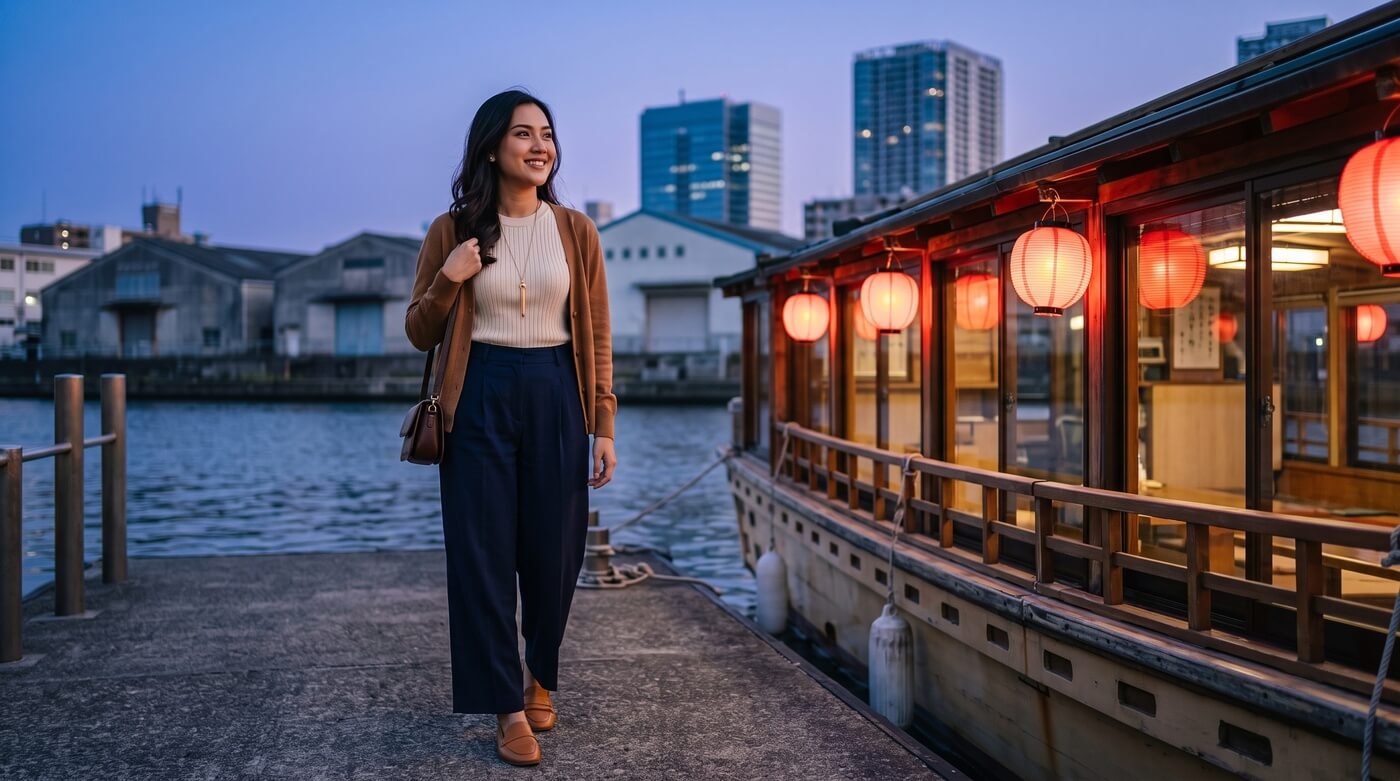
Boarding opens 30 minutes before departure at Funasei’s private pier at 1-16-8 Kitashinagawa, ten minutes on foot from Keikyu Kitashinagawa Station in Shinagawa and about thirteen from Shinagawa Station itself.
Shoes come off at the gangway.
You are shown to a long low table with a horigotatsu well beneath it, so your legs drop below floor level rather than folding under you, which is the single reason first timers survive the full sailing without cramping.
Food arrives before the engine does.
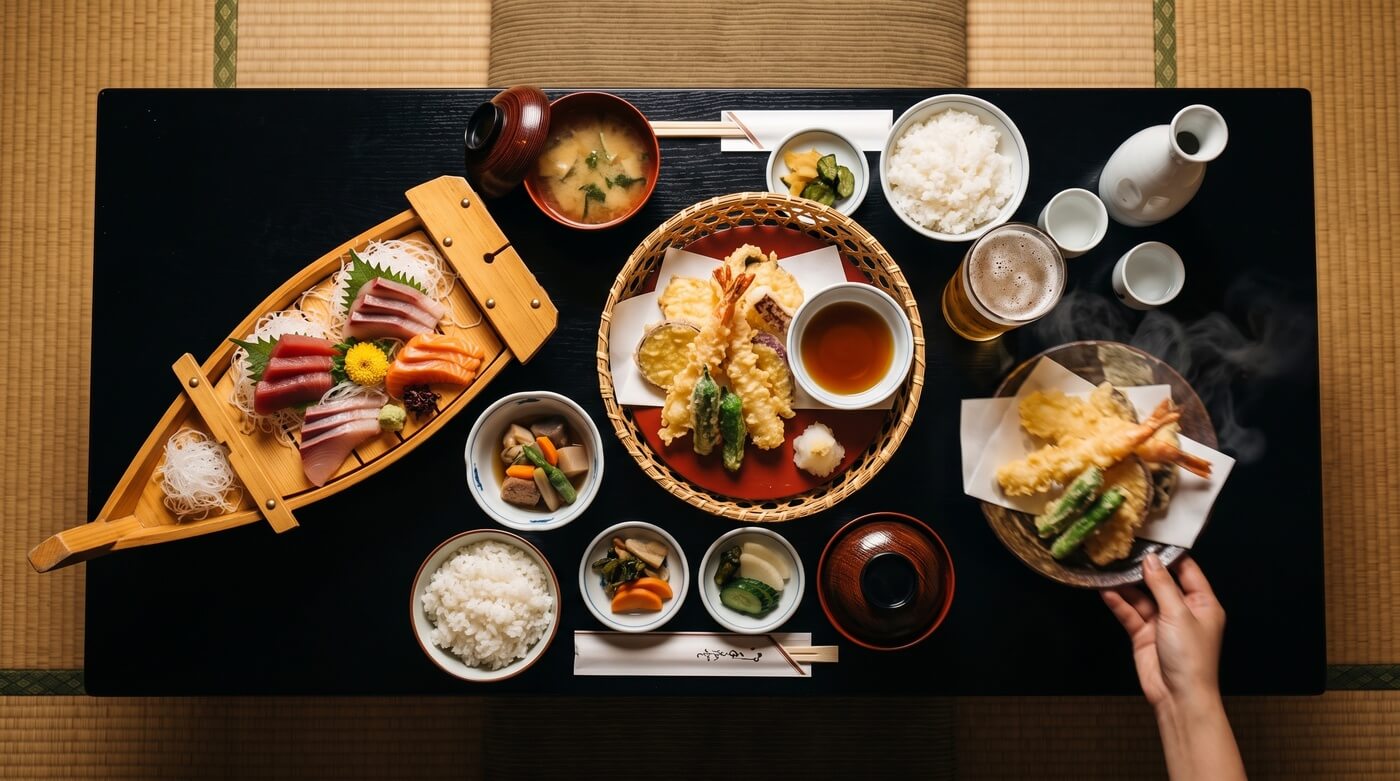
A sashimi boat lands on the table almost immediately, the nomihodai starts (free flow beer, shochu, sake, wine, whisky, umeshu, and soft drinks, the same open bar logic you meet in any Tokyo izakaya), and then tempura begins coming out of the galley in small batches, hot, for most of the next hour.
That last detail is the difference between a yakatabune and every other dinner boat in Tokyo Bay.
Nothing is plated in advance.
The First Twenty Minutes Are Not the Postcard
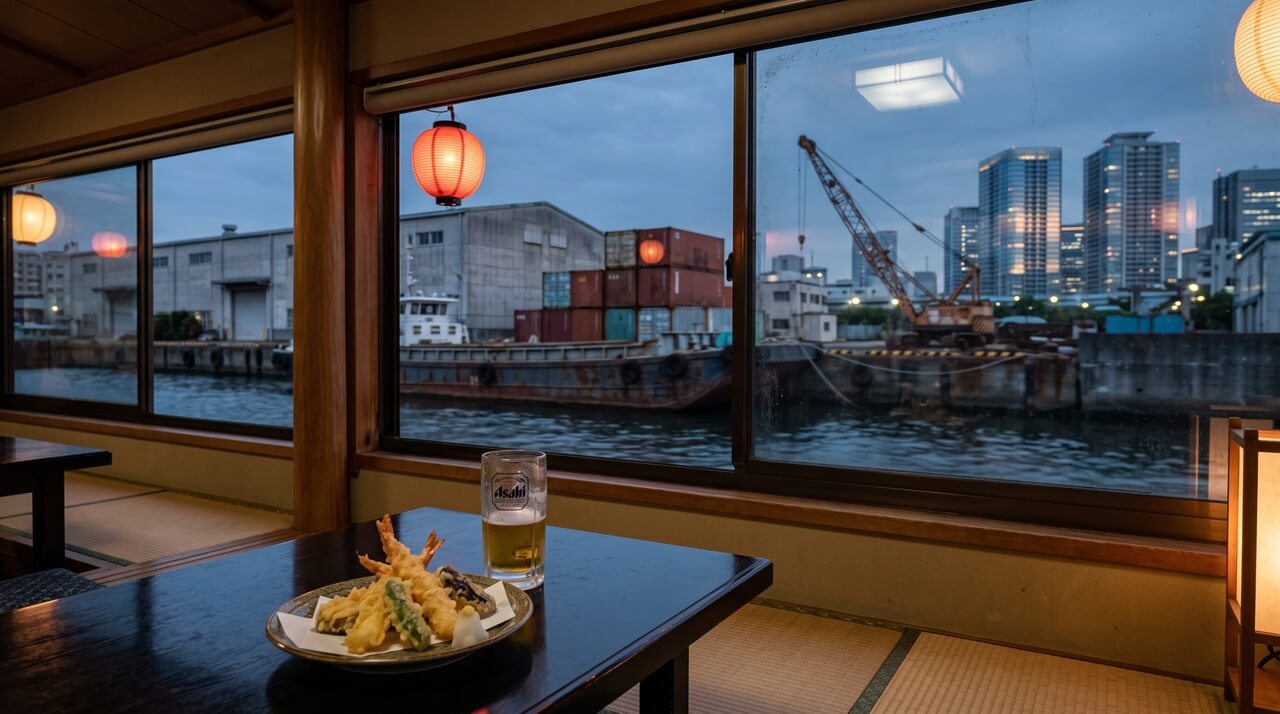
Leaving Kitashinagawa, the boat threads a working canal past warehouses, moored barges, and the glass towers of Tennozu before it reaches open water.
It is unremarkable, and it is also when the tempura is at its best, so the timing works out.
Ceilings on the Funasei boats clear 180cm, which matters if you are tall, and the cabins are air conditioned and enclosed, which matters in August and again in January.
Out in the bay the shoreline of Odaiba comes up on the approach: the Fuji TV sphere, the Statue of Liberty replica on the waterfront, the lights of DiverCity behind them.
The Unicorn Gundam stands on the DiverCity plaza rather than the shoreline, so it is not part of the view from the water and needs a separate visit.
The Rooftop Deck Opens Only When the Boat Stops
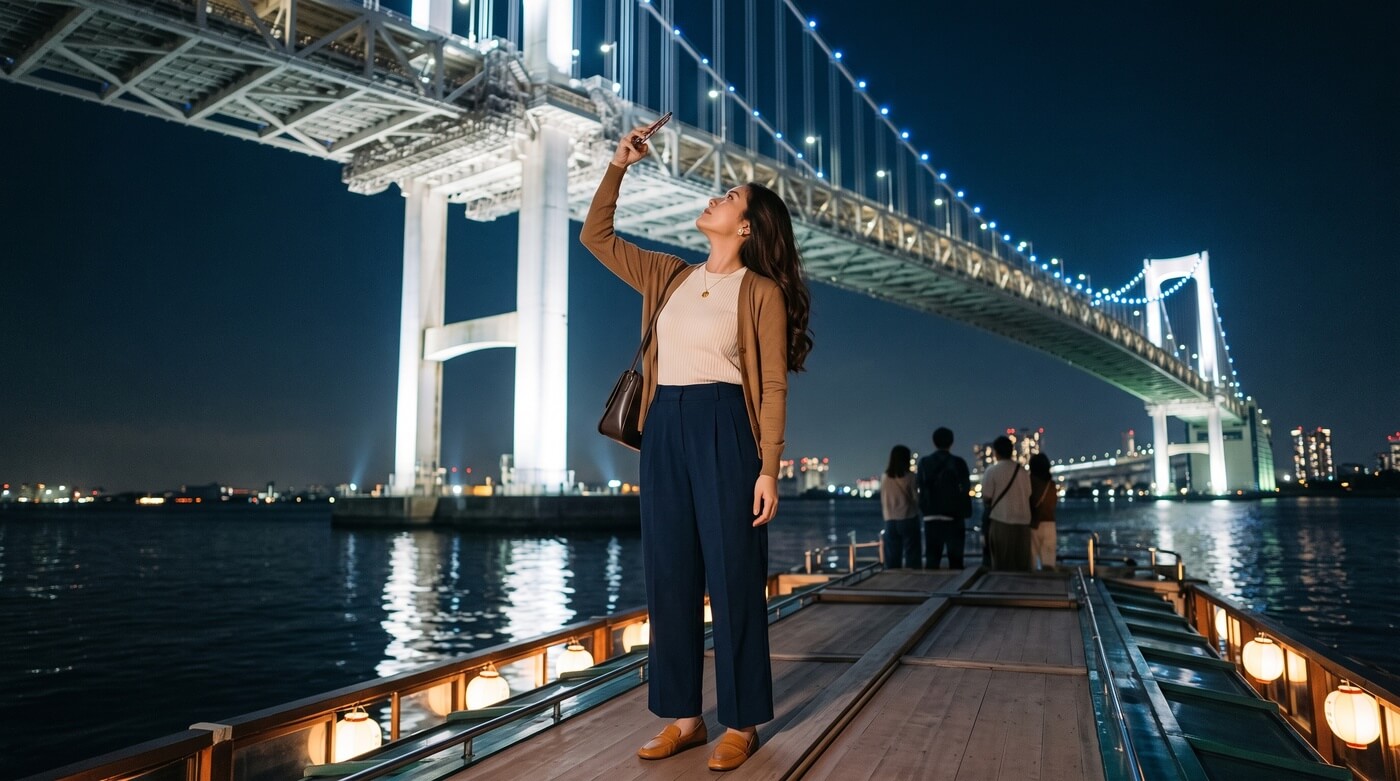
Funasei’s boats carry a rooftop observation deck, and it is open only while the vessel is stopped, not underway.
That single rule shapes the whole evening.
When the engine drops to an idle near the Rainbow Bridge, everyone who has been sitting cross legged for an hour goes up the stairs at once, and the shot people actually keep gets taken there: the Rainbow Bridge lit above you, the Shiba skyline and Tokyo Tower stacked behind it across black water.
The stop is short.
Be ready to move when the note of the engine changes rather than finishing your plate first.
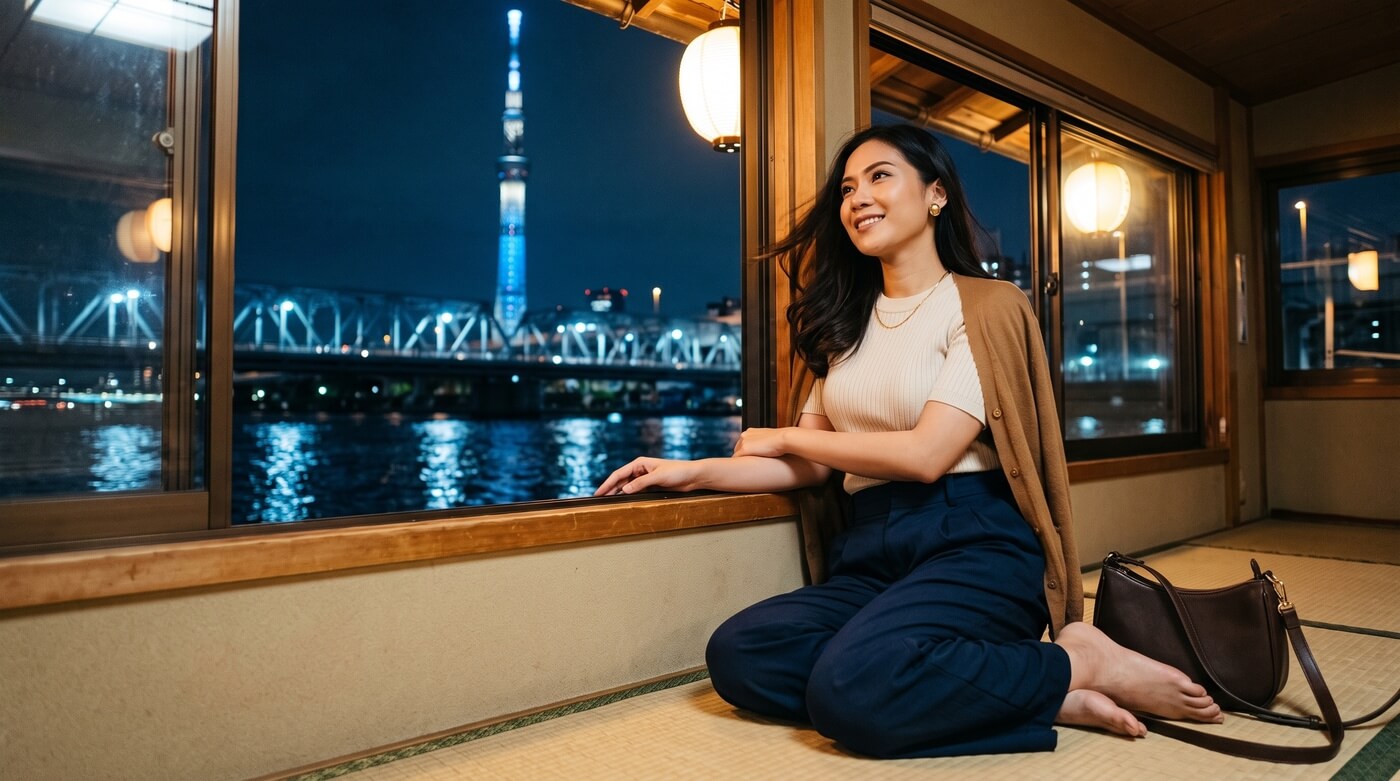
On the Sumida route the boat then turns upriver past the Kachidoki and Eitai bridges toward Tokyo Skytree, which runs 2 hours 45 minutes instead of 2 hours 30 and adds ¥1,000 per person for every extra 15 minutes.
Two honest notes about the experience.
The seating faces inward across the table, not outward through the glass, so ask for a wall side seat rather than an aisle seat when you board.
And the boats smell of frying oil and low tide in roughly equal measure, which is either the charm or the deal breaker depending on who you are.
Book the Midori Course and Skip the Kin
Funasei sells four course tiers on shared sailings, and the ¥14,000 Midori is the one to book.
The boat, the route, the rooftop deck, and the free flow drinks are identical across all four; ¥16,800 Ao adds a course, and ¥20,800 Kuro and ¥23,900 Kin add ingredients rather than experience.
Paying ¥9,900 more for the top tier buys you a nicer dinner on the same boat at the same stop.
Group size flips the maths.
A charter needs 20 guests but drops to ¥13,000 per head, so a party of 20 pays less each than a couple does, and gets karaoke thrown in.
Shared boats take from two people and up to 14 per group, and Funasei discourages groups that are more than half children for safety reasons.
Children ride at 70 percent of the adult fare through elementary school and 80 percent through middle school; high schoolers pay full adult price, preschoolers pay ¥5,500, and infants under three are free.
Alcohol is 20 and over, as everywhere in Japan.
Two booking channels matter.
The Japanese phone line takes reservations from 10:00 to 19:00, and the English route runs through GetYourGuide at roughly $118 with free cancellation up to 11 days out, or through H.I.S.
direct, which is non refundable.
Unless you read Japanese, book the GetYourGuide listing: the price lands in the same place and you keep a cancellation window.
The genuine drawback: the Funasei product does not accommodate dietary requests, allergies, or vegetarians.
If that applies to you, Amitatsu in Asakusa runs a vegetarian yakatabune menu with advance notice, and it is the better booking.
Sunset Departures and Wind Cancellations
Funasei boards between 17:00 and 18:00, departs between 17:30 and 18:30, and returns between 20:00 and 21:00, so the sailing you want is the one departing closest to sunset.
That gets you out through the canal in daylight and under the Rainbow Bridge after dark, which is the sequence the boat is built for.
A 17:30 departure in December does that; in June you want the latest slot available.
Rain is not a problem.
Funasei sails in ordinary rain because the cabins are enclosed, and cancels only for earthquake, tsunami, storm, or strong wind, with notice by email.
The realistic cancellation risk is late August into September, when a passing typhoon shuts the bay for a day or two at a time.
Check in 30 minutes before departure regardless, because late arrivals are not refunded.
Seasonally, two windows sell out before everything else.
Cherry blossom sailings on the Sumida hanami route run late March into early April, take 2 hours 45 minutes, and go first, so book them as soon as the bloom forecast firms up in February.
Fireworks nights go faster still: the 49th Sumida River Fireworks on 25 July 2026 sold out its boats, and the Tokyo Bay Grand Fireworks returns on 24 October 2026 for the first time in 11 years, firing around 12,000 shells off Harumi from 17:30.
Funasei’s charter boats for that night are already fully booked as of early September 2026, and general tickets for the land venues open on 9 September.
Yakatabune Versus the Symphony Dinner Cruise
Yakatabune Versus the Symphony Dinner Cruise
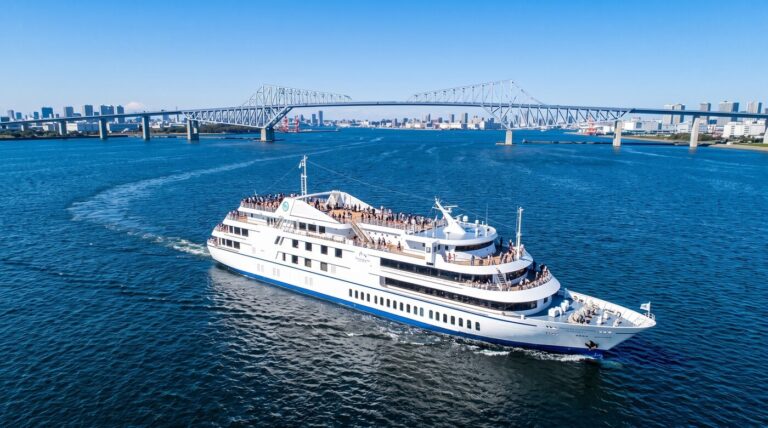
Symphony Tokyo Bay sails from Hinode Pier and charges ¥14,000 for its dinner cruise, the same headline number as Funasei’s cheapest shared sailing, for a completely different evening: a large Western style liner, a plated full course dinner, chairs and tablecloths, and drinks charged separately on top.
Funasei gives you tempura, tatami, and unlimited drinks inside the price.
If you are dressing up for an anniversary, book Symphony.
If you want the Japanese version of a night on the water, book Funasei.
Below both sits the value option.
Edomae Kisen runs monjayaki yakatabune from Shin Kiba with a free shuttle from the station, at ¥7,900 for the 16:00 departure and ¥8,900 at 19:00, all you can eat plus free flow alcohol.
The food is simpler and the boarding point is inconvenient, but it is close to half the price for the same category of experience.
Harumiya is the third name worth knowing, boarding at the Asashio pier in Harumi five minutes from Kachidoki Station, with shared sailings from ¥13,200 that open more reliably on weekdays than Funasei’s do.
None of these is transport.
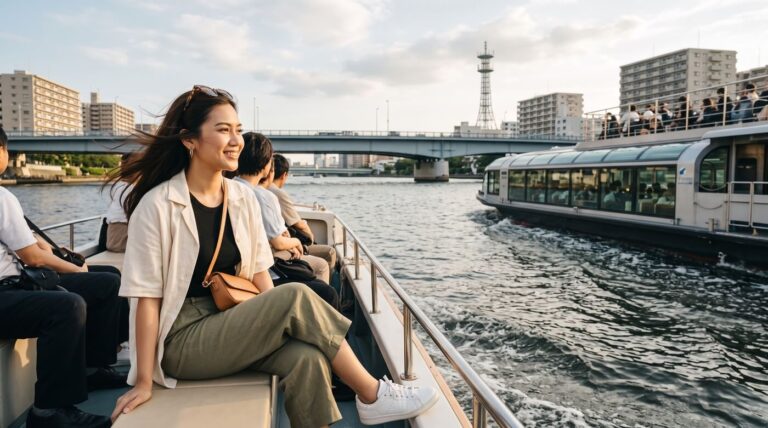
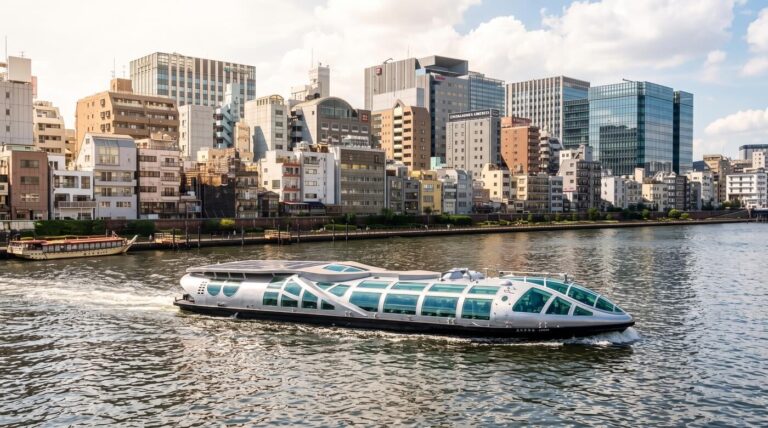
If you want to see the Sumida cheaply, the Tokyo Cruise water bus from Asakusa to Odaiba costs about ¥1,720 one way and nobody serves you anything.
The Tokyo Mizube Cruising Line, the other water bus people plan around, has been suspended since 19 January 2026 for vessel replacement, and its return was only ever described as an aim for summer 2026, still unconfirmed in September.
Pairing the Sailing With Kitashinagawa and Odaiba
Kyu Tokaido shopping street in the Kitashinagawa neighborhood of Tokyo
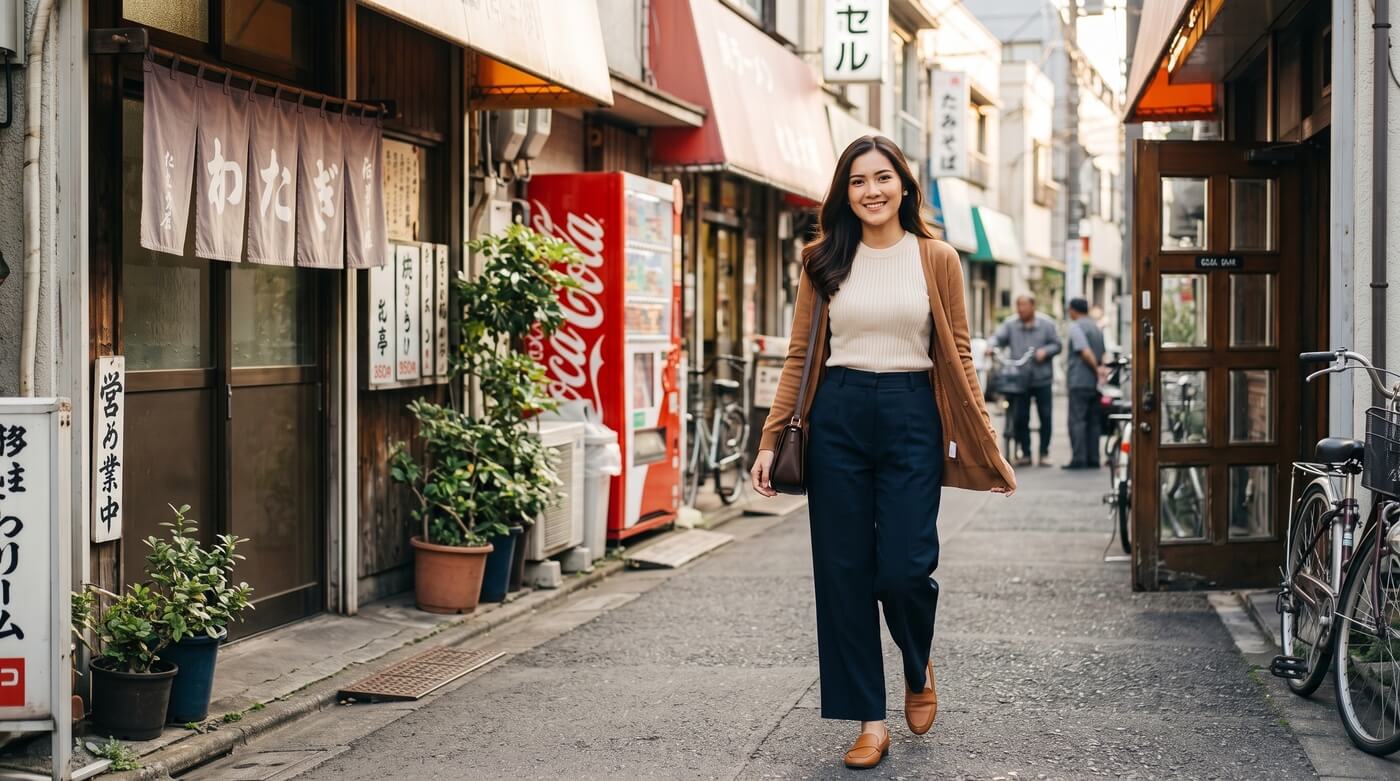
Arrive at the pier an hour early and walk the Kyu Tokaido street behind it, the old post road that made Shinagawa-juku the first stop out of Edo.
It is a low rise strip of shrines, standing bars, and shotengai shopfronts, and it is a better hour than anything you will find killing time in Shinagawa Station.
Coming back, do not build Odaiba into the same day.
The boat passes it, stops near it, and never lands there, so the island needs its own afternoon.
Couples who want the water without repeating themselves can slot the sailing into the evening of a river focused plan like this three day luxury route for couples, which already runs Asakusa to Ginza by boat during daylight.
You are back on the pier by 21:00 at the latest, which leaves the Keikyu line running normally and Shinagawa Station ten minutes away on foot.
Routes & Fares
Where It Sails and What It Costs
Seen from the Boat
The views you are actually paying for. Red chips open our full guide to that spot.
1Tennozu Isle waterfront2Odaiba3Fuji TV Building4Statue of Liberty - Odaiba5Rainbow Bridge6Tokyo Tower7Kachidoki Bridge8Eitai Bridge9Tokyo Skytree
Book your ticket onlineReserve ahead for weekends, sunset slots, and holiday sailings.
The pick. Tax included, no weekend surcharge, effective 15 April 2026. Price covers boarding, a ten course meal, and free-flow drinks. Boarding opens 17:00. Child fare shown is elementary school (70 percent of adult); middle school is ¥11,200 and preschoolers ¥5,500. Departure times vary by date between 17:30 and 18:30.
Evening Dinner Sailing, Ao course (shared)
17:30
20:00
2h30m
¥16,800
¥11,760
Included
Adds a course to the Midori menu. Identical boat, route, rooftop deck, and free-flow drinks. Child fare shown is elementary school at 70 percent of adult.
Evening Dinner Sailing, Kuro course (shared)
17:30
20:00
2h30m
¥20,800
¥14,560
Included
Upgraded ingredients only. The sailing itself does not change. Child fare shown is elementary school at 70 percent of adult.
Evening Dinner Sailing, Kin course (shared)
17:30
20:00
2h30m
¥23,900
¥16,730
Included
Top tier menu, same boat and same stop as the ¥14,000 Midori. Child fare shown is elementary school at 70 percent of adult.
Charter Sailing, Midori course (20 guests minimum)
17:30
20:00
2h30m
¥13,000
¥9,100
Included
Cheapest per head, but requires a minimum of 20 guests and the minimum charge is based on the adult headcount. Karaoke included. Ao ¥15,800, Kuro ¥19,800, Kin ¥22,900 per person. Agent-booked inbound groups add a 10 percent service charge.
Sumida Hanami Sailing (cherry blossom season)
17:30
20:15
2h45m
¥15,000
¥10,500
Included
Late March into early April only. Runs the Sumida hanami route at 2h45m, which adds ¥1,000 per person per extra 15 minutes on top of the course fare; the figure shown is the Midori course plus that supplement. Sells out before every other sailing of the year.
The Fleet
Vessels
Funasei yakatabune fleet
Capacity
8 yakatabune plus 1 cruiser; the two largest boats carry over 100 guests
Tatami cabins with horigotatsu sunken seating or chair and table seating, cabin ceilings over 180cm, air conditioning, rooftop observation deck open while the boat is moored, karaoke free on charter sailings, separate male and female flush toilets, on-board galley frying tempura during the sailing. Individual vessel names, capacities, and launch years are not published by the operator.
Getting There
Piers and How to Reach Them
Funasei Boarding Pier (Kitashinagawa) 船清 船着場(北品川)
Board and alight
1-16-8 Kitashinagawa, Shinagawa-ku, Tokyo 140-0001
Keikyu Kitashinagawa Station (Keikyu Main Line), 10 min walk
Company-owned canal pier, not a public terminal, and easy to walk past. Check in 30 minutes before departure. Shoes come off at the gangway. Every sailing returns to this pier; there is no disembarkation at Odaiba or on the Sumida.
You mainly want the skyline. The rooftop deck opens only while the boat is moored, so a ¥1,720 Tokyo Cruise water bus ticket or a free observation deck buys more view per yen.
You have allergies or eat vegetarian. Funasei accommodates no dietary requests; book Amitatsu in Asakusa, which runs a vegetarian menu with advance notice.
You want a formal plated dinner and a stable large vessel; Symphony Tokyo Bay charges the same ¥14,000 from Hinode Pier for exactly that.
You want boat transport to Odaiba. Every yakatabune sailing returns to the boarding pier and nobody gets off along the way.
Shared sailings open roughly one month ahead and often never open on weekends. Check https://www.funasei.com/cal/ before planning an evening around this.
Fares rose on 15 April 2026 following a fuel and materials revision. Confirm the current course price at the time of booking.
Cherry blossom sailings (late March to early April) and fireworks sailings sell out first, weeks ahead of everything else.
Funasei charter boats for the Tokyo Bay Grand Fireworks on 24 October 2026 are already fully booked as of early September 2026.
Check-in closes 30 minutes before departure and late arrivals receive no refund.
Direct H.I.S. bookings are non-refundable; the GetYourGuide listing allows free cancellation up to 11 days before sailing.
Weather and cancellations
Funasei sails in ordinary rain because the cabins are enclosed and air conditioned. Sailings are cancelled only for earthquake, tsunami, storm, or strong wind, with notice sent by email. The realistic cancellation window is late August into September, when a passing typhoon closes the bay for a day or two at a time.
Minimum group
2 people
Age restriction
Alcohol 20 and over. Elementary school children pay 70 percent of the adult fare, middle school 80 percent, high school full adult, preschoolers ¥5,500, infants 0-2 free (one per group on shared boats, two per boat on charters, ¥1,500 for each additional infant). Shared sailings discourage groups that are more than half children.
Language
On-board staff assist in English. Telephone reservations are handled in Japanese only. English, Chinese, and Korean bookings run through H.I.S. and OTA partners including GetYourGuide, Viator, and Klook.
Season
Year round. Sumida hanami sailings run late March into early April. Fireworks sailings are sold separately in summer and autumn.
A Tokyo yakatabune cruise with Funasei costs ¥14,000 per person on the cheapest shared sailing, tax included, as of September 2026. That single price covers boarding, a ten course meal with tempura fried on board, and free-flow drinks across 150 minutes. Charters of 20 or more guests pay ¥13,000 per head, and elementary school children pay 70 percent of the adult fare.
Two people can book a Tokyo yakatabune cruise on a shared (joriai) sailing, which takes from two guests and up to 14 per group. The catch is availability: Funasei releases shared dates roughly a month ahead and frequently offers none at all on weekends, because charter bookings of 20 or more guests fill the fleet first.
A Tokyo yakatabune cruise runs in ordinary rain, since the cabins are fully enclosed, heated, and air conditioned. Funasei cancels only for earthquake, tsunami, storm, or strong wind, and notifies guests by email. The rooftop observation deck, which opens only while the boat is moored, is the part that a wet or windy evening actually costs you.
Our Notes & Verdicts
Editor's Review
★★★★★4.8/5
The Tokyo Yakatabune Boat Cruise with Funasei is the most convincing traditional dinner boat in the city, and it is not a sightseeing product.
You spend most of 150 minutes at a low table facing your food, and the rooftop deck opens only while the boat is stopped near the Rainbow Bridge, so the views arrive in one concentrated burst rather than continuously.
What earns the ¥14,000 is the tempura, fried in the galley in small batches and handed over hot, plus free flow drinks for the entire sailing.
Nothing is plated in advance, which is the actual difference between a yakatabune and every other boat on Tokyo Bay.
Note the split in ratings: foreign visitors score the experience 4.7 on GetYourGuide across 287 reviews and 4.6 on Tripadvisor, while Japanese diners rate the food alone 3.46 on Tabelog across 206 reviews.
Both readings are correct.
You are buying an evening, not a restaurant.
Two marks against it.
Funasei accommodates no allergies, vegetarian, or dietary requests at all, so anyone with restrictions should book Amitatsu in Asakusa instead.
And the shared sailings that take two people are intermittent rather than daily, which turns a simple booking into a calendar-watching exercise.
Book the ¥14,000 Midori course; the boat, route, deck, and drinks are identical on the ¥23,900 Kin.
To provide the best experiences, we use technologies like cookies to store and/or access device information. Consenting to these technologies will allow us to process data such as browsing behavior or unique IDs on this site. Not consenting or withdrawing consent, may adversely affect certain features and functions.
Functional
Always active
The technical storage or access is strictly necessary for the legitimate purpose of enabling the use of a specific service explicitly requested by the subscriber or user, or for the sole purpose of carrying out the transmission of a communication over an electronic communications network.
Preferences
The technical storage or access is necessary for the legitimate purpose of storing preferences that are not requested by the subscriber or user.
Statistics
The technical storage or access that is used exclusively for statistical purposes.The technical storage or access that is used exclusively for anonymous statistical purposes. Without a subpoena, voluntary compliance on the part of your Internet Service Provider, or additional records from a third party, information stored or retrieved for this purpose alone cannot usually be used to identify you.
Marketing
The technical storage or access is required to create user profiles to send advertising, or to track the user on a website or across several websites for similar marketing purposes.