





Himiko
- Designer
- Leiji Matsumoto
- Capacity
- 160
- Launched
- 2004
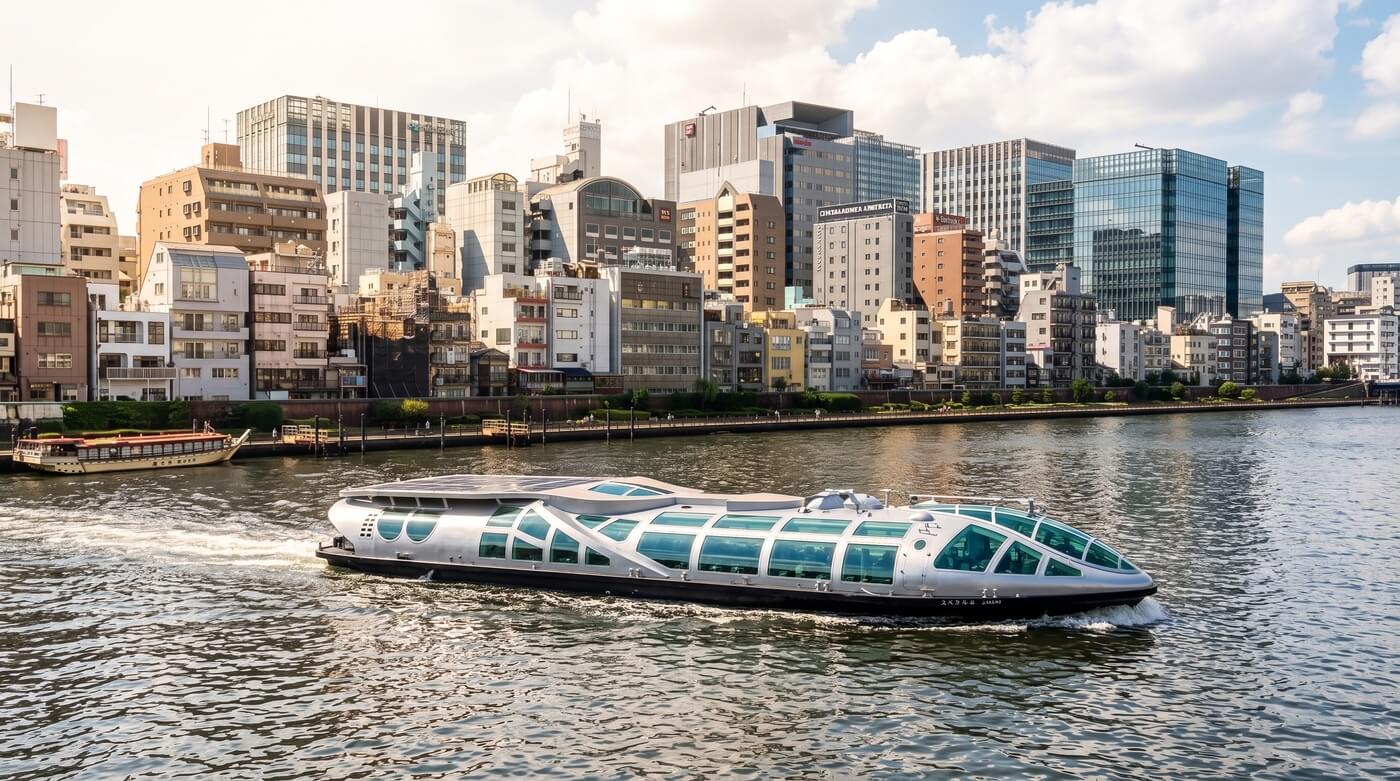
Teardrop hull with curved glass roof and 3-D view windows, plus onboard announcements voiced by Galaxy Express 999 characters.
Sumida River water bus from Asakusa to Hama-rikyu, Hinode, Odaiba and Toyosu
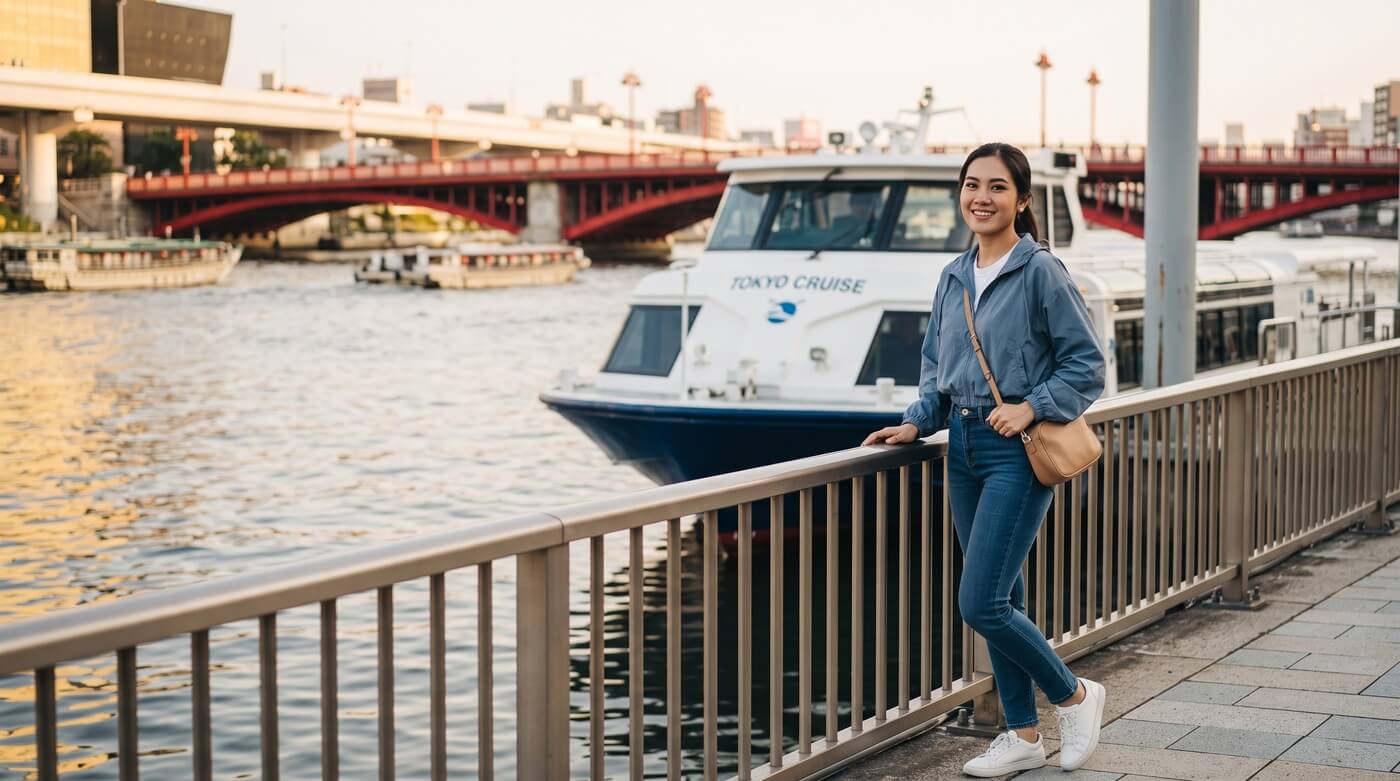
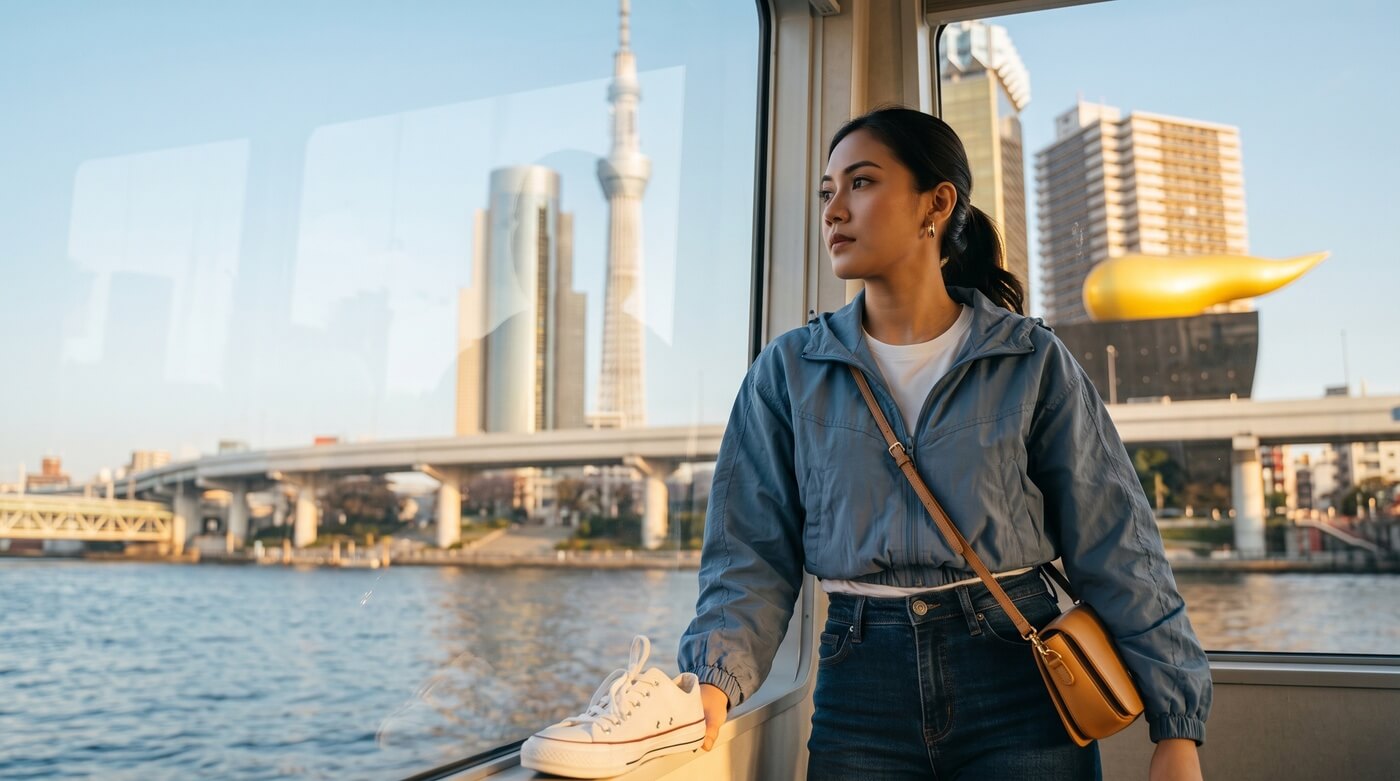
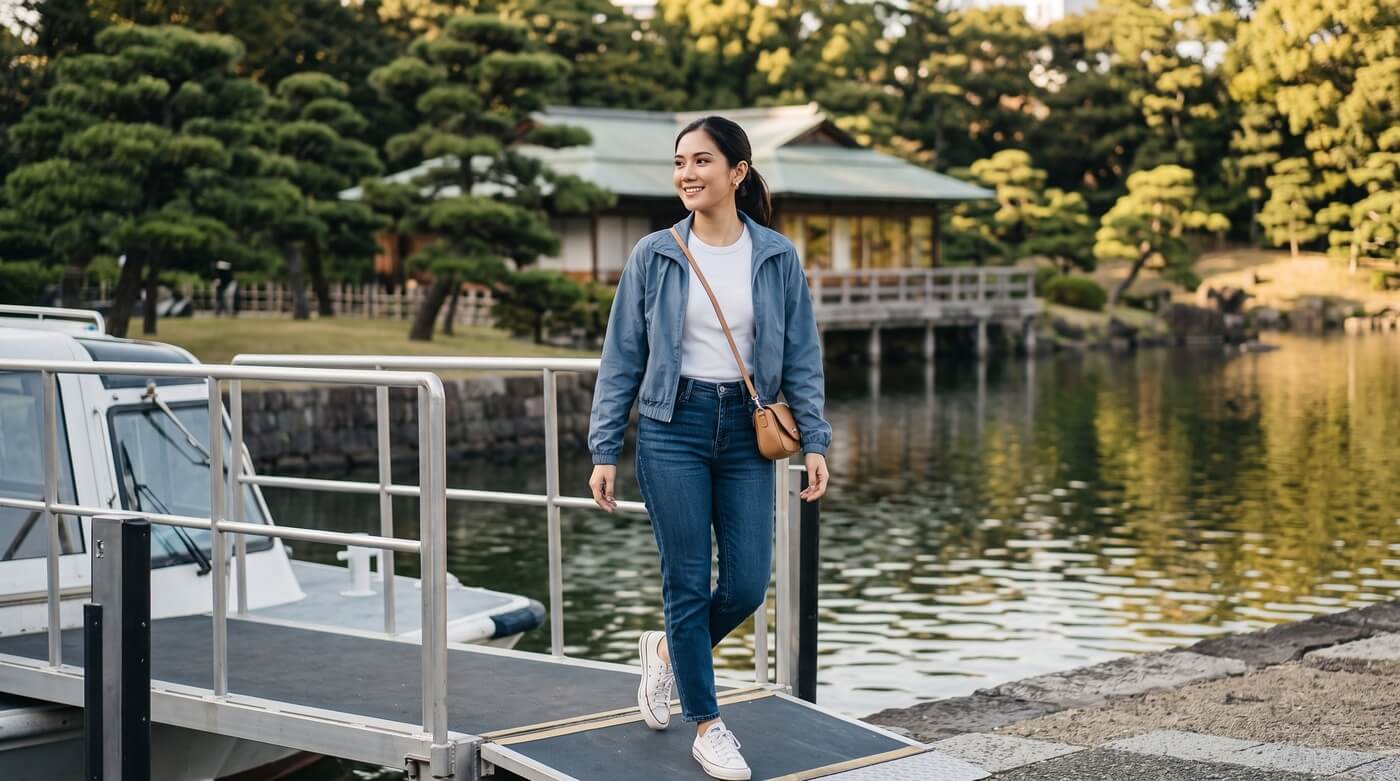
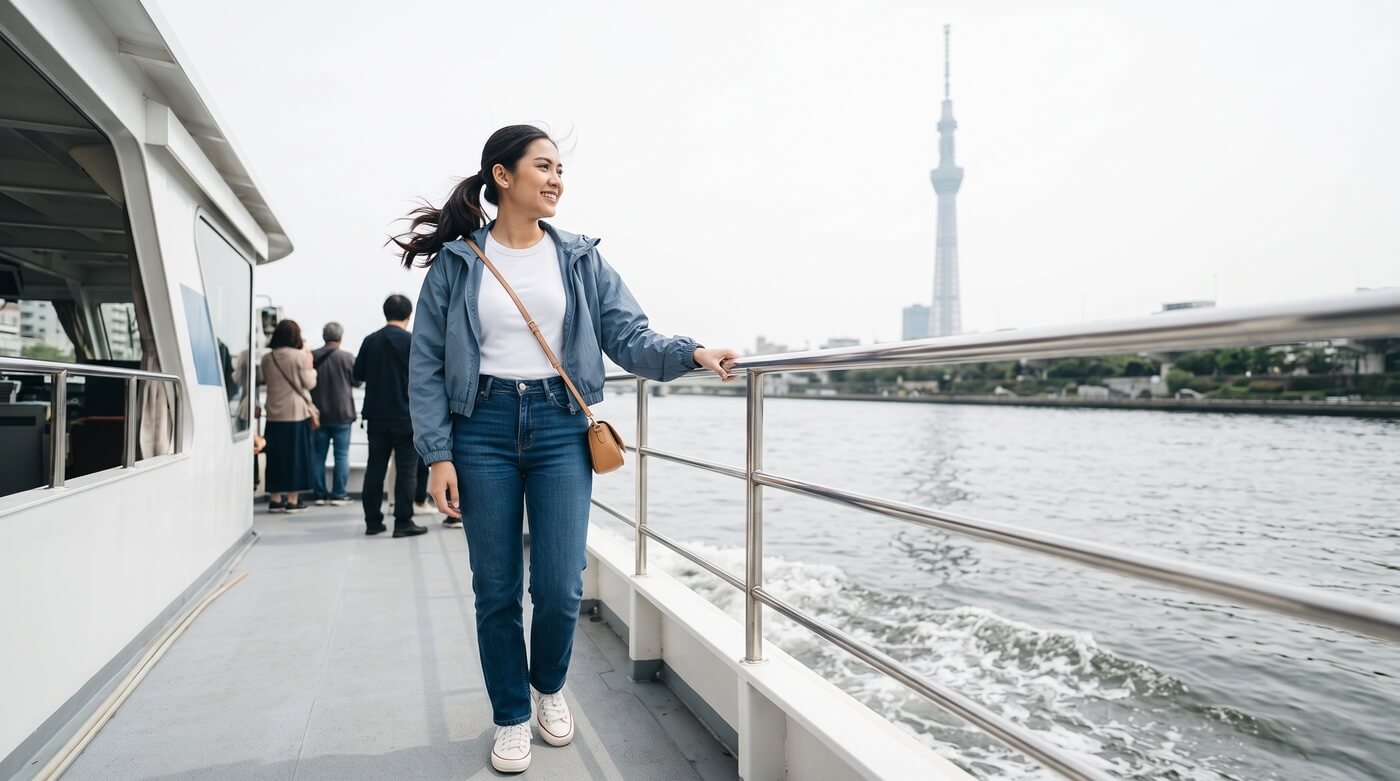
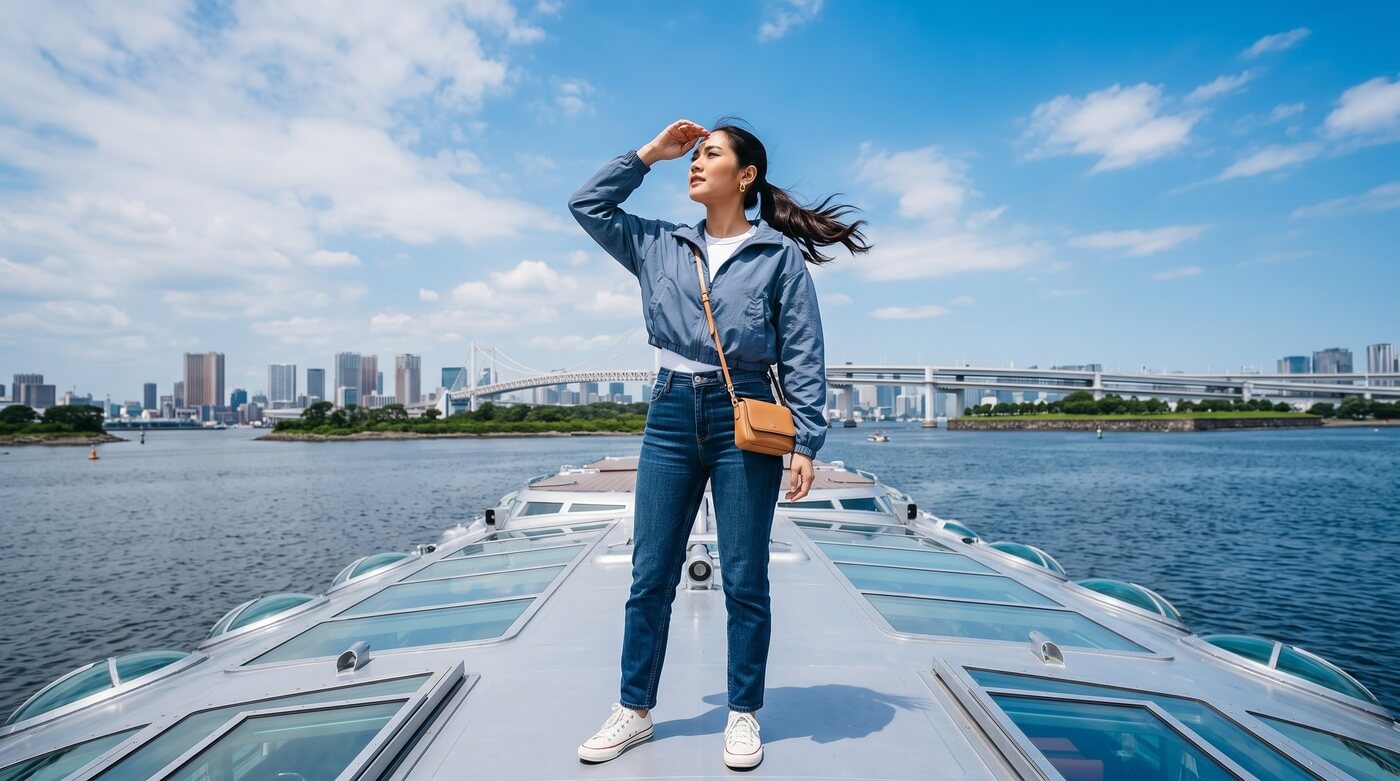
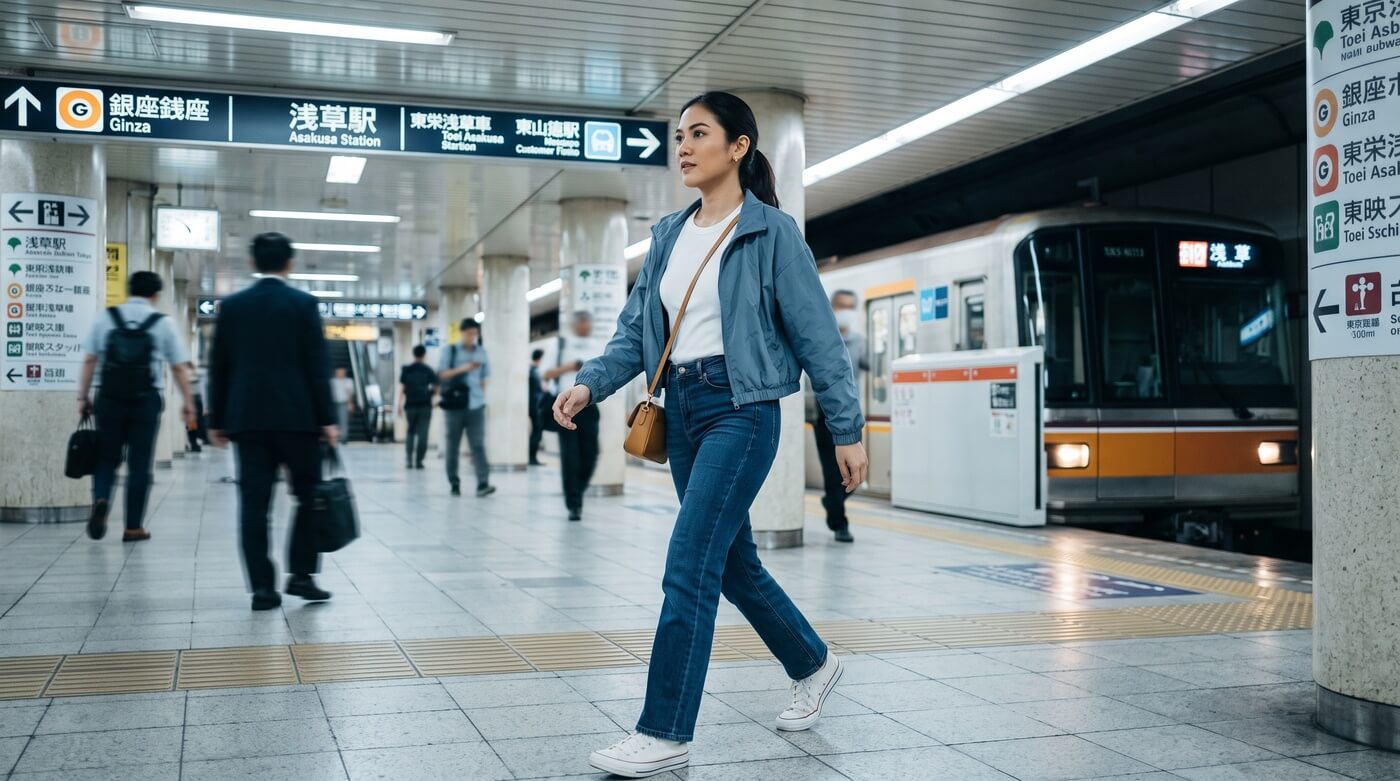
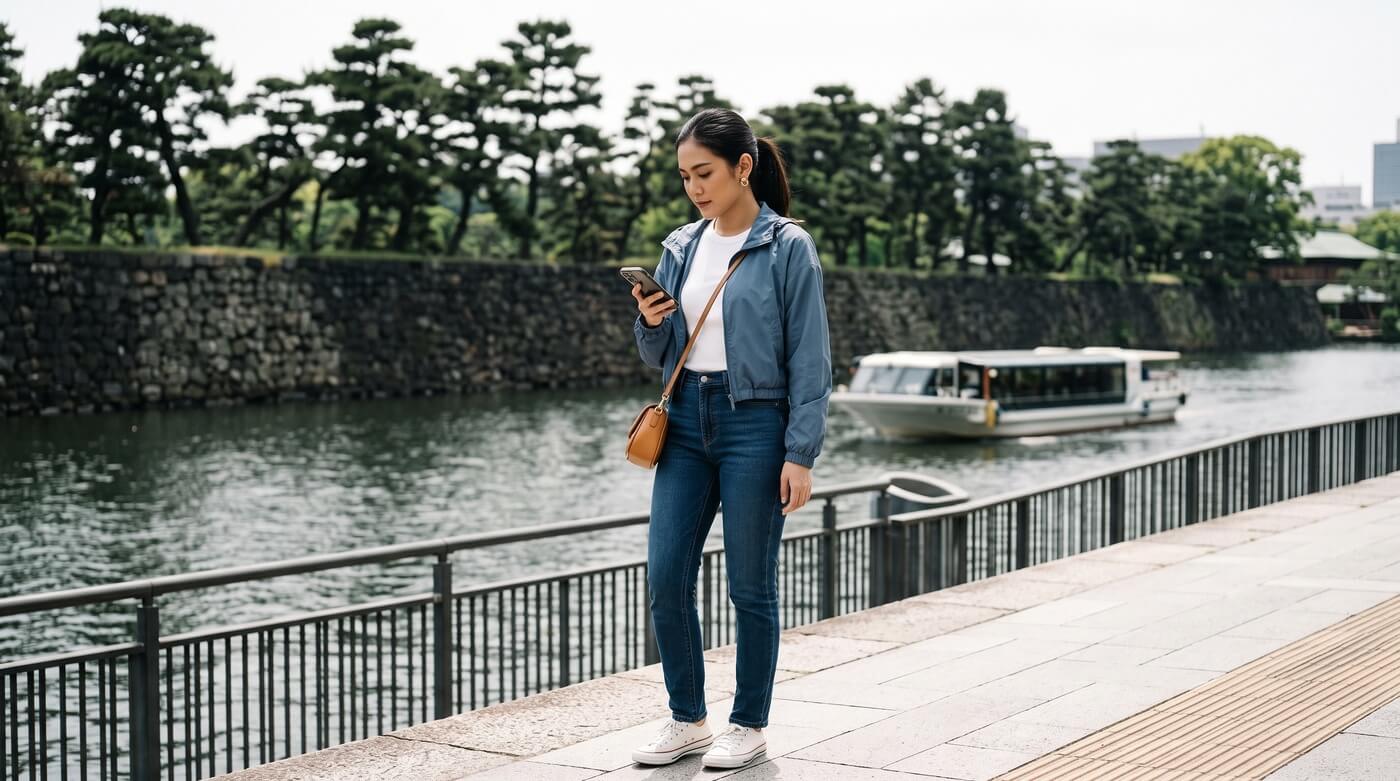
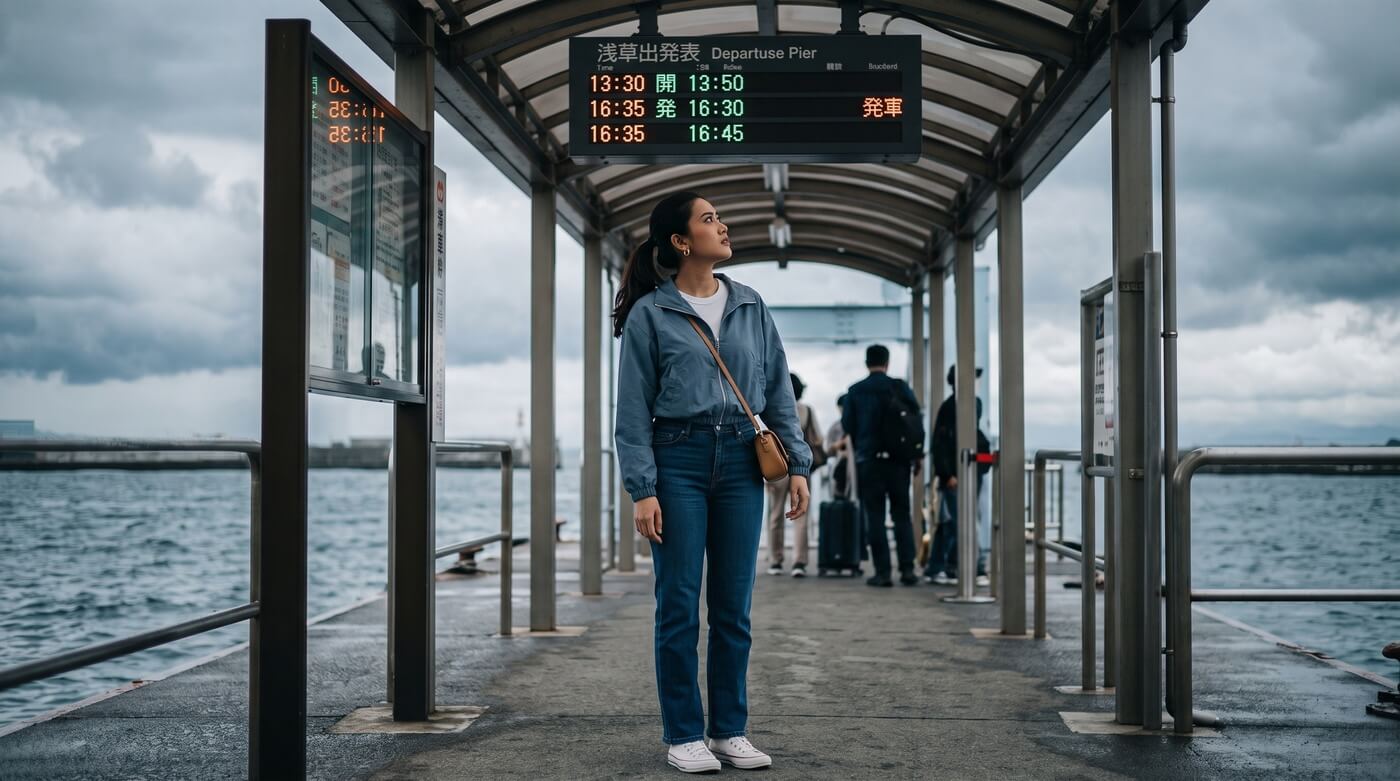
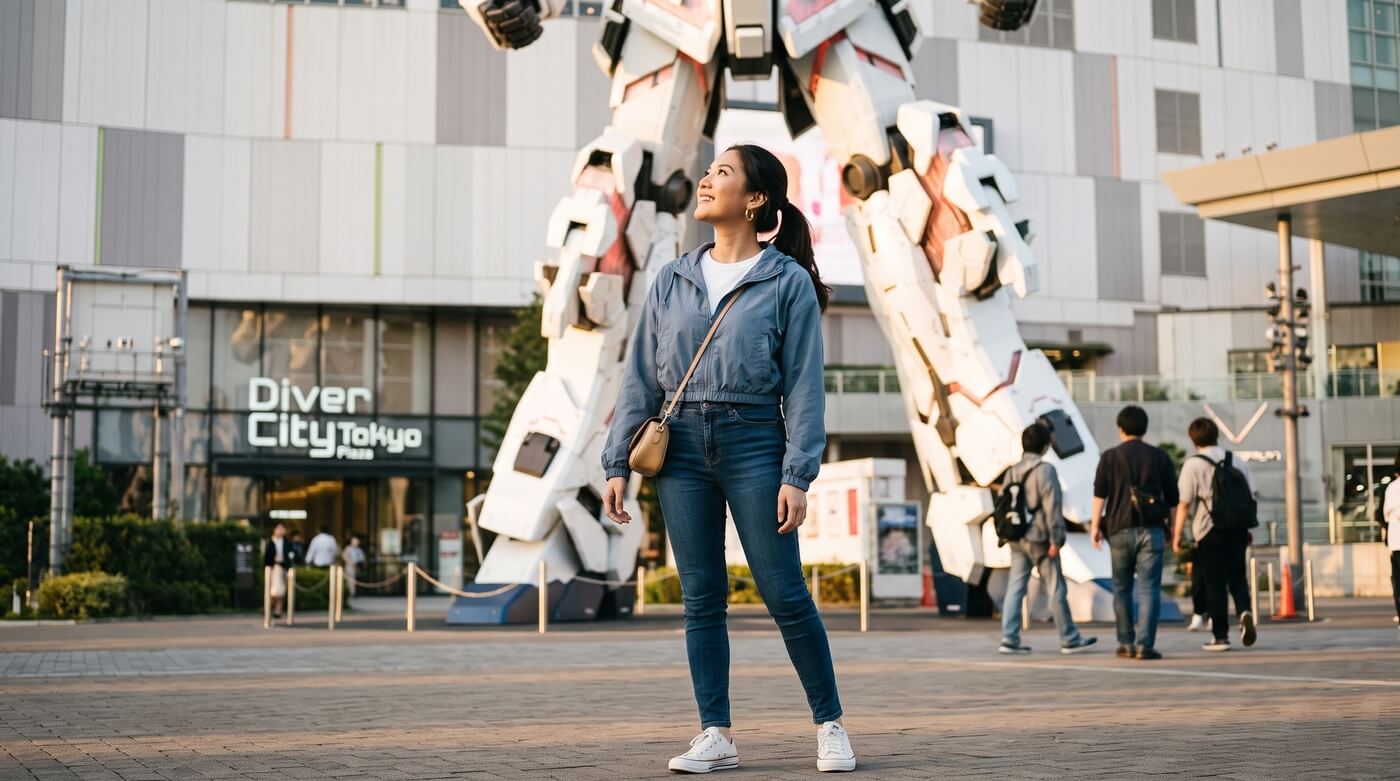

The Asakusa to Hama-rikyu water bus is the one Tokyo boat ride that drops you inside a paid garden with the ¥300 admission already folded into the ¥1,180 fare, and it is also the one stop where you cannot board for the trip back.
You ride the Sumida River south from Asakusa and pass under 13 bridges of varying shapes and colors in about 35 minutes, then step off at a pier inside Hama-rikyu Gardens.
This is public transport that happens to sightsee, run by Tokyo Cruise Ship Co.
under the TOKYO CRUISE brand.
You buy a single leg, not a loop, and fares run from ¥280 for a short hop up to ¥2,600 from Asakusa to Toyosu on the Himiko.
The futuristic Himiko, Hotaluna, and Emeraldas, all designed by manga artist Leiji Matsumoto, cost more and are worth booking ahead for the Asakusa to Odaiba run.
The Tokyo Water Bus is worth one ticket above all others: the ¥1,180 sailing from Asakusa to Hama-rikyu Gardens, which includes the garden's ¥300 admission and lands you inside the walls. Fares across the network start at ¥280, boats run daily from 10:00 to 16:10, and the service was operating normally when we checked in September 2026.
Tokyo Water Bus: Fares and Best Route – The Tokyo Water Bus is worth boarding for one ticket in particular: the ¥1,180 sailing from Asakusa to Hama-rikyu Gardens, which already contains the garden’s ¥300 admission and sets you down at a pier inside the grounds.
Every other leg on the network is competent transport with a river view, priced above the train and slower than it.
That single distinction is what this Tokyo Trip Guide page exists to settle, because the operator’s own fare table does not explain it.
Trip Essentials
Tokyo Travel Add-ons
Equip yourself for the ultimate Tokyo adventure with the following add-ons, curated just for you.
Flights to Tokyo
Airport Transfer
ICOCA IC Card
Suica IC Card
Tokyo Tours
Luggage Storage
Travel Insurance
Data Security

Japan eSIM
Japan SIM Card
Pocket WiFi Rental
Japan eSIM
Asakusa to Hama-rikyu Gardens costs ¥1,180 for adults and ¥470 for children, takes about 35 minutes, and includes the ¥300 garden admission in the fare.
The boat ties up at a jetty inside the garden’s seawall, so you walk off the gangway into the pond-and-teahouse landscape rather than queuing at a street gate with everyone who came by subway.
Arriving by water genuinely changes the place.
Hama-rikyu was a shogunal duck-hunting ground with a tidal pond fed by the bay, and the pier is the entrance it was designed around.
The catch is scheduling: as of September 2026 this route runs only twice a day, at 11:40 and 14:20, which means it dictates your morning rather than slotting into it.
Everything else on the network is priced as sightseeing rather than transport.
Asakusa to Hinode Pier runs ¥1,000 on a standard boat, Asakusa to Odaiba Seaside Park is ¥1,600 with a transfer or ¥2,000 direct, and the long Himiko run down to Toyosu costs ¥2,600 for about 90 minutes.
Those are fair prices for a boat ride.
They are poor prices for getting somewhere.
Leaving Asakusa, the Tokyo Water Bus passes under 13 bridges before it reaches the river mouth, and the first two minutes hold the only view most people photograph.
The pier sits beside Azumabashi Bridge, so the boat swings out with the Asahi Beer Hall and its gold flame sculpture directly across the water, Tokyo Skytree rising behind it.
Then the good part ends, and it ends fast.
Skytree sits behind the boat once you are moving south, and it shrinks for the next half hour.
Anyone hoping for a framed tower shot from mid-river will be disappointed, and no seat on the boat fixes that.
Sit on the left side leaving Asakusa.
Heading downstream, the east bank holds the Asahi building, the flame, and Skytree, so the left rail gets the composition while the right rail gets warehouses.
Shoot in the first 120 seconds from the stern, before the angle flattens out.
The bridges arrive quickly after that: Komagatabashi, Umayabashi, Kuramaebashi in its distinctive yellow, then Ryogokubashi.
Clearances are lower than they look from the embankment, and on the open-deck boats you will instinctively duck under a couple of them even though there is no need.
Announcements are in Japanese only, delivered at a volume that makes conversation awkward without telling English speakers anything useful.
Between Ryogoku and Kiyosubashi the Sumida turns into concrete embankment, expressway pillars, and the backs of apartment blocks.
This is honestly the dull twenty minutes, and it is where families with restless children start checking phones.
It is also, in a quiet way, the most Tokyo part of the ride, because you are looking at the working city rather than the postcard one.
Past Kiyosubashi the water changes.
You start smelling the tide near Tsukiji Outer Market, the river widens, and the light gets flatter and brighter as the bay opens ahead.
Move to the right side around here, because Hama-rikyu’s seawall and pine trees appear on the west bank and the boat swings in toward the jetty.
Continuing past Hinode is where the ride earns its second act.
The river mouth opens into Tokyo Bay, Rainbow Bridge fills the windscreen, and the Odaiba shoreline comes in low and wide on the approach.
Sunset sailings hit this stretch at the right angle, which is the argument for the 16:10 departure over the midday ones.
Paying ¥2,000 instead of ¥1,600 for Asakusa to Odaiba buys you a direct sailing on Himiko, Hotaluna, or Emeraldas rather than a transfer at Hinode Pier, and it is worth it on Hotaluna specifically.
Hotaluna carries a rooftop open-air promenade deck that opens once the boat clears the river, which is the only place on this network you can stand outside in moving air with the bay in front of you.
Himiko does the same run about ten minutes faster at roughly 50 minutes, but you spend all of it under a fixed glass roof.
Emeraldas, the 2018 sister ship, has the same sealed layout.
All three were designed by manga artist Leiji Matsumoto, and Himiko pipes in announcements voiced by Galaxy Express 999 characters, which is either a reason to book it or a reason not to, depending on your relationship with 1970s anime.
Walk-up tickets are fine midweek on the standard Sumida River legs.
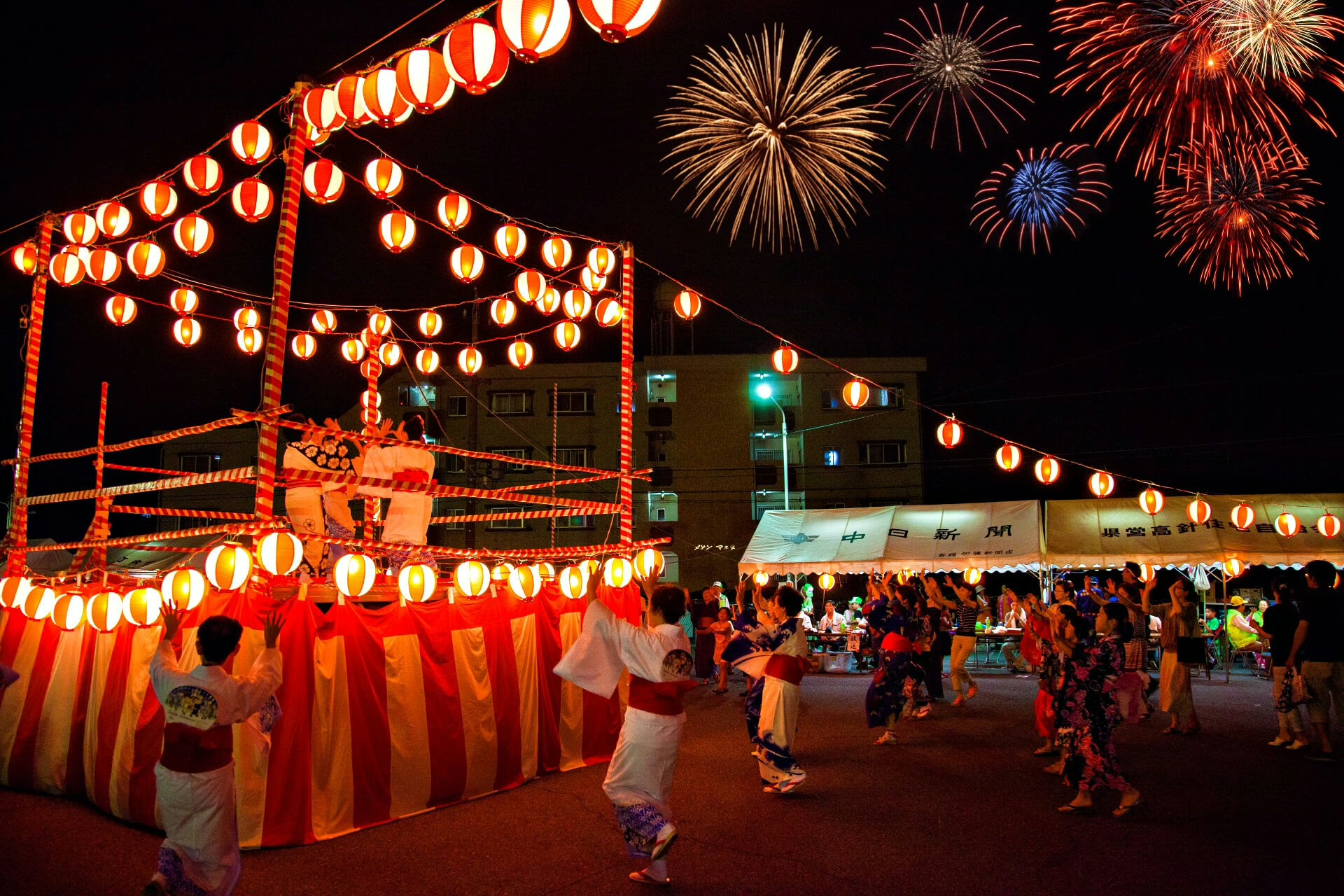
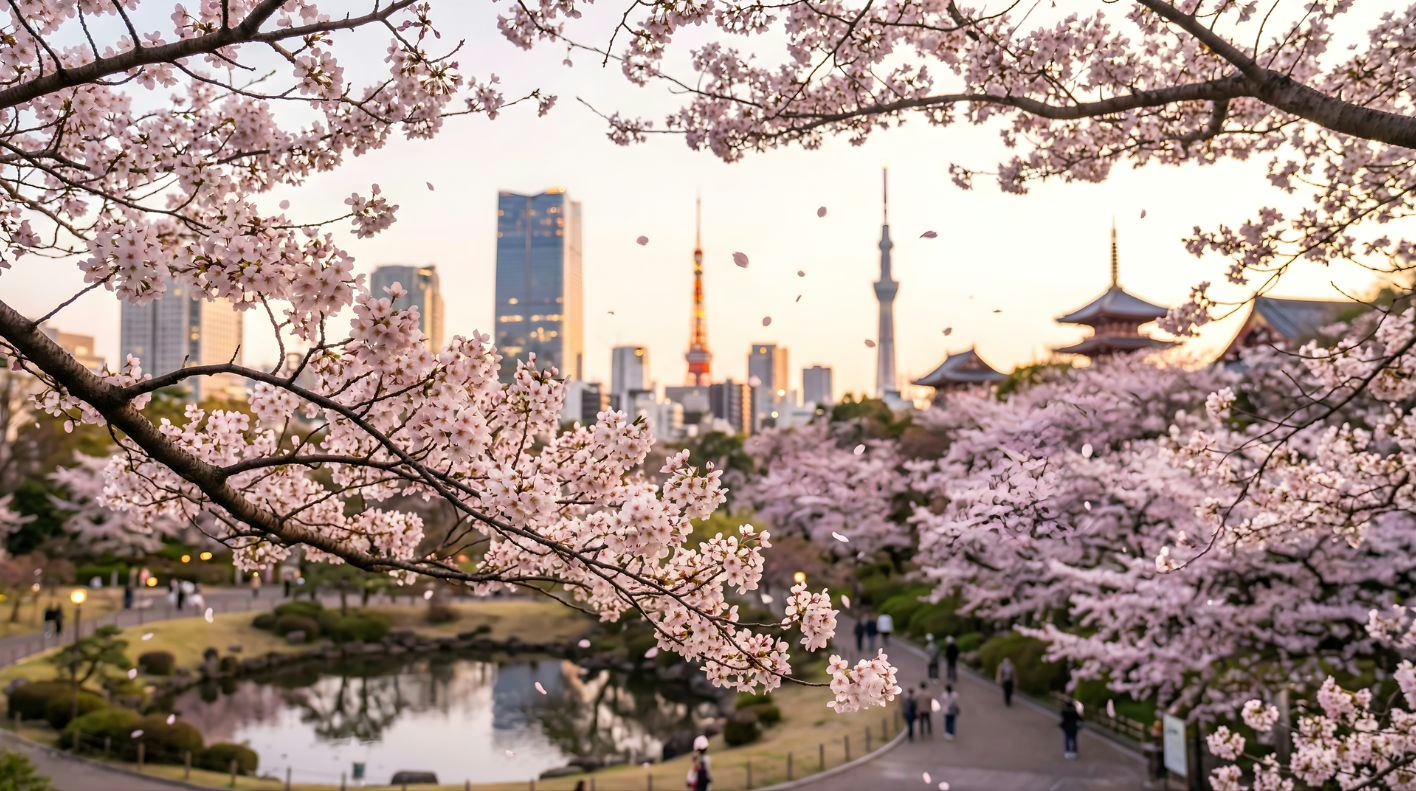
The direct Odaiba sailings are a different story: they sell out on weekends, public holidays, cherry blossom season, and firework nights, and there are only about three of them a day.
Reserve those.
For the Hama-rikyu run, availability is rarely the problem, but with only two departures you need to plan the day around 11:40 or 14:20 rather than turn up hopefully.
No. Hama-rikyu Gardens is a disembark-only stop on the Tokyo Water Bus when you come from the Asakusa direction, so you cannot start a journey there.
This trips up more visitors than any other detail on the network, usually the ones who assumed they could ride down, wander the garden, and float back.
Plan your exit on foot instead.
Shiodome Station serves the Toei Oedo Line and the Yurikamome, and Tsukijishijo Station on the Oedo Line sits close to the garden’s other side.
A short ¥280 leg between Hama-rikyu and Hinode Pier does exist on the timetable, but sailings are limited and it is not a reliable way out.
The Tokyo Water Bus operates daily, with first and last departures from Asakusa Pier falling roughly between 10:00 and 16:10, and the service was running normally as of September 2026.
Individual routes have their own thin schedules: Emeraldas leaves for Odaiba at 11:00, 14:10, and 16:10, while the long Toyosu sailing goes at 12:00 and 14:40.
Wind is the real variable.
Sailings get cancelled without advance notice when wind or waves make the water unsafe, and that happens most often between August and October during typhoon season.
The printed timetable will not tell you, so check the operator’s operating status page on the morning you plan to ride.
Weather also quietly downgrades your ticket.
Hotaluna’s rooftop deck stays shut in rain and strong wind, which turns a ¥2,000 fare into a ¥1,600 experience with a better hull shape.
Vessel maintenance removes ships too: Himiko skips the second Tuesday and Wednesday of each month plus around three weeks in February, and Hotaluna pauses the third Wednesday and Thursday plus roughly three weeks in March.
Autumn and winter afternoons give the clearest air and the sharpest bay light.
Summer midday on an open deck is punishing, and the cabin air conditioning is the better call from July through early September.
The train wins on speed and price, and it is not close.
Asakusa to Shimbashi takes about 14 minutes for ¥220 on the Toei Asakusa Line, against 35 minutes and ¥1,180 by water to Hama-rikyu.
If your Tokyo days are already tight, ride the subway and pay the ¥300 garden admission at the gate.
Against the other obvious water option, the maths runs the other way.
Symphony’s bay cruises from Hinode Pier start at ¥3,600 for boarding alone and climb past ¥8,000 with a meal, and they return you to the pier you left from.
The Tokyo Water Bus costs roughly a third of that and actually delivers you somewhere new, though nobody serves you anything beyond a small drinks and snack counter.
Resolved by traveler: first-timers with three days should take the Hama-rikyu sailing and nothing else.
Families win most here, because a 35-minute boat keeps children seated and looking outward in a way no train does, and under-sixes ride free on the standard boats.
Photographers should book the 16:10 Emeraldas for the bay light.
Repeat visitors who have done the Sumida already can justify the 90-minute Toyosu run.
Two combinations genuinely work.
The first is a morning at Sensō-ji and Nakamise, an early lunch near Kaminarimon, then the 11:40 boat to Hama-rikyu, an hour in the garden, and a walk into Ginza for the afternoon.
It moves you south across the city in one clean line instead of doubling back on the Ginza Line, which is the same logic behind this three-day plan that groups Tokyo into tight geographic loops.
The second is Asakusa to Odaiba on Hotaluna, timed for late afternoon.
You land at Odaiba Seaside Park Pier about five minutes from the station, with the Unicorn Gundam statue and its evening transformation shows a short walk inland.
Come back by Yurikamome rather than boat, since the last sailings leave earlier than you will want to.
Buy tickets at the pier counter or online, bring a card or cash for the drinks counter, and give yourself ten minutes at Asakusa Pier before departure.
The building sits one minute from Asakusa Station on the Ginza Line, and the toilet is outside on the lowest floor, not on board the standard boats.
| Route | Vessel | Duration | Adult | Child | Frequency | Notes |
|---|---|---|---|---|---|---|
| Asakusa to Hama-rikyu Gardens Editor's pick | Standard boat | About 35 min | ¥1,180 | ¥470 | 2 sailings a day (11:40, 14:20) | The ¥300 garden admission is included in this fare and the pier sits inside the garden. Hama-rikyu is disembark only, so you cannot start a trip here. |
| Asakusa to Odaiba (Hotaluna) Editor's pick | Hotaluna | About 60 min | ¥2,000 | ¥1,000 | Direct, around 3 sailings a day | Direct with no transfer, and the rooftop deck opens once past the river mouth. Reserve ahead on busy days. |
| Asakusa to Hinode Pier (standard) | Standard boat | About 40 min | ¥1,000 | ¥500 | Several sailings a day | The plain Sumida River leg down to Hinode, useful if you want to transfer onward to Odaiba. |
| Asakusa to Hinode Pier (Hotaluna) | Hotaluna | About 40 min | ¥1,400 | ¥700 | Around 3 sailings a day | Same leg on the Leiji Matsumoto ship with the rooftop deck, ¥400 more than the standard boat. |
| Asakusa to Odaiba (transfer at Hinode) | Standard boat | About 70 min | ¥1,600 | ¥800 | Timed to standard Hinode connections | This cheaper Odaiba fare is not a through boat; you change vessels at Hinode Pier. |
| Asakusa to Odaiba (Himiko) | Himiko | About 50 min | ¥2,000 | ¥1,000 | Direct, limited sailings | The fastest direct run to Odaiba, with a glass roof but no open deck. |
| Asakusa to Odaiba (Emeraldas) | Emeraldas | About 55 min | ¥2,000 | ¥1,000 | Direct, around 3 sailings a day (11:00, 14:10, 16:10) | The newest of the three futuristic ships, direct to Odaiba. |
| Asakusa to Toyosu (Himiko) | Himiko | About 90 min | ¥2,600 | ¥1,300 | 2 sailings a day (12:00, 14:40) | The longest single ride on the network, Himiko only. |
| Hinode Pier to Odaiba | Standard boat | About 20 min | ¥600 | ¥300 | Roughly once or twice an hour | The short bay hop; Himiko and Hotaluna versions cost ¥1,000. |
| Hinode Pier to Palette Town | Standard boat | About 25 min | ¥700 | ¥350 | Limited, buy at the counter on the day | Check the status page, as this line has been running a reduced schedule. |
| Hinode Pier to Tokyo Big Sight | Standard boat | About 25-35 min | ¥700 | ¥350 | Limited, tickets at the counter on the day | Not sold online; confirm sailings on the operating status page first. |
| Odaiba to Toyosu (Himiko) | Himiko | About 20 min | ¥1,000 | ¥500 | Himiko sailings only | A short bay leg on the Himiko. |
| Hama-rikyu to Hinode Pier | Standard boat | About 5 min | ¥280 | ¥140 | Limited | The cheapest leg; garden admission is charged separately here. |
The views you are actually paying for. Red chips open our full guide to that spot.
Teardrop hull with curved glass roof and 3-D view windows, plus onboard announcements voiced by Galaxy Express 999 characters.
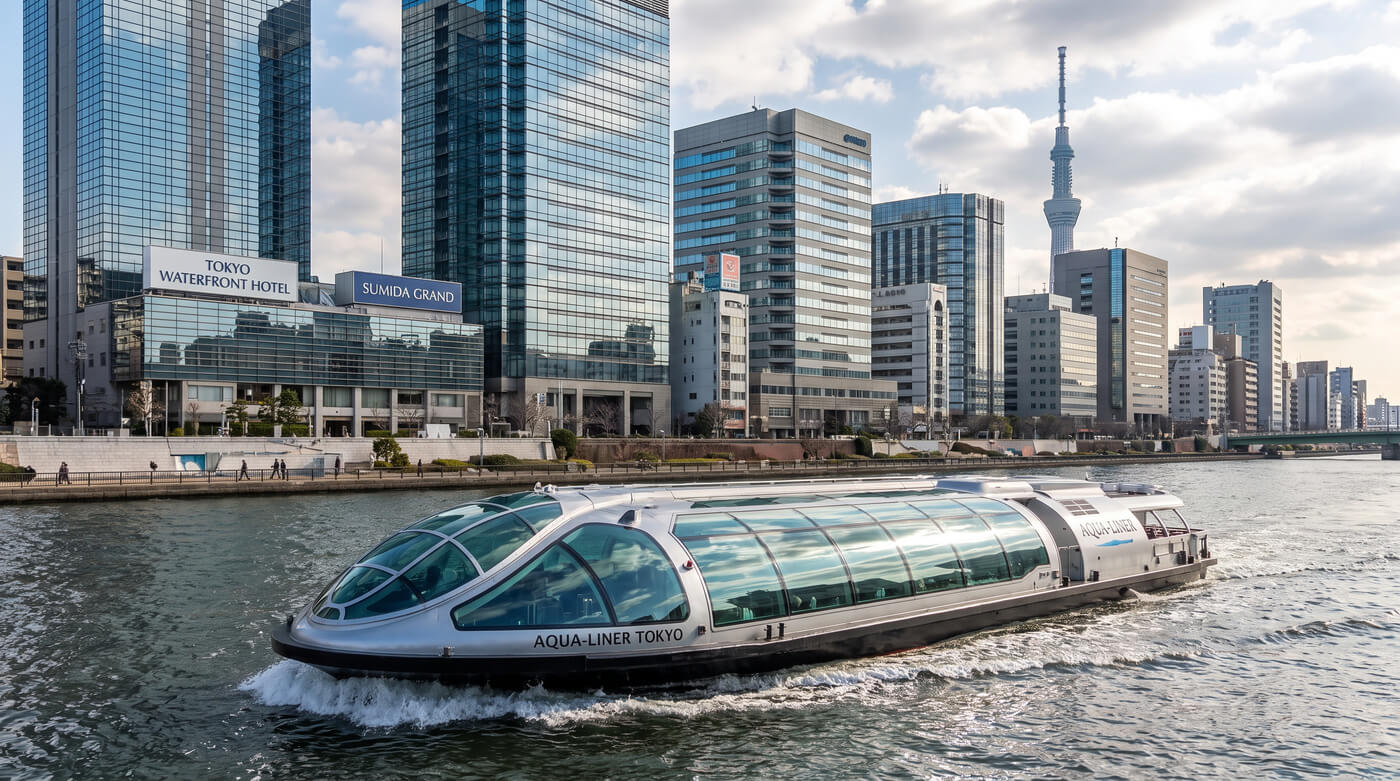
The largest of the three futuristic ships, with a rooftop open-air promenade deck that opens mid-cruise in good weather.
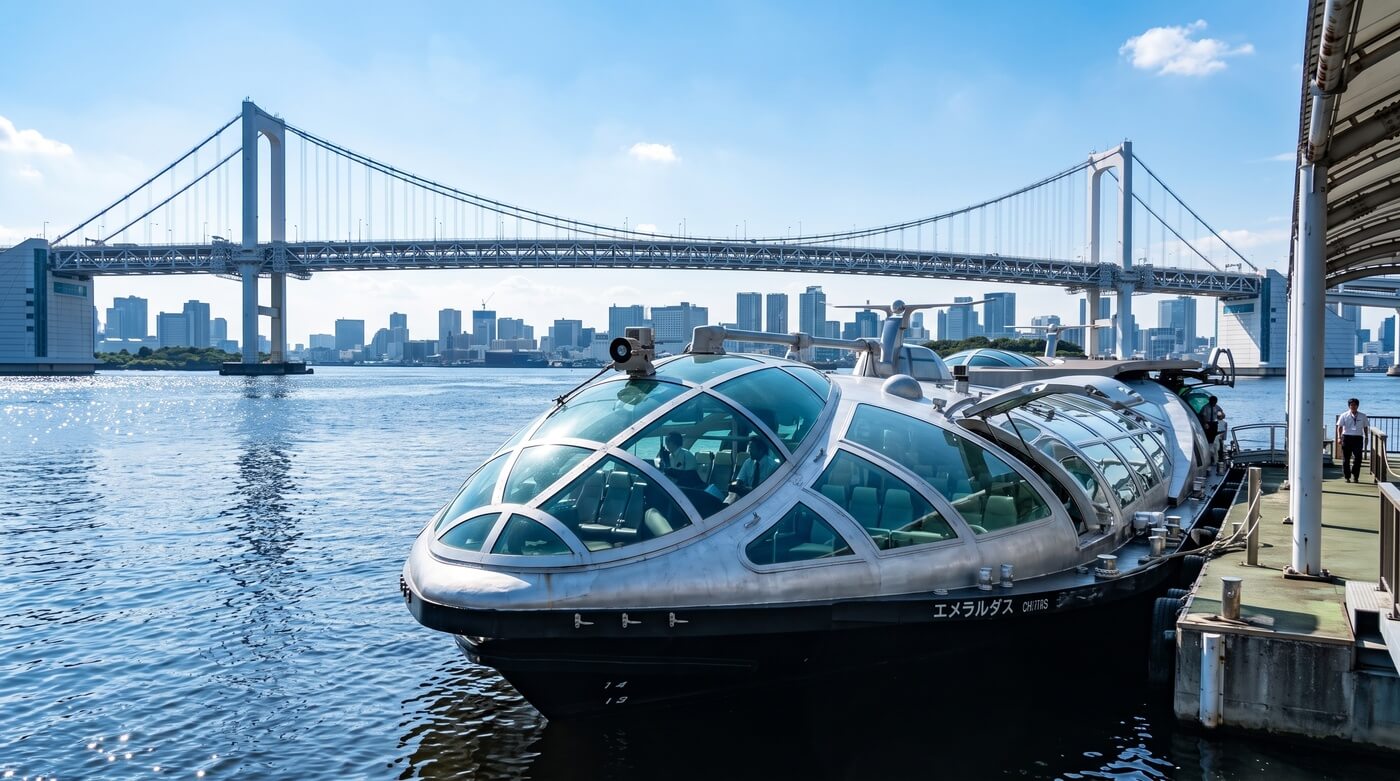
The newest futuristic vessel and a sister ship to Himiko, 34.5 meters long, with a glass roof and no open deck.
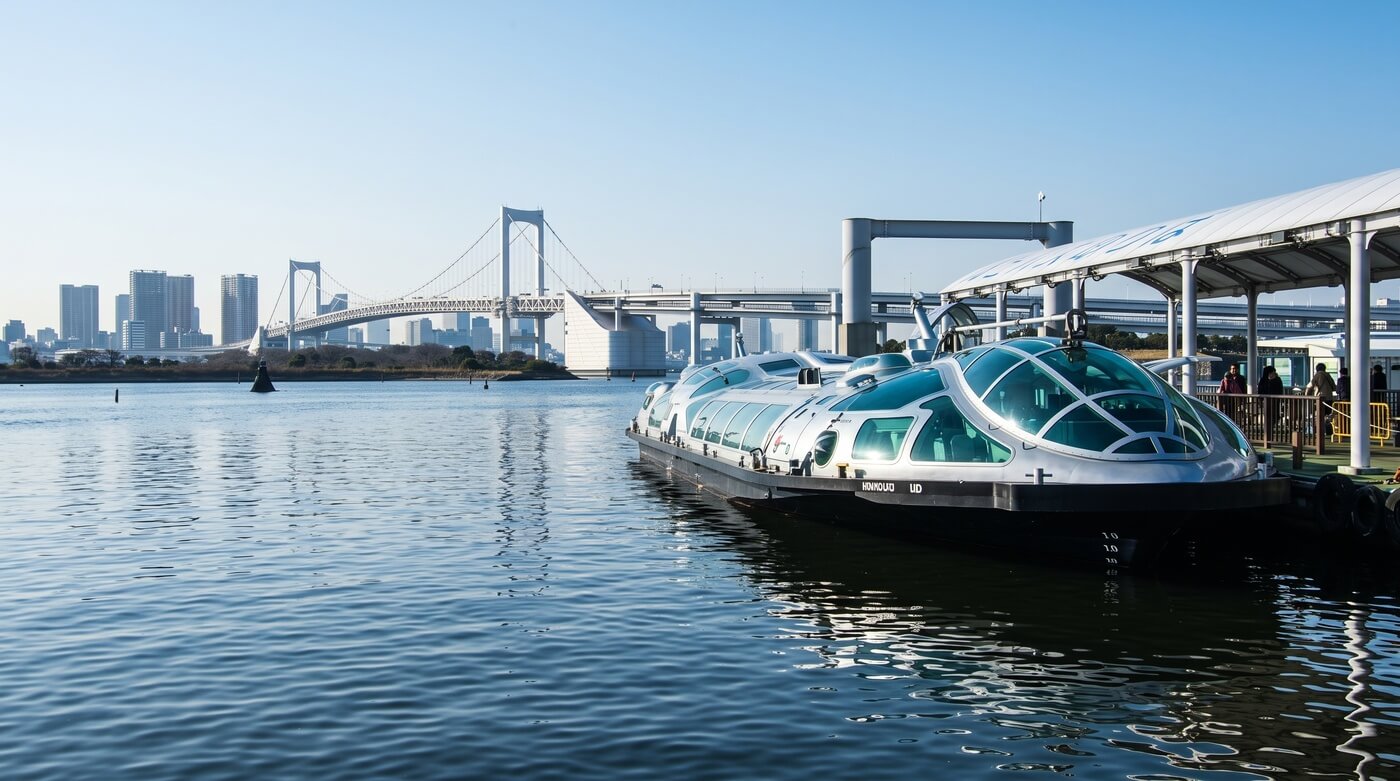
Conventional two-deck water buses used on most Sumida River and bay legs, cheaper than the Matsumoto ships.
1-1-1 Hanakawado, Taito-ku, Tokyo 111-0033
Asakusa Station (Tokyo Metro Ginza Line, 1 min); Toei Asakusa Line (3 min)
The main boarding pier, right beside Azumabashi Bridge and one minute from Asakusa Station. The building opens close to the first departure and the toilet sits outside on the lowest floor.
Directions1-1 Hamarikyu-teien, Chuo-ku, Tokyo 104-0046
Shiodome Station (Toei Oedo Line, Yurikamome); Tsukijishijo Station (Toei Oedo Line)
Disembark only from the Asakusa direction. The pier is inside the paid garden, so plan your return by train from Shiodome.
Directions2-7-104 Kaigan, Minato-ku, Tokyo 105-0022
Hinode Station (Yurikamome, 3 min); Hamamatsucho Station (JR Yamanote Line, 8 min)
The transfer hub for Odaiba on the cheaper standard Asakusa to Odaiba fare.
Directions1-4-1 Daiba, Minato-ku, Tokyo 135-0091
Odaiba-Kaihinkoen Station (Yurikamome, 5 min); Tokyo Teleport Station (Rinkai Line, 10 min)
A short walk from Aqua City and the Odaiba shoreline; the boat stops about five minutes from the station.
Directions6-4 Toyosu, Koto-ku, Tokyo 135-0061
Toyosu Station (Yurikamome, Tokyo Metro Yurakucho Line)
Served by the Himiko only, with limited sailings; check the status page before relying on it.
DirectionsFares and timetable last verified on September 2, 2026. Check the operator's live status before you travel.
Yes. The Tokyo Water Bus fare of ¥1,180 from Asakusa to Hama-rikyu Gardens already includes the garden’s ¥300 admission, and the pier sits inside the garden walls, so you step off the boat directly into the grounds. This applies only when you board at Asakusa, since Hama-rikyu is a disembark-only stop.
No. On the Tokyo Water Bus, Hama-rikyu Gardens is a disembark-only stop from the Asakusa direction, so you cannot start a trip there. Plan your onward journey by train from Shiodome or Tsukijishijo Station, both a short walk from the garden’s exits, once you have finished exploring the grounds.
No. The Tokyo Water Bus is slower and pricier than the train. Asakusa to Shimbashi takes about 14 minutes for ¥220 on the Toei Asakusa Line, while the boat to Hama-rikyu takes 35 minutes for ¥1,180. Choose the water bus for the river view and included garden entry, not for speed.
I keep coming back to one ticket on this network: Asakusa to Hama-rikyu for ¥1,180.
It is the only leg where the boat earns its price, because the ¥300 garden admission is already inside the fare and the pier sits within the garden walls, so you walk off the gangway straight into the ponds and tea house.
Ride the train instead and you save money and time, but you arrive at a street entrance rather than gliding in from the water.
The rest is honest transport with a view.
The Sumida stretch is more grey than pretty, the commentary is Japanese only and names bridges without much story, and Tokyo Skytree stays small and behind you.
Things improve past the river mouth, where Rainbow Bridge and the Odaiba shoreline give the ¥2,000 Himiko and Hotaluna run something to show.
Book those two ships ahead on weekends and in cherry blossom season, take the daytime Hama-rikyu boat for the calmest value, and check the operating status page the morning you go.