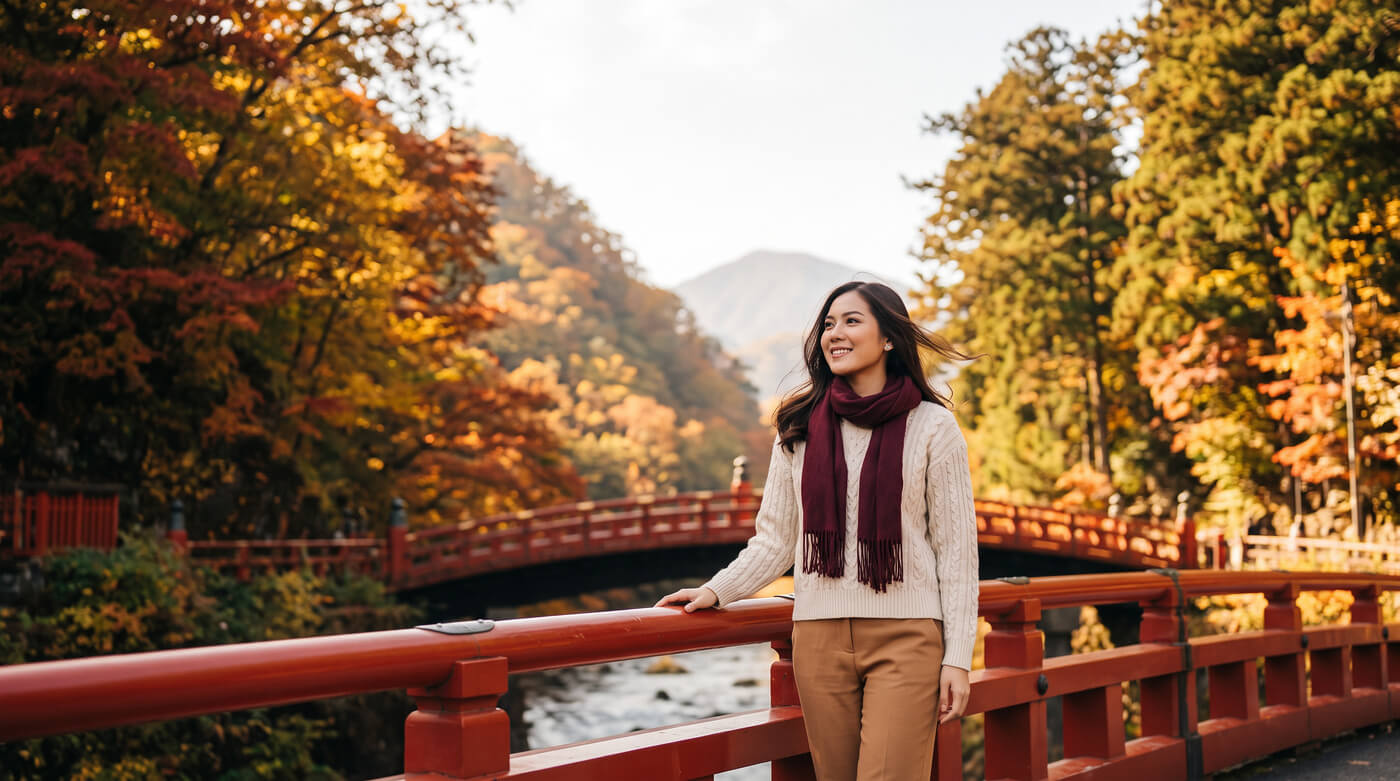



Nikko is a full day trip from Tokyo, not a half one: the Tobu Limited Express takes 1 hour 50 minutes each way from Asakusa, leaving roughly six usable hours on the ground. That's enough for Toshogu Shrine, Taiyuin Mausoleum, and Shinkyo Bridge, but not enough to add Lake Chuzenji unless you leave before 07:30. Skip the mountain and you get a relaxed day; add it and you get a 12-hour one.
Getting There (at a glance)
Tobu Limited Express SPACIA X: 1 hr 50 min, ¥2,860-3,340 (fare varies by season)
JR Limited Express Nikko (through train): 2 hr, ¥4,000 from Shinjuku, partially covered by JR Tokyo Wide Pass
Tobu Rapid/Local trains via transfer at Shimo-Imaichi: 2 hr 30 min, ¥1,400 one-way
Nikko Day Trip Itinerary from Tokyo
09:15
Shinkyo Bridge
Shinkyo Bridge
This vermilion bridge marks the historic entrance to Nikko's sacred sites and once carried only shoguns and imperial messengers across the Daiya River. Crossing it costs ¥300 and takes about 15 minutes; viewing it from the road outside is free.

09:45
Rinnoji Temple
Rinnoji Temple
The Sanbutsudo Hall houses three gilded Buddha statues over 8 meters tall, each representing a different mountain deity from Nikko's founding as a mountain worship site. Budget 30 to 40 minutes; admission runs about ¥400.
10:30
Toshogu Shrine
Toshogu Shrine
This is the mausoleum of Tokugawa Ieyasu, the shogun who unified Japan, and it carries more carved detail per building than any other shrine in the country. Budget a full 2.5 to 3 hours to see the Yomeimon Gate, the sleeping cat carving above a side gate, and the 207-step climb to the actual tomb behind the shrine.
13:15
Hippari Dako
Hippari Dako
This small yakitori and noodle counter near the shrine approach has been feeding day-trippers for decades and covers its walls in visitor business cards. Lunch runs 30 to 45 minutes and costs ¥1,000 to ¥1,500 per person.

14:15
Taiyuin Mausoleum
Taiyuin Mausoleum
This is the tomb of Ieyasu's grandson Iemitsu, built with similar craftsmanship to Toshogu but on a deliberately smaller scale out of respect for his grandfather. It draws a fraction of Toshogu's crowds. Budget 40 to 45 minutes; admission is ¥550.
15:15
Futarasan Shrine
Futarasan Shrine
Nikko's oldest shrine, founded in 782, sits just past Toshogu and holds a sacred sword said to ward off evil. Most people give it 15 to 20 minutes on the way back to the station, and admission to the grounds is free.
How to Get from Tokyo to Nikko
| Route | Line | Duration | Cost | Book |
|---|---|---|---|---|
| Tobu Limited Express SPACIA X RECOMMENDED | Tobu Railway | 1 hr 50 min | ¥2,860-3,340 | |
| JR Limited Express Nikko | JR East / Tobu Railway (through service) | 2 hr | ¥4,000 | |
| Tobu Rapid/Local Trains (transfer at Shimo-Imaichi) | Tobu Railway | 2 hr 30 min | ¥1,400 |
Day Trip Navigation Map: Tokyo → Nikko
All stops on this itinerary pinned for easy reference.
🗺️ Nikko 日光
Key Takeaways
Hide- The fastest route is Tobu, not JR. The Tobu Limited Express SPACIA X from Asakusa Station covers the trip in 1 hour 50 minutes for ¥2,860 to ¥3,340 one way, depending on the seasonal surcharge band. No transfer, no faster option exists from central Tokyo.
- Neither JR pass fully covers this trip. The nationwide Japan Rail Pass doesn't apply at all, since the fastest route runs entirely on private Tobu track. The JR Tokyo Wide Pass only covers the JR portion of the slower Shinjuku through-train, not the Tobu segment, and it's useless on the SPACIA X.
- Toshogu needs three hours, not one. The shrine complex holds over 5,000 carvings across roughly a dozen buildings, and the combination ticket for the shrine and Treasure Museum costs ¥2,400. Budgeting an hour here is the single most common planning mistake.
- Don't try to add Lake Chuzenji unless you're leaving before 07:30. Combining it with a proper Toshogu visit turns a six-hour day into a 12-hour one; most first-time visitors should skip the lake entirely.
- Realistic per-person cost lands at ¥11,000 to ¥15,000. That figure includes round-trip transport, all four entry fees (Toshogu, Rinnoji, Taiyuin, Shinkyo Bridge), lunch, and a snack, once you account for the return fare most budget estimates online quietly leave out.
- Autumn is the genuine peak, and it arrives early. Color starts around Lake Chuzenji in early October and reaches the town by late October to early November, distinctly ahead of central Tokyo's own foliage season.
- The climb to Ieyasu's tomb is worth the 207 steps. Most day-trippers skip it after exhausting their patience on the lower shrine complex, but the crowd thins by about 80% past the first switchback.
How to Plan a Nikko Day Trip From Tokyo (Route and Costs): Nikko works best as a full day trip from Tokyo, not a half one.
The Tobu Limited Express covers the distance from Asakusa in about 1 hour 50 minutes each way, and catching the earliest departure gets you roughly seven usable hours on the ground before you need to think about the last comfortable train home.
That’s enough time for Toshogu Shrine, Taiyuin Mausoleum, and Shinkyo Bridge, but it’s genuinely not enough to add Lake Chuzenji on top unless you catch the very first train out and keep moving all day.
Skip the mountain and you get a relaxed, well-paced day.
Add it in and you get a 12-hour one, with a lot less time to actually enjoy Toshogu.
We put this guide together on Tokyo Trip Guide because most Nikko write-ups make one of two mistakes: they oversell how easy it is to fit in the mountain lake, or they undersell how much time Toshogu genuinely deserves.
Both mistakes cost you daylight you can’t get back.
Essential Tokyo Travel Passes
Powered by KlookThe passes worth buying before you land — curated for first-timers.
Tokyo Amazing Pass
Unlimited subway + free entry to 40+ attractions. The only pass most visitors actually need.
Tokyo e-Pass
Attractions-only digital pass. Pair with a Metro Pass if skipping the Amazing Pass.
Tokyo Metro Pass
1 or 2-day unlimited Metro rides. Best standalone transit value if you already have an attractions pass.
JR West Kanto Area Pass
Unlimited JR trains for 1–4 days. Covers Nikko, Kamakura, Yokohama, and Himeji from Tokyo.
JR Haruka Express
NRT to Marunouchi/Shin-Tokyo in ~50 min. Best if staying in Marunouchi or heading straight to Nikko.
Nankai Rapi:t Express
NRT to Shinjuku in 34 min, reserved seat. Better if staying in Shinjuku or Ginza.
Nikko vs Kamakura, Hakone, and Kawagoe: Where It Wins and Where It Doesn’t
Nikko’s case against Kamakura, Hakone, Enoshima, Kawagoe, and Fuji comes down to one thing: shrine density per hour spent.
Toshogu is the mausoleum of Tokugawa Ieyasu, the shogun who unified Japan in 1603, and it packs more carved ornamentation into a compact hillside complex than any other single site within day-trip range of Tokyo.
Kamakura gives you a bigger, more atmospheric Buddha and a beach.
Kawagoe gives you an Edo-era streetscape you can walk in two hours.
Hakone gives you an onsen town and, on a clear day, Mount Fuji from a cable car.
None of them ask you to spend three hours studying the carvings on a single building.
That density is also the catch.
Nikko rewards people who want to look closely at one thing, not people who want to cover a lot of ground in a day.
If your idea of a good day trip is Kamakura’s mix of temple, beach, and bamboo grove all in one afternoon, Nikko will feel slow by comparison, because it genuinely is.
Skip it if you only have half a day free, if your group includes young kids who won’t sit still through a 207-step climb, or if you’re chasing a lake view and can’t leave before mid-morning.
On a tight half-day, free things to do in Tokyo will likely serve you better than a rushed shrine visit.
Go if you want one serious historical site done properly, and you don’t mind that the rest of the day is a quiet temple town rather than a variety show.
How to Get to Nikko From Tokyo: Train Routes and Fares
There are three real ways to reach Nikko from central Tokyo, plus one pass question that trips up a lot of first-time visitors.
Here’s how they compare.
The Fastest Route: Tobu SPACIA X From Asakusa
The Tobu Limited Express SPACIA X from Asakusa Station is the fastest and most comfortable option, covering the distance in about 1 hour 50 minutes with no transfer.
The fare for a standard reserved seat runs from about ¥3,140 in the off-season up to ¥3,540 during busy periods like autumn foliage season, with ¥3,340 as the typical mid-season price.
Tobu sets these fares by its own seasonal calendar rather than by the exact date you book, so check the current figure when you reserve instead of assuming the lowest number applies.
This is the pick for most travelers: direct, fast, and departing from a station most Tokyo-based visitors can reach easily on the Ginza or Asakusa subway lines.
If you’re coming from elsewhere in the city, knowing a few Tokyo metro shortcuts can shave a few minutes off that connection.
Since the SPACIA X is a shared, reserved-seat train, it’s worth reading up on Tokyo train etiquette before boarding, particularly around luggage space, phone calls, and the quiet-car norms that catch a lot of first-time riders off guard.
One thing to know before you reach the gate: Suica and Pasmo work fine for local Tobu trains and buses once you’re in Nikko, but they won’t get you onto the SPACIA X or the Limited Express Nikko on their own.
Reserved-seat limited express trains always require a separate ticket, so tapping an IC card alone isn’t enough.
The JR Option: Limited Express Nikko From Shinjuku
A second option is the JR Limited Express Nikko, a through-service train that starts on JR East track at Shinjuku and continues onto Tobu Railway rails without requiring you to change trains.
It takes about 2 hours and costs roughly ¥3,900 one way, more than the SPACIA X, since the fare combines both JR and Tobu charges over the same journey.
The bigger catch is frequency.
This isn’t an hourly service like the SPACIA X.
There’s typically only one or two Limited Express Nikko departures a day from Shinjuku, usually a single mid-morning slot, so it can genuinely eat into your day if you rely on it as your only way in.
The main reasons to choose it over the SPACIA X are a starting point near Shinjuku rather than Asakusa, or holding a rail pass that already covers it, which the next section explains.
The Budget Route: Tobu Rapid and Local Trains
The cheapest way in is Tobu’s own rapid and local trains, with a transfer at Shimo-Imaichi Station, running about 3 hours for roughly ¥1,400 one way.
It’s the least expensive option by a wide margin, but you’re trading well over an hour of extra travel time each direction, plus a platform change, for those savings.
That trade-off makes sense mainly if you’re on a strict budget or building in an overnight stay rather than a single day trip.
Does the Japan Rail Pass Cover Nikko?
This is the part that costs people real money if they get it wrong.
The nationwide Japan Rail Pass does not cover Nikko.
The fastest and most sensible route runs entirely on Tobu Railway, a private operator, and the JR Pass has no standing on that track at all.
The JR Tokyo Wide Pass is a different, regional product, and it helps more than most people expect.
It fully covers the reserved seat on the through-service Limited Express Nikko or Kinugawa train between Shinjuku and Nikko, including both the JR and Tobu portions of that specific journey, at no extra charge.
What it doesn’t cover is the SPACIA X from Asakusa, since that train runs entirely on Tobu track with no JR involvement at all.
If you’re deciding between rail products for a wider Kanto trip, our comparison of the JR Pass and the Tokyo Metro Pass breaks down which pass applies where, and Nikko is a good example of how easily the two get confused.
Plan for the return trip too.
The last SPACIA X of the day typically departs Nikko for Asakusa in the late afternoon, usually somewhere around 17:45, arriving back in Asakusa by roughly 19:30.
Don’t count on a later option: Tobu adjusts the exact departure slightly by season and by day of the week, so confirm the current time on the departure board as soon as you arrive rather than leaving it until the end of the day.
- eSIM vs Pocket WiFi for Japan: Which Should You Get for Tokyo?
- Tokyo Coworking Spaces: The Complete Digital Nomad Guide
- Tokyo Izakaya Guide: How to Order and Drink Like a Local
- Tokyo Solo Female Travel: Complete Safety Tips & Honest Advice
- Tokyo Nightlife: Roppongi vs. Shinjuku vs. Shibuya Compared
- Tokyo Convenience Store Food Under ¥500: The Complete Budget Meal Guide
- Tokyo Cheap Eats Under ¥1,000: The Local Budget Food Guide
- Tokyo Capsule Hotels vs Hostels: The Complete Budget Guide
- Tokyo Backpacker Guide: Budget Hostels, Street Food & Free Adventures
- Tokyo 100 Yen Store Guide: Best Daiso & Seria Finds
When Is the Best Time to Visit Nikko?
The best time to visit Nikko is autumn, running from early October at Lake Chuzenji’s higher elevation to late October through early November down in the town itself, as the color works its way downhill over the course of about a month.
That timing gap is worth knowing if you’re coordinating a Nikko trip around a broader Tokyo autumn itinerary, since the two peaks rarely land in the same week.
If you’re also chasing Tokyo’s best autumn foliage spots within the city itself, the timing rarely lines up with Nikko’s, so it’s worth checking both calendars before you fix a date.
Outside of autumn, Nikko is still worth visiting, just not at its absolute best.
Summer brings heat and humidity to the shrine complex, with none of the mountain relief you’d get at Lake Chuzenji unless you make the extra bus trip up.
Winter drops snow onto Toshogu’s roofs, which photographs beautifully but also adds ice to the stone steps up to Ieyasu’s tomb, so good footwear matters even more than usual.
If autumn dates don’t work for your trip, plan around a weekday instead of chasing a specific season.
Toshogu’s courtyards get genuinely tight on weekend mornings during peak color, and worse during national holiday stretches.
It’s worth knowing how to work around Golden Week crowds in Tokyo, since that same crowding logic applies just as directly to Nikko’s shrine courtyards.
A Full Day at Toshogu: From the Shrine Approach to the Inner Tomb
Here’s how the day actually unfolds once you step off the train, laid out in the order you’ll walk it: station, bridge, temple, then the shrine itself.
Treat the times below as a flexible guide you can shift earlier or later depending on when your train actually gets in, not a schedule you need to hit to the minute.
Shinkyo Bridge and Rinnoji Temple First
Nikko Station sits about 2 km from Toshogu, roughly a 30-minute walk uphill along the shrine approach, or about a 10-minute ride on the Tobu World Heritage Area loop bus.
The bus costs about ¥320 for a single ride, or ¥600 for an all-day pass covering every stop between the station and the shrine district, which is worth it if you’re planning to walk one way and ride the other.
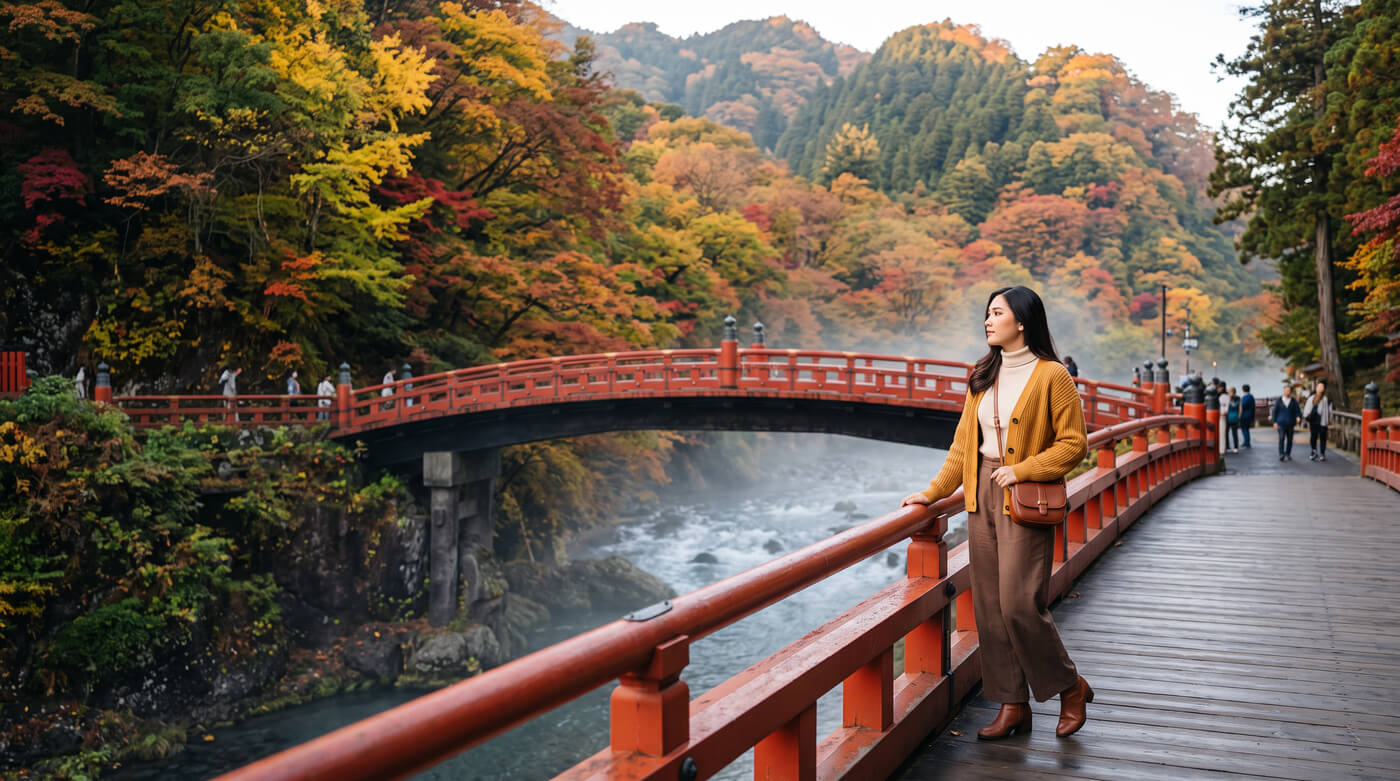
Start at Shinkyo Bridge, the vermilion span that marks the historic entrance to Nikko’s sacred district and once carried only shoguns and imperial messengers across the Daiya River.
Crossing it costs ¥300 and takes about 15 minutes.
If you’re short on time, the view from the ordinary road bridge right next to it is nearly identical and completely free.
Budget around 30 minutes here, including the short walk or bus ride up from the station once your train arrives.
From the bridge, the path climbs toward Rinnoji Temple, where the Sanbutsudo Hall holds three gilded Buddha statues over 8 meters tall, each representing one of the mountain deities that made Nikko a site of mountain worship centuries before Toshogu ever existed.
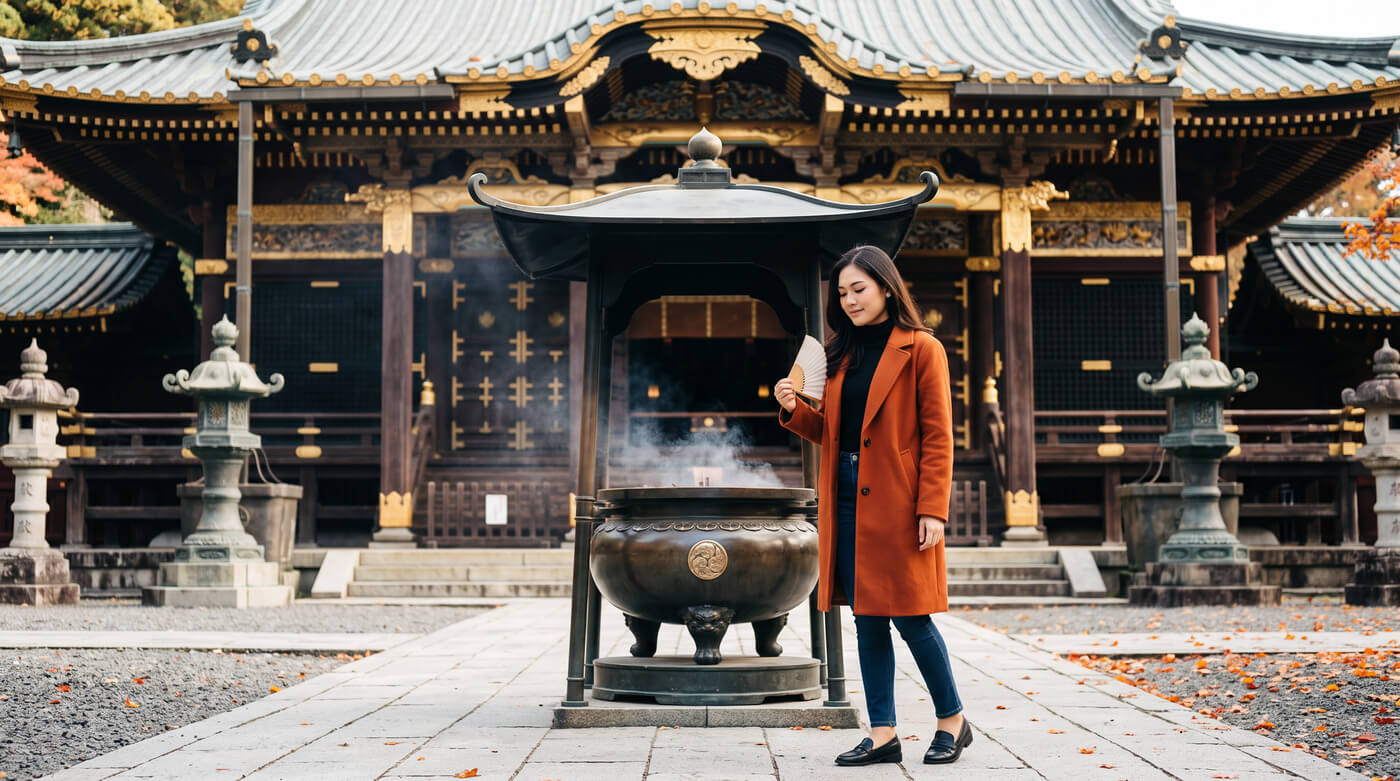
Admission runs about ¥400, and 30 to 40 minutes covers it comfortably.
Do this before Toshogu rather than after, both because it sits directly on the path and because Toshogu’s crowds and detail will otherwise tempt you to rush past a genuinely old and worthwhile temple hall.
Inside Toshogu: Tickets, Timing, and What to See
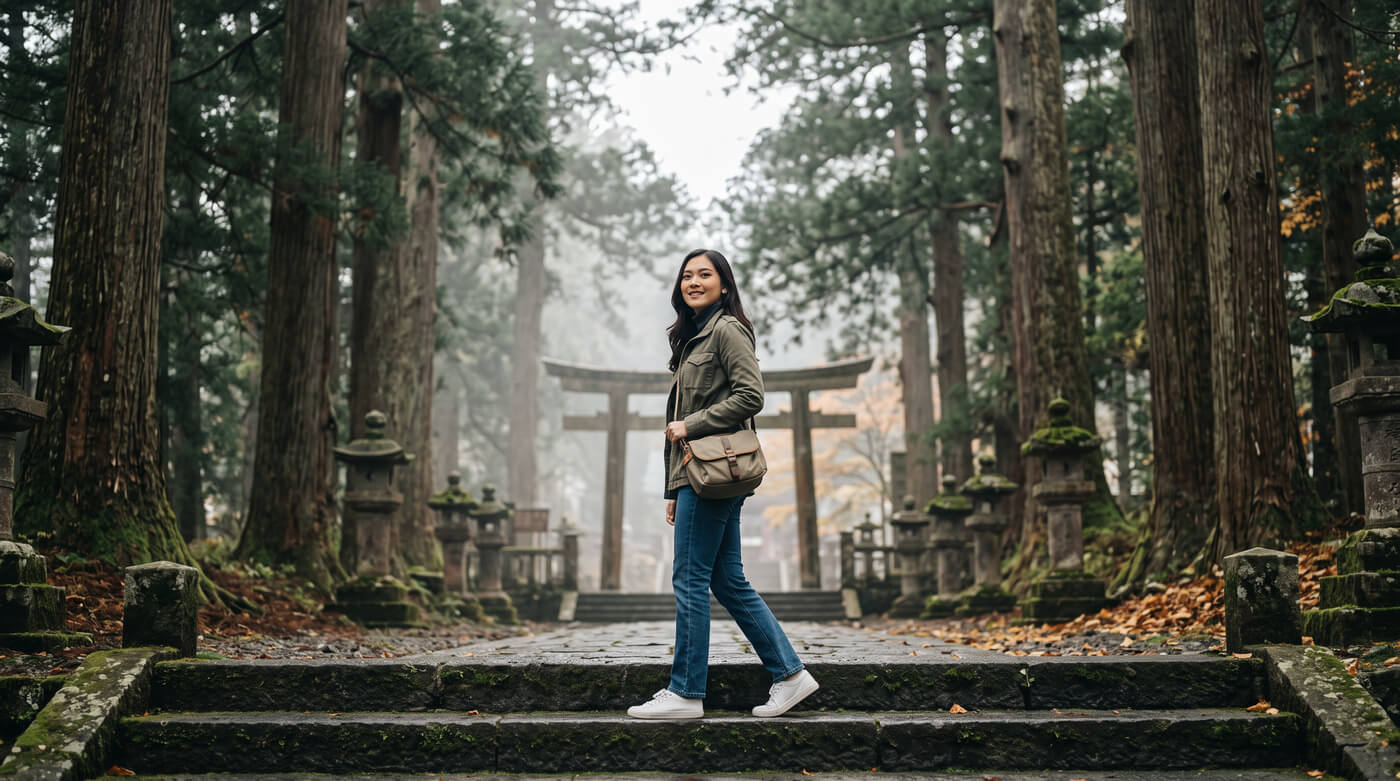
Toshogu itself is the reason you made this trip, and it deserves 2.5 to 3 hours, not the single hour most first-time visitors budget for it.
Shrine-only entry costs ¥1,600 for adults and ¥550 for elementary-age children, with younger kids admitted free.
The combination ticket covering the shrine and the Treasure Museum costs ¥2,400, only ¥400 more than the shrine-only adult ticket, and the museum hall is air-conditioned and nearly empty most mornings, which makes it a genuinely smart place to cool down partway through your visit.
One thing worth knowing before you get to the counter: a combined ticket covering Toshogu, Rinnoji, and Taiyuin together used to be available, but it’s since been discontinued.
Budget for each site’s admission separately rather than asking for a bundle that no longer exists.
Toshogu’s opening hours shift by season.
Expect 8:00 to 17:00, with last entry at 16:30, from April through October, and 8:00 to 16:00, with last entry at 15:30, from November through March.
Build your afternoon around whichever closing time applies to your visit date, since arriving even 30 minutes before closing isn’t enough time to see the upper shrine properly.
Inside the shrine grounds, look for three things specifically.
The first is the Yomeimon Gate, covered in over 500 individual carvings and the single most photographed structure in the complex.
The second is the sleeping cat carving above a small side gate, tiny compared to everything around it, but the one every guide points out.
The third is the roughly 207 stone steps leading up to Ieyasu’s actual tomb behind the main shrine buildings, which most day-trippers skip because they’ve already used up their patience on the lower complex.
Climb them anyway.
The crowd thins by about 80% past the first switchback, and the tomb itself is a quiet stone pagoda with none of the gilding you saw below.
Plan to be at Toshogu itself from roughly 11:00 to 13:45.
That block, plus the time spent at Shinkyo Bridge and Rinnoji beforehand, accounts for close to four hours of your day in Nikko, which is the real argument for skipping Lake Chuzenji rather than a vague claim that it’s simply too far.
Lunch at Hippari Dako, and What You’re Missing by Eating in Tokyo Instead

Hippari Dako, a small yakitori and noodle counter near the shrine approach, has been feeding day-trippers for decades and covers its walls in business cards left by visitors over the years.
It seats only seven or eight people at most, so aim to arrive by early afternoon, ideally before 14:00, if you want a seat rather than a wait.
It’s cash-friendly, which matters since not every restaurant in Nikko takes cards, and it’s worth knowing that its hours can shift or it can close without much notice on quieter days.
Treat any posted opening times as a general guide rather than a guarantee.
Lunch here runs ¥1,000 to ¥1,500 per person, similar to a casual lunch set back in Tokyo, so you’re not paying a tourist premium just for the location.
What you’d actually be missing by eating in Tokyo instead is Nikko’s yuba, a fresh tofu skin the town has produced since Buddhist monks needed a protein source that didn’t involve killing anything.
It’s served here in simple sets alongside soba, and it’s a genuine regional specialty rather than a rebranded Tokyo dish.
You won’t find it on most central Tokyo lunch menus at all.
How Much Does a Nikko Day Trip Cost?
A realistic Nikko day trip runs about ¥11,500 to ¥15,000 per person, and that figure only holds if you skip Lake Chuzenji.
Round-trip transport on the SPACIA X runs roughly ¥6,300 to ¥7,100 depending on which seasonal surcharge band your travel date falls into.
Entry fees add up fast on top of that: ¥2,400 for the Toshogu and Treasure Museum combo, ¥400 for Rinnoji, ¥550 for Taiyuin, and ¥300 for Shinkyo Bridge, a total of ¥3,650 in admission alone.
Lunch and a snack (a box of yuba manju to take home is a common choice) add another ¥1,500 to ¥2,000.
Add those up and you’re closer to ¥11,500 to ¥12,700 before any souvenirs, which is one reason the low end of most online Nikko budget estimates ends up looking unrealistic: a lot of them leave the return fare out entirely.
If you’re looking to trim that number, discount passes for Tokyo attractions exist for plenty of sights around the city, even though none of them apply directly to Nikko’s admission fees.
The real savings here come from taking the budget train instead of the SPACIA X, or skipping the Treasure Museum add-on and sticking with shrine-only entry.
If you’re building a broader Tokyo trip budget around this day, our Tokyo daily budget breakdown is a useful baseline for comparison, though Nikko’s entry fees push this specific day well above a typical Tokyo sightseeing day.
Before You Leave: Timing, Packing, and the Mistake Everyone Makes
Catch a SPACIA X departing Asakusa by 07:50 to 08:00 if you want the fullest possible day on the ground and a comfortable buffer before the last convenient evening return.
Wear shoes you can climb stone steps in.
The path to Ieyasu’s tomb is uneven in places, and sandals are a bad idea on wet stone after rain.
If you’re visiting between December and February, packing for Tokyo’s winter cold matters even more here than in central Tokyo.
Nikko sits at a higher elevation than the city, and the temperature drop is noticeable the moment you step off the train.
Bring cash for Hippari Dako and for the Shinkyo Bridge ticket counter, which doesn’t take cards.
The mistake almost everyone makes isn’t about the trains at all.
It’s about time allocation inside Toshogu itself.
People budget an hour for “the shrine” the way they’d budget an hour for a single museum wing, not realizing Toshogu is closer to eight distinct structures, each worth ten to twenty minutes of attention on its own.
Cutting the visit short here doesn’t buy you time for Lake Chuzenji.
It just means you saw Toshogu badly.
If you genuinely want both Toshogu and the lake in one day, the honest fix is catching an earlier train, not shortening the shrine visit.
Accessibility is limited across the complex.
The 207 steps to Ieyasu’s tomb have no elevator alternative, and several of the shrine’s inner courtyards involve stone steps without ramps.
Toshogu’s lower level, Rinnoji, and Shinkyo Bridge are manageable for most mobility levels, but the climb to the tomb itself is not.
Is a Nikko Day Trip From Tokyo Worth It?
Yes, if you want one dense, historically specific site and don’t mind a quiet town around it.
Nikko rewards travelers who value depth over variety.
History-minded travelers, people who genuinely prefer depth over variety, and anyone building a trip that already includes Kamakura’s temples and wants a contrasting, more elaborate shrine complex will get real value here.
Couples and solo travelers with a full day free are the best fit.
The walking and stair climbing are moderate rather than strenuous, but there’s no real shortcut through Toshogu that still counts as actually seeing it.
Skip it if you have young kids who tire quickly of stairs, if you only have half a day free in Tokyo, or if a lake view and mountain air matter more to you than shrine carvings.
Hakone or Kawaguchiko will serve that particular want better in roughly the same amount of travel time.
If you’re still deciding between Tokyo’s day trips generally, our Tokyo day trips archive lays out the full field so you can compare Nikko against Kamakura, Hakone, and the rest before committing a full day to any single one of them.
Frequently Asked Questions (FAQs)
Is Nikko worth a day trip from Tokyo?
Nikko is worth a full day trip from Tokyo, but only if you commit to a full one. The Tobu Limited Express takes 1 hour 50 minutes each way from Asakusa, which leaves roughly six usable hours on the ground once you factor in the walk from the station.
That’s enough for the Toshogu Shrine complex, Shinkyo Bridge, and Taiyuin Mausoleum. It is not enough to also reach Lake Chuzenji unless you leave Tokyo before 07:30.
How long do you need in Nikko?
Budget a minimum of six hours in Nikko itself, not counting the round trip. Toshogu Shrine alone deserves 2.5 to 3 hours if you want to see the Yomeimon Gate, the sleeping cat carving, and climb to Ieyasu’s tomb.
Add Taiyuin Mausoleum and Shinkyo Bridge and you’re at a realistic six to seven hour day, which is why most people skip Lake Chuzenji entirely on a first visit.
Can you visit Nikko and Lake Chuzenji in one day?
Technically yes, but it turns a relaxed day into a rushed one. Lake Chuzenji and Kegon Falls sit another 50 minutes by bus beyond the town, and the round trip alone eats close to two hours.
If you want both, leave Asakusa on the first Limited Express of the day and accept that Toshogu gets a tighter two hours instead of three.
Does the Japan Rail Pass cover Nikko?
No. The nationwide Japan Rail Pass does not cover Nikko because the fastest and most common route runs on Tobu Railway, a private operator, from Asakusa Station.
The JR Tokyo Wide Pass is a different product and does partially help: it covers the JR portion of the through-service Limited Express Nikko train from Shinjuku, plus the reserved seat fee, but you still need to buy into a route that touches Tobu track for the Nikko leg itself.
What is the fastest way to get to Nikko from Tokyo?
The Tobu Limited Express SPACIA X from Asakusa Station is the fastest option, covering the distance in about 1 hour 50 minutes with no transfer.
A JR Limited Express Nikko service also runs from Shinjuku, but it takes closer to 2 hours and costs more once you add the Tobu portion of the fare.