National Museum of Nature and Science
Japan’s largest comprehensive science museum showcasing cutting-edge technology, dinosaur skeletons, fossils, and interactive exhibits in Ueno Park—the perfect "wow" spot for curious minds and families.






You’re about to enter a place where an ordinary museum visit becomes an expedition through millions of years of history, the cosmos, and Japan’s technological brilliance.
The Tokyo National Museum of Nature and Science isn’t some dusty fossil display—it’s Japan’s largest science museum, featuring an impressive 25,000 exhibits that span everything from massive dinosaurs and a full-scale blue whale (genuinely fascinating for all ages!) to a piece of the famous Nantan meteorite.
Don’t be surprised when you catch yourself staring at preserved icons like Hachikō and unusual geological specimens.
For those who appreciate hands-on learning, prepare to explore the World Gallery and Japan Gallery, where each corner reveals a fresh perspective on the cosmos and makes you think “my science classes should have included field trips here.”
If you imagine this as a brief visit, reconsider… You could comfortably spend a full day exploring two large connected buildings, examining the progression of life, studying futuristic innovations, or experiencing The Theater36o—an enveloping dome that might change your opinion on 3D cinema.
There’s also an outdoor botanical garden offering a glimpse of Japan’s plant variety (and providing justification for that extra coffee break).
Admission prices are reasonable—most tickets cost around 630 yen, and visitors traveling with family or alone consistently praise the exhibits. English labels can be somewhat inconsistent, but scientific Latin remains universal (though actual biologists may have different opinions on this matter).
Inside Tokyo’s National Museum of Nature and Science: Everything You Need to Know – Ever wondered where Tokyoites take their kids when they want to blow their minds with science?
The Kokuritsu Kagaku Hakubutsukan—Tokyo National Museum of Nature and Science—sits in Ueno Park like a massive treasure chest filled with everything from meteorite fragments to the preserved body of Japan’s most famous dog.
This isn’t some dusty repository where you shuffle past glass cases fighting sleep.
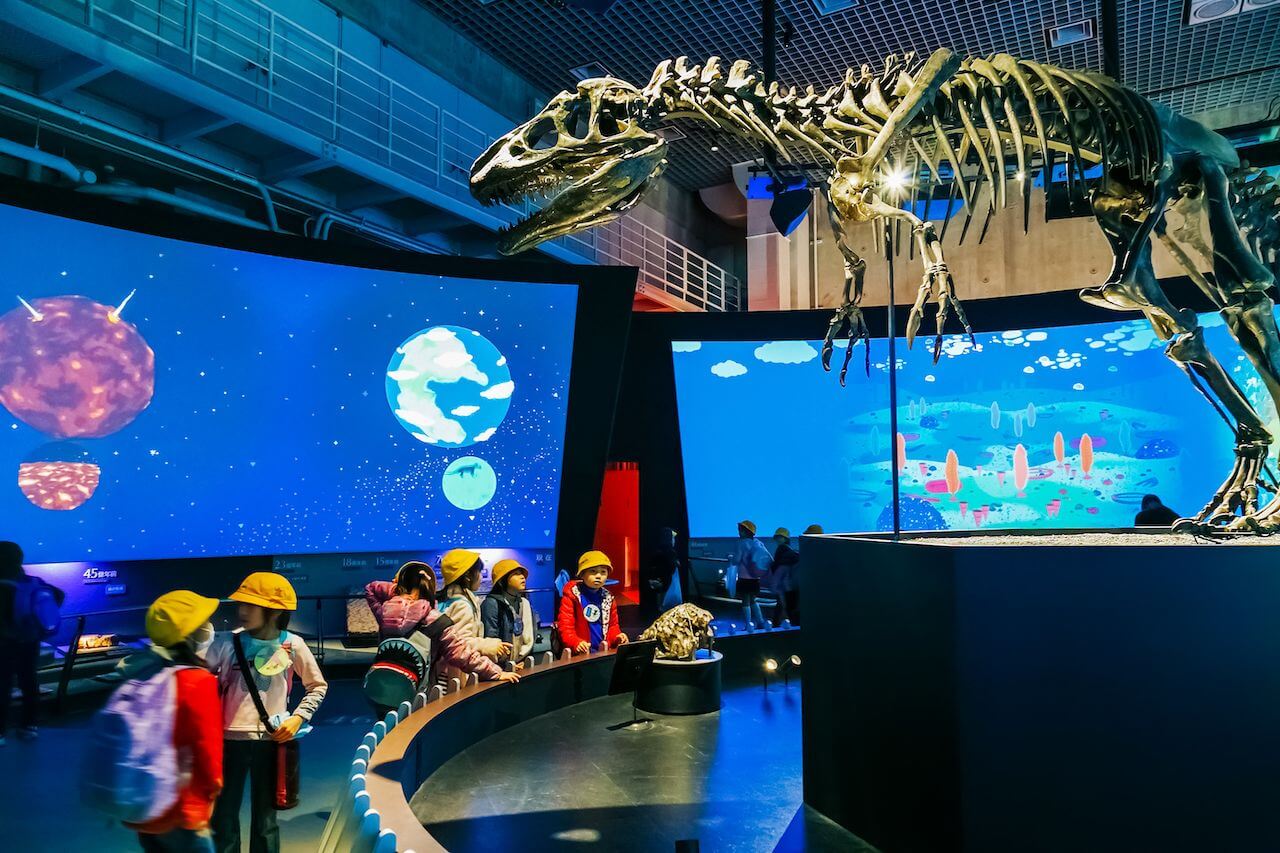
It’s Japan’s oldest and largest science museum, where a life-sized blue whale model hangs suspended above your head, where you can stand eye-to-socket with a Tyrannosaurus rex, and where 25,000 exhibits span from the birth of the universe to the cutting edge of modern technology.
For just ¥630, you get access to what many seasoned museum-goers call one of the finest natural history collections in Asia.
National Museum of Nature and Science: Two Buildings, Infinite Curiosity
The museum complex sprawls across two architecturally distinct buildings connected by walkways—the Japan Gallery (Nihonkan) and the Global Gallery (Chikyūkan).
Together, they occupy a prime position in Ueno Park, Tokyo’s cultural heartland where museums cluster like stars in a constellation.
You’re looking at roughly 14,000 square meters of exhibition space packed across multiple floors, each dedicated to different slices of scientific knowledge.
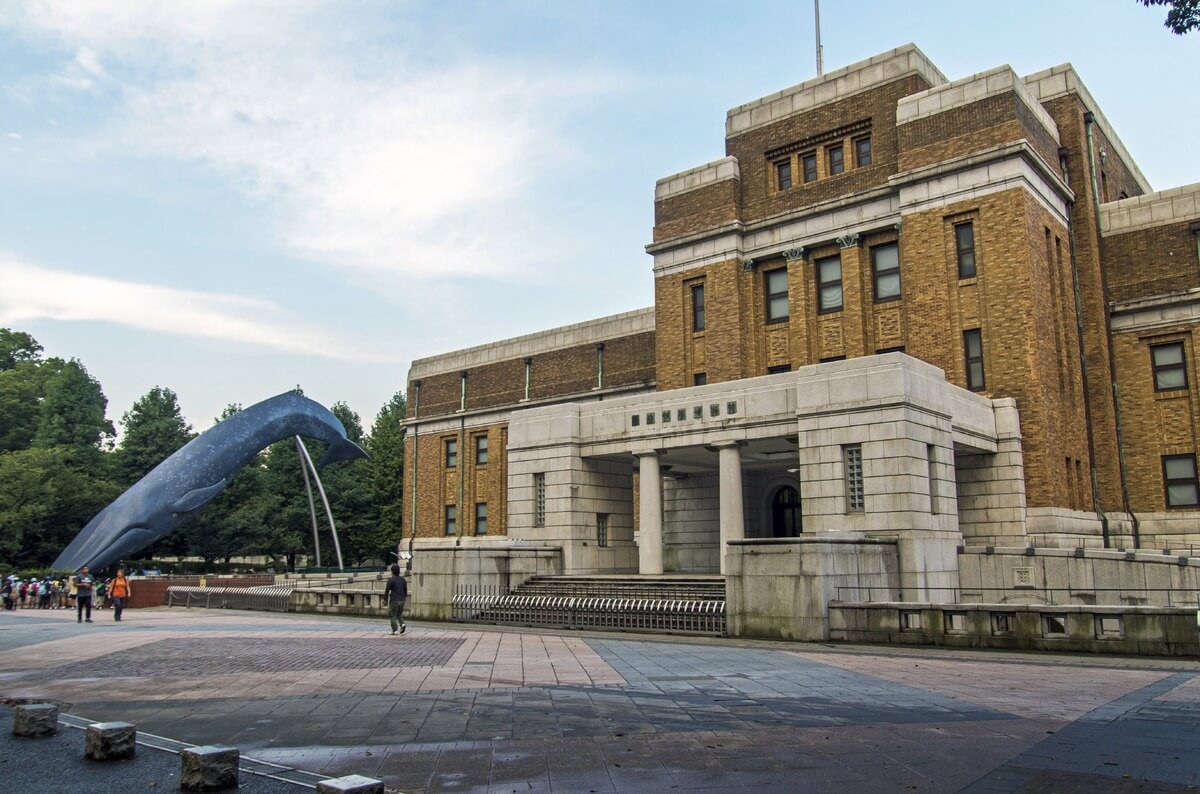
The Japan Gallery, housed in a Renaissance-style building from 1931, focuses exclusively on the Japanese archipelago’s natural history and the relationship between its people and environment.
The Global Gallery, a more modern structure, takes a planetary perspective—tracking evolution, biodiversity, and scientific achievement across continents and eons.
Most visitors spend 3-4 hours minimum exploring both buildings, though dedicated science enthusiasts and families with endlessly curious children often find themselves still wandering exhibits when closing time approaches.
What sets this museum apart from similar institutions worldwide?
The sheer density of its collection, displayed with a distinctly Japanese attention to detail and spatial creativity.
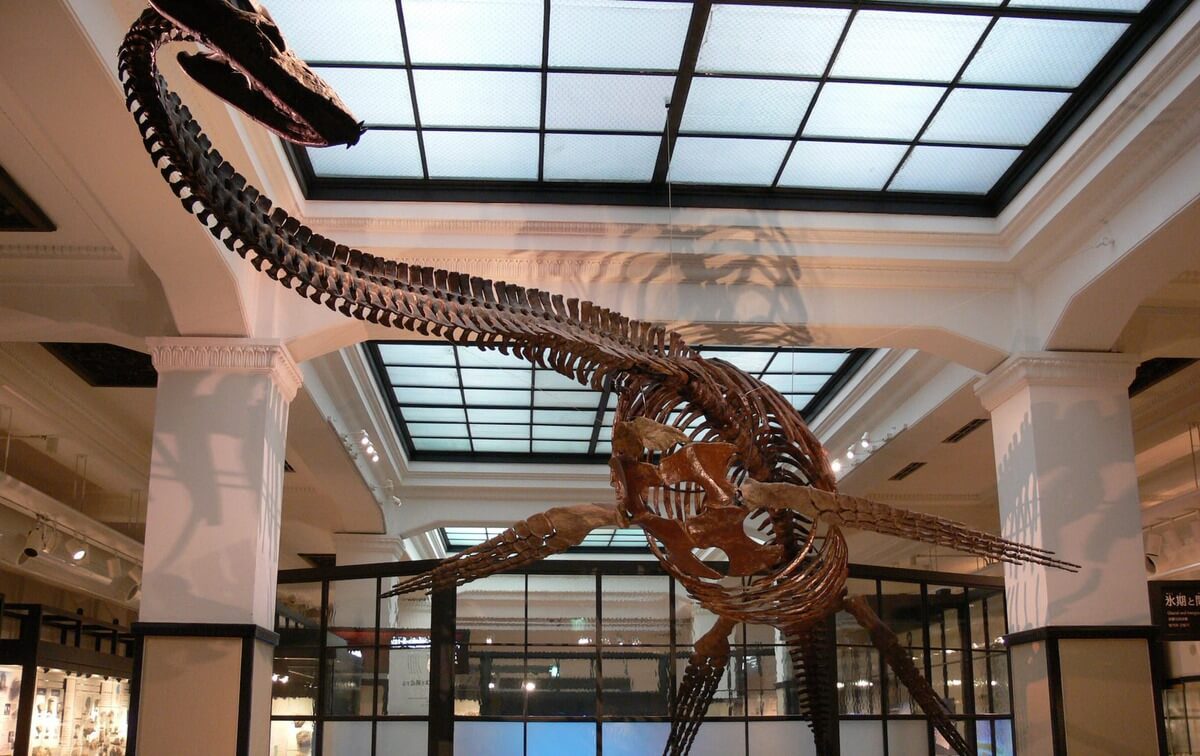
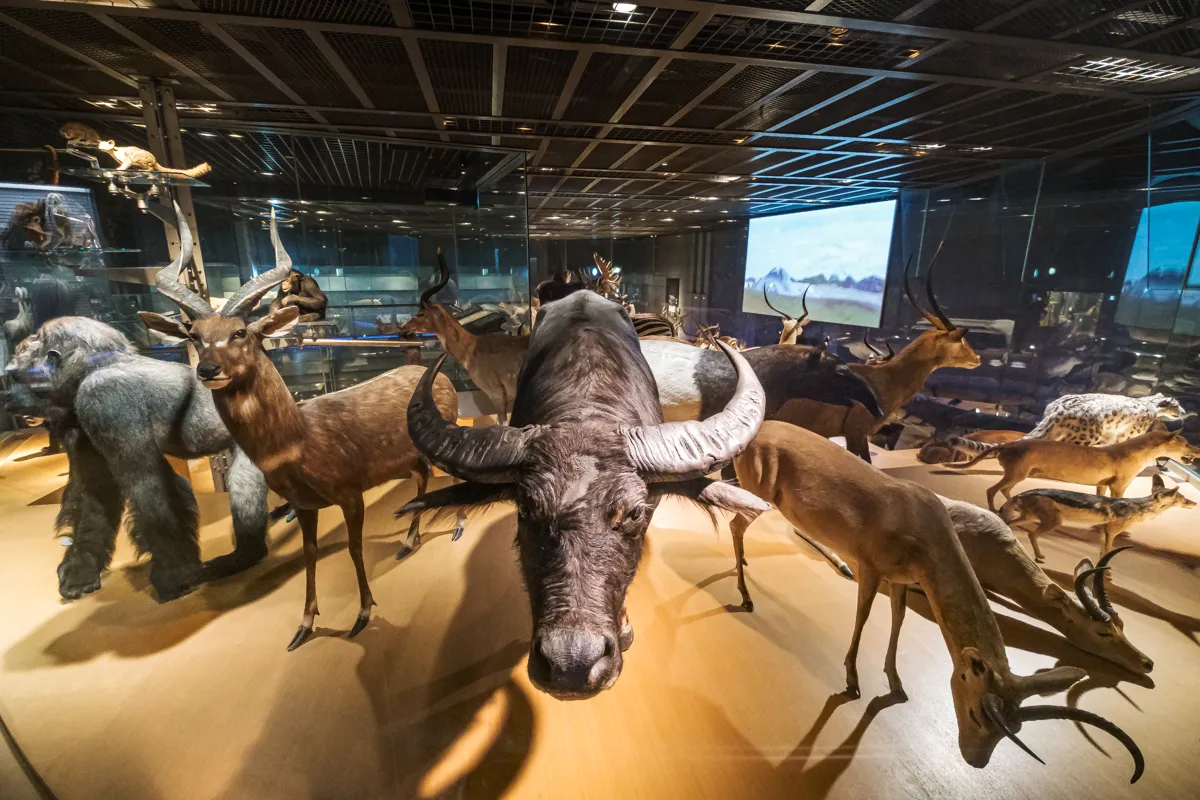
Taxidermied animals stack artfully from floor to ceiling. Fossil displays hang dramatically from above.
Interactive digital screens coexist peacefully with century-old specimens, creating a dialogue between past and present that feels both respectful and dynamic.
Location & Access: Finding Your Way to Ueno Park
The museum occupies 7-20 Uenokoen, Taito City, Tokyo 110-8718, positioned on the northern side of Ueno Park.
If you’re navigating by smartphone, the GPS coordinates 35.716880, 139.776517 will drop you right at the entrance.
The location couldn’t be more convenient—Ueno serves as one of Tokyo’s major transportation hubs, making this museum accessible from virtually anywhere in the metropolitan area.
Getting There by Train
JR Ueno Station serves as your primary gateway, specifically the Park Exit (Koen-guchi) on the west side of the station.
From there, it’s a straightforward 5-minute walk through the park grounds, following clearly marked signage in both Japanese and English.
The route involves some gentle uphill walking—nothing strenuous, but worth noting if you’re traveling with mobility considerations.
Alternative train options include:
- Tokyo Metro Ueno Station (Ginza Line or Hibiya Line): 10-minute walk from Exit 7
- Keisei Ueno Station: 10-minute walk, particularly convenient if you’re arriving from Narita Airport via the Keisei Skyliner
- Nezu Station (Chiyoda Line): 15-minute walk, quieter approach through a charming neighborhood
The museum sits within easy walking distance of several other cultural institutions, including the Tokyo National Museum, National Museum of Western Art, and Ueno Zoo.
If you’re planning a museum-hopping day, Ueno Park offers an unbeatable concentration of options.
By Bus and Taxi
Bus routes 上58 and 上60 stop near the museum, though most visitors find trains more convenient.
Taxis can drop you at the museum’s front entrance if you’re coming from hotels in central Tokyo—expect to pay ¥1,500-¥2,500 depending on your starting point and traffic conditions.
The museum provides on-site paid parking for those driving, though parking in central Tokyo tends to be expensive and spaces fill quickly on weekends.
Public transportation remains your most practical choice unless you have specific mobility needs.
What to See & Do: Navigating Two Worlds of Discovery
Walking through the museum’s entrance, you’ll face a choice that travelers either love or find slightly overwhelming: which building to tackle first?
There’s no wrong answer, but understanding what each offers helps you prioritize based on your interests and energy levels.
The Japan Gallery: An Archipelago’s Story
The Nihonkan occupies the museum’s original 1931 building, a beautiful example of Renaissance Revival architecture that’s been meticulously maintained and modernized inside.
This gallery tells the story of the Japanese islands themselves—how they formed, what lives on them, and how humans have interacted with this unique environment for millennia.
The B1F level plunges you into geological deep time, examining the tectonic forces that created Japan’s volcanic archipelago.
You’ll find rock samples, seismic models, and explanations of why Japan experiences so many earthquakes—information that adds sobering context if you’ve felt a tremor during your visit.
The 1F focuses on Japan’s biodiversity, showcasing how climate and geography create distinct ecosystems from subarctic Hokkaido to subtropical Okinawa.
Here’s where the taxidermy collection makes its first major impression.
Specimens are arranged not in traditional museum rows but in creative, almost artistic configurations—animals stacked vertically, suspended mid-leap, or positioned to show natural behaviors.
You’ll see Japanese serow, tanuki, native birds, and marine life, all preserved with remarkable attention to detail.
The displays aren’t just scientifically informative; they’re genuinely beautiful.
The 2F and 3F trace human history in Japan, from Jomon-period pottery to modern agricultural techniques.
This section includes anthropological exhibits on Ainu culture, traditional Japanese relationships with nature, and how the Japanese people adapted to their island environment’s challenges and opportunities.
Some visitors find this cultural-natural history blend particularly fascinating—it’s not often you see museums integrate human and natural history so seamlessly.
The Global Gallery: Planet Earth and Beyond
The Chikyūkan takes a much broader perspective, and this is where the museum truly flexes its world-class collection.
The building’s modern architecture allows for dramatic display techniques—soaring atriums where whale models swim overhead, multi-story fossil displays, and technology-enhanced exhibits that would be impossible in the historic Japan Gallery structure.
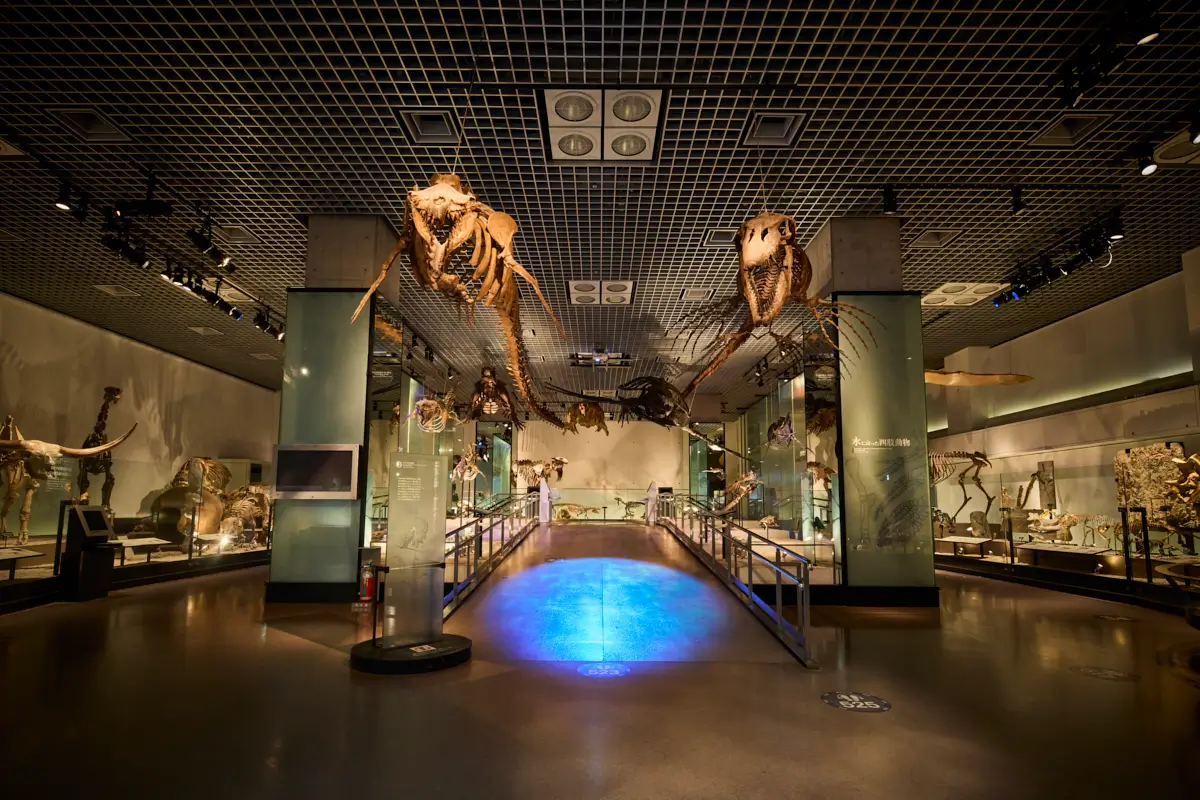
B3F houses the dinosaur collection, which consistently ranks as the most popular section among visitors of all ages.
We’re not talking about a handful of bones mounted on frames.
This is an extensive collection of genuine fossils, casts of famous specimens, and complete skeletal reconstructions that include Tyrannosaurus rex, Triceratops, and several dinosaurs discovered in Asia that Western museums rarely display.
The fossils hang from ceilings, emerge from walls, and are positioned at angles that create dramatic shadows and viewing perspectives.
Kids go absolutely wild here—expect excited shouting and lots of parents trying to keep up with their suddenly-expert-on-Cretaceous-period offspring.
Even adults who thought they’d outgrown dinosaur enthusiasm find themselves saying “wow” more than they expected.
One exhibit allows you to compare your height against various dinosaurs, a humbling reminder of just how massive these creatures were.
B2F explores the diversity of life on Earth through the “History of Life” exhibit.
This floor traces evolution from single-celled organisms through the major extinction events to the present day.
The centerpiece is a spectacular “Tree of Life” installation that many visitors describe as the best evolution exhibit they’ve encountered in any museum worldwide.
Interactive touchscreens let you explore branches of the evolutionary tree, seeing how different species relate to each other.
B1F and 1F focus on the natural world today—ecosystems, climate, biodiversity, and environmental challenges.
You’ll find everything from rainforest dioramas to Arctic displays, each populated with preserved specimens shown in naturalistic contexts.
The attention to detail in these habitat recreations is extraordinary—not just the animals themselves, but the plants, insects, even the quality of light attempts to recreate what you’d experience in nature.
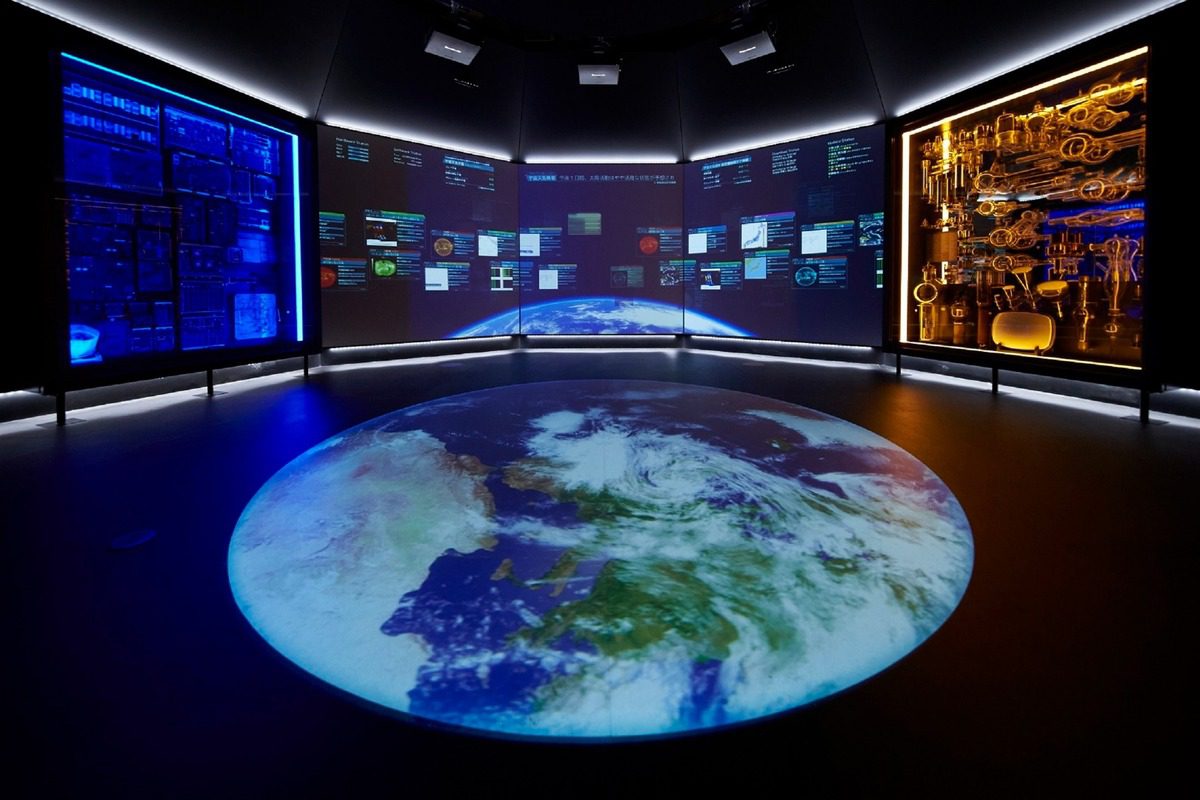
2F and 3F shift focus to science and technology, showcasing human innovation from basic tools to space exploration.
This is where you’ll find models of satellites, explanations of particle physics, displays on renewable energy, and interactive experiments that let you engage with scientific principles hands-on.
The exhibits balance accessibility with depth—a child can enjoy pushing buttons and watching reactions, while adults can dive into detailed explanations of the underlying science.
One particularly popular attraction on 3F is the Kompasu area, an interactive space where science communicators demonstrate experiments and answer questions throughout the day.
If you read Japanese or have translation assistance, this adds valuable context to what you’re seeing elsewhere in the museum.
Theater 360: Immersive Science Storytelling
Included with your general admission, the Theater 360 (Shiahtā Sanbyakurokujū) offers a viewing experience that deserves its own dedicated time slot in your visit.
This spherical theater wraps you in 360-degree imagery—screens above, below, and all around—creating genuinely immersive presentations on topics ranging from deep-sea exploration to the birth of the solar system.
The theater runs different programs throughout the day, each lasting approximately 20-30 minutes.
You can enter as many showings as you want with your admission ticket, though popular times fill up quickly.
The production quality rivals anything you’d see in a planetarium or IMAX theater, and even visitors who typically dismiss 3D movies as gimmicky admit this technology serves the content beautifully.
Programs rotate seasonally, so checking the museum’s schedule before your visit lets you plan around presentations that interest you most.
English narration isn’t available for all programs, but the visual storytelling is so strong that language barriers become less significant than you might expect.
Hachikō and Cultural Icons
Yes, that Hachikō—the Akita dog whose story of loyalty waiting for his deceased owner at Shibuya Station has become a global symbol of devotion.
His preserved body is displayed in the Japan Gallery, and it’s become one of the museum’s most photographed exhibits.
The taxidermy was performed shortly after Hachikō’s death in 1935, making this a genuine historical artifact as well as a moving memorial.
You’ll also find other culturally significant animals, including specimens that appeared in early Japanese natural history studies and animals that hold special places in Japanese folklore and tradition.
The museum treats these not just as biological specimens but as cultural touchstones, adding historical and emotional dimensions to the scientific presentation.
Facilities & Amenities: Practical Considerations
The museum balances world-class scientific collections with visitor comfort, though some amenities differ from what you might expect at major Western museums.
Understanding what’s available—and what’s not—helps you plan accordingly.
Dining and Refreshments
Here’s the situation that surprises some visitors: there’s no full-service restaurant within the museum complex.
You’ll find vending machines offering drinks and light snacks on multiple floors, but if you’re planning a full day visit, you have three main options:
- Bring your own food: Eating isn’t prohibited in designated rest areas, and many Japanese visitors pack obentō (boxed lunches)
- Exit and return: Your admission ticket allows re-entry the same day, so you can venture into Ueno Park where numerous cafes and restaurants cluster, or head to nearby Ameya-yokochō for street food
- Eat before arriving: Several cafes and restaurants sit within 5 minutes of the museum entrance
The museum shop sells packaged snacks and drinks, though at typical museum markup pricing.
If you’re traveling with children or know you’ll need sustenance during a long visit, bringing your own food is the most practical and economical choice.
Restrooms and Accessibility
Wheelchair-accessible restrooms are available on multiple floors in both buildings, clearly marked with international accessibility symbols.
The museum provides wheelchairs for loan at the entrance (no reservation required, subject to availability).
Elevators connect all floors, though some older sections of the Japan Gallery have narrower corridors that can feel cramped when crowded.
Braille signage and tactile exhibits exist throughout the museum, though the extent of accessibility features varies between the newer Global Gallery and historic Japan Gallery.
If you have specific accessibility needs, calling ahead at +81-50-5541-8600 ensures staff can prepare appropriate assistance.
Museum Shop and Library
The museum shop, located near the main entrance, stocks an impressive range of science-themed merchandise—from dinosaur models and mineral samples to books, educational toys, and museum-exclusive souvenirs.
Quality tends toward educational rather than gimmicky, making it worthwhile for anyone interested in science gifts.
Expect prices ranging from ¥300 for postcards to ¥10,000+ for detailed fossil replicas.
The museum library serves primarily as a research facility for serious students and scholars.
While visitors can enter, most materials are in Japanese, and the library functions more as an academic resource than a casual browsing space.
WiFi and Connectivity
This is worth noting clearly: the museum doesn’t offer comprehensive free WiFi throughout its buildings.
Some areas have limited connectivity, but you shouldn’t count on it for navigation, translation, or real-time research during your visit.
Downloading any reference materials, translation apps, or audio guides before arrival saves frustration.
Many international visitors rely on pocket WiFi devices or SIM cards with data plans—if you’ve rented these for your Tokyo trip, they’ll work inside the museum as well as standard mobile connectivity allows.
Visitor Tips: Insider Knowledge for a Better Experience
Having watched countless visitors navigate this museum over multiple visits, certain patterns emerge that separate frustrating experiences from wonderful ones.
These aren’t secrets exactly, but practical insights that come from experience.
Timing Your Visit Strategically
Weekday mornings, especially Tuesday through Thursday between 9:30 AM-11:00 AM, offer the quietest experience.
You’ll encounter school groups occasionally, but nothing like the family crowds that pack the building on weekends and holidays.
Japanese schools often schedule field trips here, typically arriving mid-morning and departing by early afternoon.
Sundays draw massive crowds—families with strollers, young children, and the energy level that comes with hundreds of excited kids discovering dinosaurs.
If you thrive on that atmosphere, great.
If you prefer contemplative museum experiences, Sunday should be your last choice.
Friday and Saturday evenings (the museum extends hours until 8:00 PM on these nights) attract fewer visitors than daytime hours.
The lighting shifts as natural light fades, creating different moods in the exhibit halls.
This timing works beautifully if you’re spending the day elsewhere in Tokyo and want a relaxing evening activity, or if you’re trying to avoid crowds.
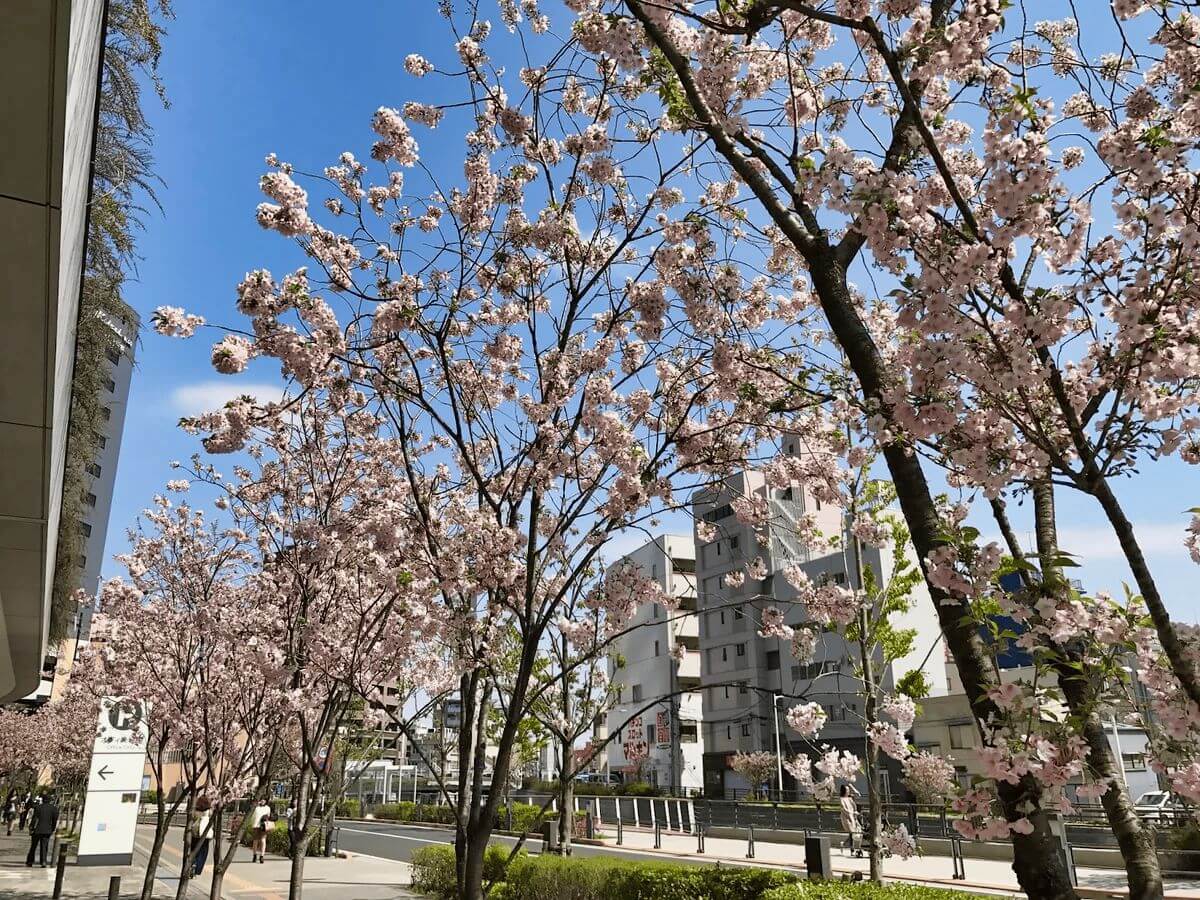
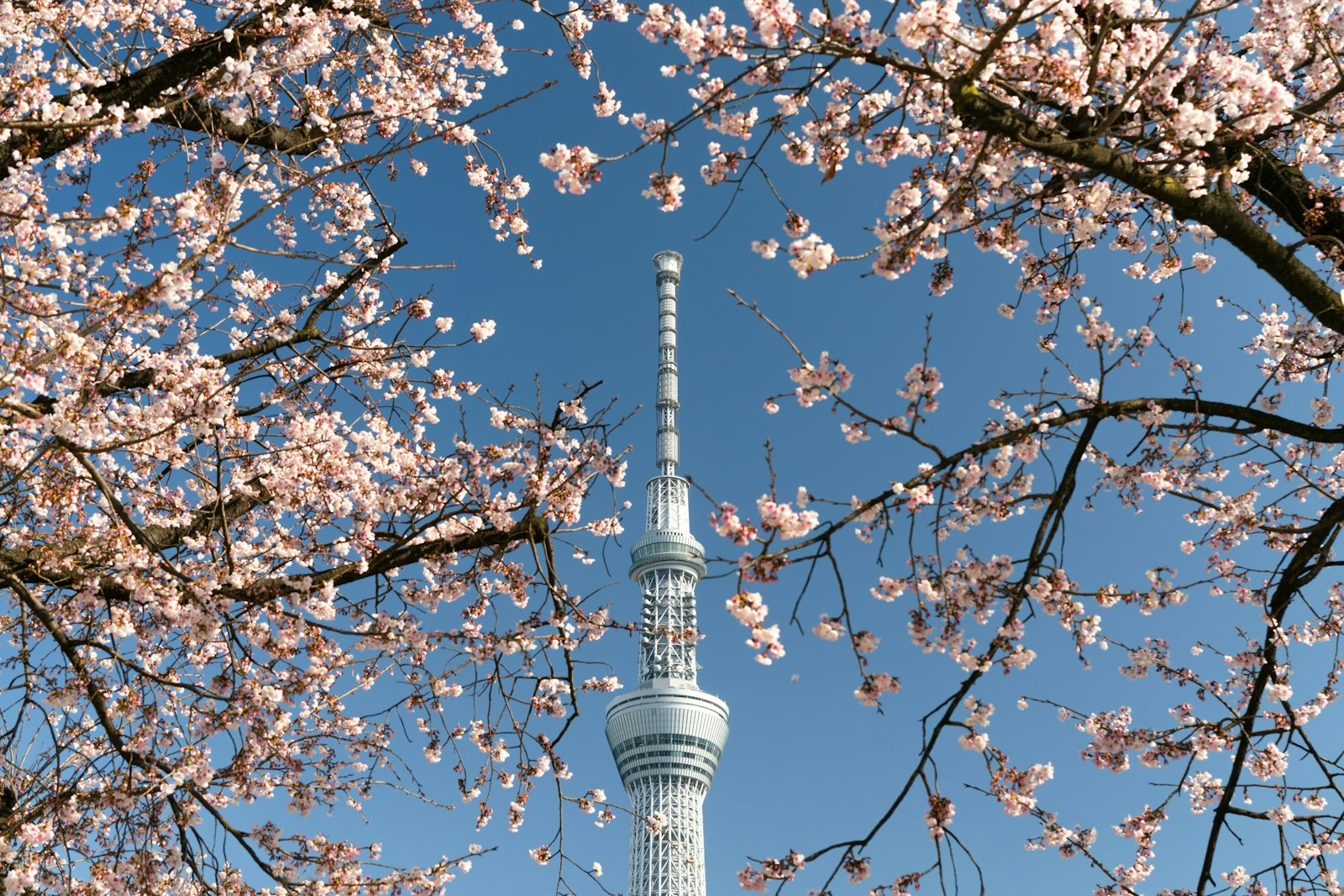
Cherry blossom season (late March to early April) brings additional complexity.
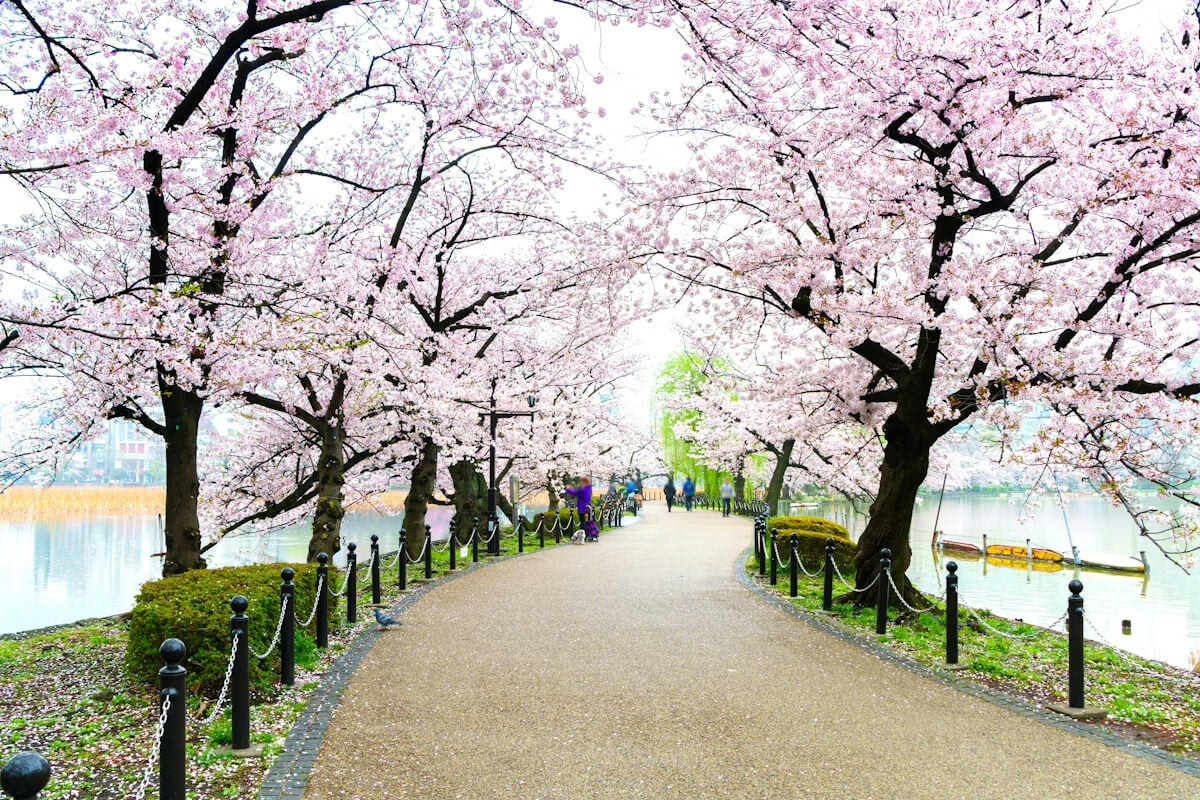
Ueno Park becomes one of Tokyo’s premier hanami (flower viewing) destinations, meaning the surrounding area floods with visitors even if the museum itself doesn’t necessarily get proportionally more crowded.
Plan for longer walks from the station through packed pathways, but enjoy the spectacular scenery.
Language and Translation Strategies
The limited English signage frustrates some international visitors while others barely notice it.
Here’s realistic guidance: all specimens display scientific Latin names prominently, which helps if you have biology knowledge.
Major exhibit sections include English titles and basic explanations, but detailed information often appears only in Japanese.
Successful strategies include:
- Google Translate’s camera function: Point your phone at Japanese text for real-time (imperfect but helpful) translation
- Hiring a guide: Some Tokyo tour companies offer museum-specific guides who provide context and translation
- Focusing on visual learning: The specimens, models, and displays communicate enormous information without requiring text
- Embracing the experience: Many visitors report that limited translation forced them to observe more carefully, leading to different but equally valuable museum experiences
The interactive touchscreen displays throughout the museum often include English language options—look for flag icons or language selection menus.
These digital exhibits provide much more detailed English content than the physical signage.
Energy Management and Route Planning
The museum’s 11 floors across two buildings involve considerable walking and stair-climbing even with elevator use.
The walk from Ueno Station includes hills and stairs.
If you have mobility limitations or limited stamina, plan accordingly:
- Prioritize your must-sees: Decide in advance which sections matter most to you
- Take advantage of seating: Rest areas exist on multiple floors—use them
- Split the visit: Your ticket allows same-day re-entry, so you can leave for lunch or a break
- Wear comfortable shoes: This cannot be overstated—you’ll be on your feet for hours
Some couples and friend groups find that splitting up based on interests works perfectly.
One person explores dinosaurs while the other focuses on Japanese natural history, then they reconvene to share highlights.
The museum’s layout makes this practical, and mobile phones make coordination easy.
Photography Considerations
Photography is generally permitted for personal use throughout most of the museum, though some special exhibitions may restrict it.
Flash photography is typically prohibited to protect specimens.
The museum’s creative display methods—dramatic lighting, suspended models, artistic arrangements—create fantastic photo opportunities beyond typical museum snapshots.
The ceiling-mounted blue whale in the Global Gallery, the stacked taxidermy arrangements in the Japan Gallery, and the dramatic dinosaur poses all photograph beautifully.
Golden hour lighting (if you’re visiting on late Friday/Saturday) adds warmth to the Japan Gallery’s historic spaces.
What to Bring
Based on watching visitors over multiple visits, here’s what actually proves useful:
- Snacks and water: Especially for visits longer than 2 hours or if traveling with children
- Portable charger: Heavy phone use for photos and translation drains batteries
- Small backpack: For purchases, layers (the museum temperature varies), and personal items
- Notebook: If you’re a serious enthusiast, you’ll want to record information
- Comfortable shoes: Worth mentioning twice because it matters that much
What you don’t need: Extensive guidebooks or printed materials, as the museum provides excellent contextual information for what’s on display, and your phone handles research and translation needs.
Practical Visitor Information: Essential Details
Hours and Admission
Regular Hours:
- Tuesday-Thursday: 9:00 AM – 5:00 PM (last entry 4:30 PM)
- Friday-Saturday: 9:00 AM – 8:00 PM (last entry 7:30 PM)
- Sunday-Monday: 9:00 AM – 5:00 PM (last entry 4:30 PM)
Closed: Mondays (or the following Tuesday if Monday is a national holiday), December 28-January 1, and occasional maintenance days (check the official website)
Admission Prices:
- Adults: ¥630
- High school students (aged 18 and under): Free with student ID
- University students: ¥630
- Children (elementary/junior high): Free
- Seniors 65+: Free with proof of age
These prices represent extraordinary value—comparable museums in other global cities charge 5-10 times more for similar collections.
Special exhibitions sometimes require separate fees (¥1,000-¥2,000 typically) in addition to general admission.
Contact Information
- Phone: +81-50-5541-8600 (NTT Hello Dial service, Japanese language primarily)
- Official Website: https://www.kahaku.go.jp/english/ (English version available)
- Address: 7-20 Uenokoen, Taito City, Tokyo 110-8718
The English website provides current information on special exhibitions, closure dates, and seasonal programs.
Checking it 1-2 days before your planned visit confirms the museum will be open and alerts you to any special events.
Best For
This museum excels for specific visitor types:
- Families with children aged 5+: The dinosaurs alone justify the visit, while diverse exhibits maintain interest across age ranges
- Science enthusiasts: Serious depth across natural history, paleontology, anthropology, and technology
- Budget-conscious travelers: World-class collection at minimal cost
- Rainy day backup plans: Entirely indoors with hours of content
- Museum lovers: Genuinely ranks among Asia’s finest natural history institutions
The museum works less well for visitors seeking cutting-edge interactive technology (though some exists), those with very limited time in Tokyo (you need minimum 2-3 hours to do it justice), or travelers who require extensive English interpretation for every exhibit.
Visitor Feedback Patterns
The museum maintains a 4.5-4.6 star average rating across major review platforms, with over 22,000 Google reviews and 1,254 TripAdvisor reviews.
The consistency of these ratings across thousands of reviews suggests genuinely excellent quality control and visitor satisfaction.
Common praise points:
- Exceptional value for money
- Extensive, world-class fossil and taxidermy collections
- Creative, artistic display methods
- Effective for children and adults equally
- Well-maintained facilities despite the historic building
Common criticisms:
- Limited English signage and interpretation
- Can be very crowded on weekends and holidays
- No on-site restaurant
- Exhibits occasionally feel dated in presentation style (though content remains current)
The feedback patterns suggest that visitors who arrive with appropriate expectations—understanding the language limitations, bringing snacks, choosing less crowded times—rate their experiences most positively.
Making the Most of Ueno Park
The Tokyo National Museum of Nature and Science sits within the broader context of Ueno Park (Ueno Kōen), Tokyo’s most concentrated cultural district.
If you’re planning a full day in the area, multiple world-class institutions cluster within 10 minutes walking distance:
- Tokyo National Museum: Japan’s oldest and largest museum, focusing on Japanese art and antiquities
- National Museum of Western Art: Le Corbusier-designed building housing European art from the Renaissance onward
- Ueno Zoo: Japan’s oldest zoo, famous for giant pandas
- Shitamachi Museum: Exploring old Tokyo’s working-class neighborhoods and culture
During cherry blossom season, the park itself becomes the main attraction, with over 1,000 cherry trees creating tunnel-like canopies of pink and white blossoms.
The museum makes an excellent escape when the park becomes too crowded, or a perfect afternoon activity after morning hanami.
Why This Museum Deserves Your Time
Tokyo offers countless attractions competing for your limited vacation hours.
So why choose the Tokyo National Museum of Nature and Science over alternatives?
Because it represents something increasingly rare: a genuinely world-class institution that hasn’t been dumbed down, commercialized beyond recognition, or priced out of reach for ordinary visitors.
The museum trusts its visitors to engage with serious scientific content.
It doesn’t hide its extensive collections in storage vaults.
It presents 25,000 exhibits not as overwhelming clutter but as generous abundance—there’s something here for every curiosity, every question, every wondering mind.
For ¥630, you gain access to dinosaur fossils that museums pay millions to acquire, to Hachikō’s preserved body connecting you to one of Japan’s most beloved stories, to technological displays tracing human innovation, to taxidermy so artfully arranged it transcends mere specimen storage and becomes genuinely beautiful.
Yes, you’ll walk more than expected.
Yes, you might wish for more English signage.
Yes, you should bring snacks.
But you’ll also stand beneath a blue whale, trace the evolutionary tree of life, watch your children’s eyes light up at Tyrannosaurus skeletons, and leave with your brain pleasantly overstuffed with new knowledge and wonder.
That’s not a bad way to spend a few hours in Tokyo.
In fact, it might be exactly what you didn’t know you needed between temples, shopping districts, and ramen shops—a reminder that science and nature, properly presented, inspire just as powerfully as any cultural landmark.
What aspect of natural history makes you most curious?
The ancient past preserved in fossils, the diversity of life filling our planet today, or the technologies we’ve developed to understand it all?
What's Available
Frequently Asked Questions (FAQs)
Most visitors spend 3-4 hours exploring both the Japan Gallery and Global Gallery, though science enthusiasts and families with curious children often stay for 5-6 hours or the entire day. If you’re short on time, 2 hours allows you to hit the major highlights including the dinosaur collection and Theater360, but you’ll need to move quickly and skip many exhibits.
Yes—while English signage is limited compared to some Tokyo attractions, the visual nature of the exhibits (fossils, taxidermy, models, interactive displays) communicates effectively without extensive text. All specimens include scientific Latin names, major sections have English titles, and touchscreen displays often offer English options. Many international visitors report excellent experiences despite language barriers, though translation apps help.
The dinosaur collection on B3F of the Global Gallery consistently ranks as the top attraction, particularly the Tyrannosaurus and complete fossil skeletons. The Theater360 immersive dome experience is included with admission and shouldn’t be missed. Hachikō’s preserved body in the Japan Gallery draws significant interest, as does the “Tree of Life” evolution exhibit on B2F. The ceiling-mounted blue whale model creates an iconic photo opportunity.
Yes—while the museum doesn’t have a full restaurant, eating your own food in designated rest areas is permitted and commonly practiced by Japanese visitors. Vending machines throughout the building sell drinks and light snacks. Your admission ticket allows same-day re-entry, so you can also exit to nearby restaurants in Ueno Park and return.
Weekday mornings, particularly Tuesday-Thursday between 9:30 AM-11:00 AM, offer the quietest experience. Friday and Saturday evenings (when the museum stays open until 8:00 PM) also see lighter crowds than weekend daytime hours. Avoid Sundays and national holidays when families pack the museum. During cherry blossom season (late March-early April), arrive early as Ueno Park generally becomes very crowded.
Editor's Review
When we visited the Tokyo National Museum of Nature and Science, we anticipated seeing a few dinosaur fossils and perhaps a steam locomotive or two.
However, we were completely amazed by just how enormous, hands-on, and enjoyable this museum turned out to be for visitors of every age.
We wandered for hours through the World Gallery, admiring exhibits that included everything from meteorites to rocket models, and each of us stopped to take a selfie with the stuffed Hachikō.
Our children were thrilled by the “tree of life,” which serves as a visual guide to evolution, and we kept making jokes about needing a support group for those overwhelmed by the robotic exhibits.
The employees are welcoming, and visitor numbers are quite reasonable when you avoid weekends—just make sure you eat beforehand; the absence of a proper restaurant left us sharing snacks from vending machines (yet another typical travel blogger mistake).
Whether you have sixty minutes or an entire adventurous day, you’ll depart more knowledgeable, a bit tired, and with thirty fresh pictures on your phone.
We’re already thinking about a return trip, since there’s far too much to absorb in a single visit—and for our next journey, we plan to improve our knowledge of Japanese scientific terms.