Tokyo 100 Yen Store Guide: Best Daiso & Seria Finds




Tokyo 100 Yen Store Guide: Best Daiso & Seria Finds for Travelers – Tokyo’s 100 yen stores — led by Daiso and Seria — sell high-quality Japanese products for roughly ¥100 each (approximately $0.65–$0.75 USD).
These aren’t flimsy knockoffs; they’re legitimate items that Tokyo locals buy every week.
Daiso operates 100+ Tokyo locations, while Seria specializes in minimalist-design goods perfect for souvenirs.
Visit weekday mornings for the best selection, keep cash on hand for smaller branches, and bag your own purchases at self-service checkout stations.
The Bottom Line
Hide- Tokyo's 100 yen stores offer high-quality Japanese products at approximately $0.65-$0.75 per item, not cheap knockoffs.
- Daiso has over 100 Tokyo locations; visit weekday mornings at neighborhood shops for better stock and shorter lines.
- Best travel finds include packing cubes, compression bags, leak-proof containers, portable fans, and collapsible organizers for luggage efficiency.
- Popular souvenirs include matcha Kit-Kats, cherry blossom stationery, tenugui towels, ceramic chopstick rests, and kawaii accessories.
- Seasonal items appear 6-8 weeks early; most stores accept cash and credit cards with self-bagging at checkout stations.
Why Tokyo’s 100 Yen Stores Are a Traveler’s Secret Weapon
Tokyo’s 100 yen stores offer travelers an unmatched combination of quality, variety, and price — all under one roof. You can pick up emergency toiletries, packing organizers, snacks, and souvenirs for roughly $1 each, far below what airport shops or tourist-area boutiques charge.
These stores stock products that genuinely work: compression bags that shrink bulky clothes, leak-proof travel bottles, sheet masks used by Japanese dermatologists, and stationery that rivals boutique brands. The value is real, not a marketing gimmick.
- Complete Guide to Topping Up a Suica Card in Tokyo
- Tokyo Anime & Manga Guide: Pilgrimages, Shops & Pop Culture Sites
- Tokyo Cherry Blossom Photography: Best Angles, Timing & Camera Settings
- Tokyo Power Outlets and Voltage: Smart Electronics Tips for Travelers
- Tokyo Department Store Tax-Free Shopping Made Simple
- Tokyo Valentine’s Day: Local Customs & Romantic Spots
For budget-conscious travelers, a single 30-minute stop at Daiso or Seria can replace a dozen overpriced purchases elsewhere. If you’re planning to shop for unique gifts beyond tourist traps, these stores deserve a dedicated slot in your itinerary.
Tokyo Trip Add-Ons
Equip yourself for the ultimate Tokyo adventure with the following add-ons, curated just for you.








Understanding Japan’s 100 Yen Store Culture
Japan’s 100 yen stores operate on a fundamentally different model from Western dollar stores. Retailers like Daiso source products through high-volume manufacturing contracts, allowing them to sell genuinely functional goods at a fixed ¥100 price point without sacrificing quality.
The result is a store where a ¥100 silicone spatula performs as well as a ¥500 version from a kitchenware shop. Locals shop here weekly — not as a last resort, but as a deliberate choice.
This culture of accessible quality is why 100 yen stores have expanded globally, with Daiso alone operating over 6,000 stores worldwide as of 2024.
Is Everything Really 100 Yen?
Most items in Daiso and Seria cost exactly ¥100 plus 10% consumption tax, bringing the real price to ¥110 per item. Some Daiso locations now stock premium sections with items priced at ¥300, ¥500, or ¥1,000.
Seria maintains a stricter ¥100 (¥110 with tax) pricing policy across almost its entire range. Always check shelf labels — a small “¥300” sticker is easy to miss when you’re browsing quickly.
At current exchange rates, ¥110 equals roughly $0.72 USD, €0.67, or £0.57 — making even the “premium” ¥300 items exceptional value by international standards.
Daiso: Tokyo’s Largest 100 Yen Chain
Daiso is Japan’s dominant 100 yen retailer, with over 100 locations across Tokyo and more than 6,000 stores globally. Founded in Hiroshima in 1977, Daiso now stocks approximately 70,000 product lines covering everything from travel accessories to seasonal decorations.
Tokyo flagship stores typically span three to five floors, with each floor organized by category. Smaller neighborhood branches carry a curated selection of the most popular lines.
Finding Daiso Stores Near Tokyo’s Tourist Areas
Daiso stores cluster around Tokyo’s major transit hubs and shopping streets, making them easy to combine with sightseeing. The following locations are particularly convenient for tourists.
- Harajuku (Takeshita Street): A five-floor Daiso sits at the top of Takeshita Street, steps from Harajuku Station. Hours: 10:00–21:00 daily. This branch draws heavy weekend crowds — arrive before 11:00 AM for comfortable browsing.
- Shibuya (Center-gai): Located inside the Shibuya 109-2 building area, this branch stays open until 21:00 on weekdays and 22:00 on weekends. Ideal for an evening shopping stop after exploring Shibuya Crossing.
- Asakusa (ROX Building): A large Daiso on the upper floors of the ROX shopping complex, a five-minute walk from Senso-ji Temple. Perfect for post-temple souvenir hunting without the inflated prices of nearby tourist stalls.
- Shinjuku: Multiple branches near both the east and west exits of Shinjuku Station. The Kabukicho-area branch is open until 23:00, making it one of Tokyo’s latest-closing 100 yen stores.
For neighborhood branches with shorter queues, search “Daiso” in Google Maps and filter by distance from your accommodation. Most residential areas have a branch within a 10-minute walk.
Must-Buy Travel Items at Daiso
Daiso’s travel section is one of its strongest categories, stocking compact solutions that cost several times more at airport shops or dedicated travel retailers.
Packing and Luggage Organizers
Daiso’s packing accessories solve real luggage problems at a fraction of retail prices. The following items consistently earn high marks from frequent travelers.
- Compression bags: Vacuum-seal bags that reduce bulky knitwear and jackets to roughly one-third their original volume. Available in three sizes (small, medium, large) for ¥110 each.
- Mesh packing cubes: Lightweight zippered cubes that create instant compartments inside any suitcase. A set of three cubes costs ¥330 total — versus ¥2,000–¥4,000 for branded equivalents.
- TSA-approved travel bottles: Clear, leak-proof bottles in 30 ml, 50 ml, and 100 ml sizes with secure flip-top caps. Each bottle costs ¥110 and meets international carry-on liquid rules.
- Laundry detergent sheets: Ultra-thin dissolvable sheets (20 per pack) that weigh almost nothing and eliminate the need to carry liquid detergent on longer trips.
Electronics and Tech Accessories
Daiso stocks a practical range of tech accessories that keep devices charged and cables organized without the premium markup of electronics retailers. For a deeper comparison of Tokyo’s electronics shopping options, see our guide to Akihabara vs. Yodobashi Camera electronics shopping.
- Cable organizers: Velcro and silicone cable ties in multipacks (¥110 for 10 pieces) that eliminate tangled charging cables.
- Compact battery packs: Basic 2,000 mAh portable chargers for ¥330–¥550. Sufficient for one full smartphone charge — ideal as a backup rather than a primary power bank.
- Screen cleaning kits: Microfiber cloths with cleaning solution for ¥110, identical in function to ¥800 versions sold at electronics stores.
Note: Daiso does not sell Japan-to-international plug adapters. Purchase these at electronics stores or the airport before arrival.
Beauty and Skincare Products
Japan’s skincare industry is globally respected, and Daiso carries a genuine selection of products used by Japanese consumers — not tourist-facing imitations.
- Compressed sheet masks: Add water to activate; each mask costs ¥110 for a pack of five. Ingredients include hyaluronic acid and collagen.
- Silicone facial cleansing pads: Reusable pads that remove makeup and exfoliate gently. One pad costs ¥110 and lasts several months with proper care.
- Eyebrow stencils: Pre-shaped guides for precise eyebrow shaping, a staple of Japanese makeup routines. Available in six shapes for ¥110 each.
Seria: The Minimalist 100 Yen Store
Seria operates approximately 1,800 stores across Japan and has built a loyal following by prioritizing aesthetics over sheer product volume. Where Daiso stocks 70,000 product lines, Seria curates a tighter range with a consistent visual identity: neutral tones, natural materials, and clean geometric designs.
The result is a store that feels closer to a design boutique than a discount retailer. Products photograph well, coordinate easily, and make convincing gifts — few recipients guess the ¥110 price tag.
What Makes Seria Different from Daiso
Seria and Daiso serve overlapping but distinct customer needs. Understanding the difference helps you decide which store to prioritize on a tight schedule.
Daiso wins on variety and practicality: more product categories, more locations, and a stronger travel-accessories section. Seria wins on design and gift appeal: cohesive aesthetics, minimalist packaging, and a curated range that skews toward home goods and stationery.
Seria also maintains a stricter ¥100 (¥110 with tax) pricing policy, with almost no premium-priced items. If budget predictability matters, Seria delivers a more consistent experience.
Both chains restock shelves daily, but Seria’s tighter product range means popular items sell out faster. Weekday morning visits (10:00–11:00 AM) give the best chance of finding full stock.
Top Seria Finds for Souvenirs and Gifts
Seria’s product range skews heavily toward items that make excellent souvenirs — attractive, lightweight, and genuinely Japanese in design sensibility.
Stationery and Paper Goods
Seria’s stationery section is one of its strongest categories and a consistent favorite among visitors who appreciate Japanese paper culture.
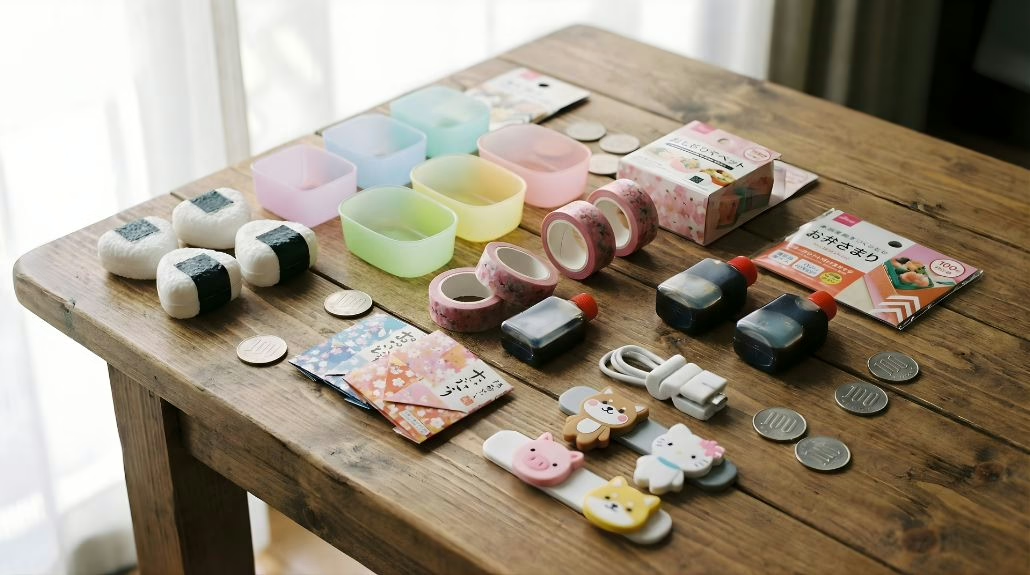
- Washi tape: Decorative adhesive tape in seasonal and traditional patterns (cherry blossoms, indigo waves, geometric mon crests). Each roll costs ¥110; most travelers buy five to ten rolls as gifts.
- Brush pens: Water-based calligraphy pens with flexible tips that produce authentic brushstroke effects. A set of two costs ¥110 — versus ¥500–¥800 at stationery boutiques.
- Grid notebooks: A5-format notebooks with 5 mm dot-grid pages, minimal branding, and sturdy covers. Identical in function to Muji notebooks at roughly one-fifth the price.
- Masking tape dispensers: Compact desktop dispensers in matte black or white that hold standard washi tape rolls — a practical gift for anyone who crafts or journals.
Home Décor and Kitchen Items
Seria’s home goods section stocks items that look expensive and function well — a combination that makes them ideal souvenirs for friends who care about interior design.
- Bamboo organizers: Small desk and drawer organizers in natural bamboo finish. Dimensions: approximately 10 cm × 15 cm × 5 cm. Each costs ¥110.
- Ceramic chopstick rests: Hand-painted rests in seasonal motifs (plum blossom, autumn maple, ocean wave). A set of two costs ¥110 — a classic, lightweight souvenir.
- Collapsible silicone containers: Foldable food containers that compress to 2 cm height when empty. Microwave-safe and dishwasher-safe. Ideal for travelers who want to carry bento lunches.
- Egg separator: A small ceramic tool that separates yolks cleanly — a genuinely useful kitchen gadget that costs ¥110 versus ¥600–¥1,200 at kitchenware shops.
When Is the Best Time to Visit Tokyo’s 100 Yen Stores?
Weekday mornings between 10:00 AM and noon offer the best combination of fresh stock and minimal crowds. Stores typically receive deliveries overnight and restock shelves before opening, so early arrivals get first pick of new items.
Weekend afternoons — particularly Saturday 13:00–17:00 — are the busiest periods at tourist-area branches. Checkout queues at Harajuku Daiso can reach 20–30 minutes during peak hours on weekends.
Seasonal timing matters too. Daiso and Seria introduce seasonal merchandise approximately 6–8 weeks before the relevant holiday or season:
- Cherry blossom items (sakura-themed stationery, picnic gear, pink packaging): appear in mid-February
- Summer festival goods (uchiwa fans, wind chimes, yukata accessories): appear in mid-June
- Halloween merchandise: appears in late August
- New Year’s decorations (kadomatsu, nengajo postcards, osechi accessories): appear in mid-November
If you’re visiting during Golden Week in late April and early May, expect extremely long queues at tourist-area branches. Opt for neighborhood locations or visit before 10:30 AM.
Payment Methods and Checkout Etiquette
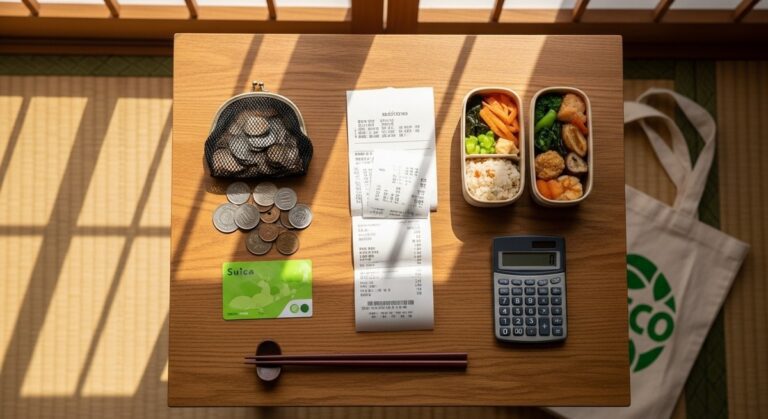
Most Daiso and Seria locations accept cash (yen only), major credit cards (Visa, Mastercard, JCB, American Express), and IC cards such as Suica and Pasmo. Some smaller neighborhood branches are cash-only — carry ¥1,000–¥2,000 in coins and small notes as a backup.
Self-checkout machines are available at larger branches. Staff-operated registers are standard at smaller locations.
Checkout process:
- Place items on the counter or conveyor belt.
- Staff scan items and announce the total.
- Pay by cash, card, or IC card.
- Move to the self-bagging station (typically a counter beside the register) and pack your own purchases.
- Bags cost ¥3–¥5 each; bring a reusable tote to avoid the fee.
Cultural etiquette at checkout:
- Place cash in the small tray provided — do not hand money directly to staff.
- A brief bow and “arigatou gozaimasu” (thank you) is appreciated but not required.
- Handle merchandise carefully; avoid opening packaging to inspect contents.
- Step aside promptly after paying to allow the next customer to approach.
Practical Travel Finds That Solve Real Problems in Tokyo
Beyond souvenirs and beauty products, Tokyo’s 100 yen stores stock a category of practical travel items that solve specific problems travelers encounter in Tokyo.
Space-Saving Solutions for Small Hotel Rooms
Tokyo hotel rooms average 13–20 square meters in budget and mid-range properties — significantly smaller than equivalent rooms in most Western cities.
The right organizational tools make a measurable difference.
- Over-door hooks: Plastic S-hooks that hang over bathroom doors, creating instant storage for towels, bags, and jackets. A pack of four costs ¥110.
- Drawer dividers: Adjustable cardboard or plastic dividers that organize suitcase contents without adding weight. A set of six costs ¥110.
- Hanging toiletry pouches: Zippered pouches with a hook that hang from towel rails or door handles, keeping toiletries accessible in cramped bathrooms.
- Collapsible laundry bags: Lightweight mesh bags (¥110) that separate worn clothes from clean items inside a suitcase — a simple solution that most travelers wish they’d packed.
Emergency Travel Supplies Worth Buying
Tokyo’s weather and urban environment create predictable emergencies that 100 yen stores are well-equipped to handle cheaply.
- Rain ponchos: Compact folded ponchos (¥110–¥220) that fit in a daypack pocket. Tokyo’s rainy season runs June–July, and sudden afternoon showers occur year-round. For more on staying dry in Tokyo, see our Tokyo rainy day fashion and rain gear guide.
- Disposable heat packs (kairo): Adhesive heat packs that attach to clothing and provide 8–12 hours of warmth. Available October–March; a pack of five costs ¥110. Essential for Tokyo winter visits.
- Face masks: Individually wrapped surgical masks (10 per pack, ¥110). Standard practice in Tokyo during cold and flu season (November–March).
- Blister plasters: Hydrocolloid blister pads (five per pack, ¥110) — a must-have given that Tokyo sightseeing typically involves 15,000–25,000 steps per day.
- Pocket hand sanitizer: 30 ml bottles (¥110) that meet carry-on liquid rules and fit in any pocket.
Souvenir Shopping at 100 Yen Stores: What to Buy
Tokyo’s 100 yen stores stock a surprisingly strong range of authentic Japanese souvenirs — items that reflect genuine cultural traditions rather than mass-produced tourist merchandise.
At ¥110 per item, you can buy meaningful gifts for an entire contact list without exceeding a ¥3,000–¥5,000 budget.
Traditional Japanese Items Worth Bringing Home
The following items combine cultural authenticity with practical value — they look and feel Japanese, serve a real purpose, and survive the journey home without breaking.
- Tenugui towels: Thin cotton hand towels printed with traditional patterns (indigo waves, chrysanthemums, geometric asanoha). Dimensions: approximately 35 cm × 90 cm. Lightweight, fast-drying, and genuinely used by Japanese households.
- Furoshiki wrapping cloths: Square cotton cloths used for wrapping gifts, carrying items, or decorating. Available in 50 cm × 50 cm and 70 cm × 70 cm sizes. Traditional patterns include crane motifs and seasonal florals.
- Origami paper: Packs of 50–100 sheets in traditional patterns (washi-print, metallic, seasonal). Each pack costs ¥110 and makes an excellent gift for children and adults alike.
- Lacquered chopsticks: Pairs with lacquered finishes in red, black, or natural wood tones. Functional and food-safe — a step above the disposable chopsticks sold at tourist stalls.
- Ceramic chopstick rests: Hand-painted seasonal motifs (available at Seria). Lightweight enough to pack in quantity; a set of five rests weighs under 100 grams.
Gift Ideas by Recipient
Matching souvenirs to recipients makes the shopping process faster and the gifts more appreciated.
- For children and teenagers: Character-themed stationery, kawaii washi tape, origami paper sets, and Japanese candy assortments (matcha Kit-Kats, Pocky, Ramune candy).
- For home enthusiasts: Ceramic chopstick rests, bamboo desk organizers, collapsible silicone containers, and furoshiki wrapping cloths.
- For coworkers and colleagues: Individually wrapped Japanese snacks, washi tape rolls, and compact brush pen sets — items that are easy to distribute and universally appreciated.
- For beauty enthusiasts: Sheet mask sets, silicone cleansing pads, and Japanese nail care tools (nail files, cuticle pushers) that reflect Japan’s reputation for precision beauty products.
Packaging and Shipping Your Haul
Larger Daiso branches sell packaging supplies that help travelers transport fragile or bulky purchases safely.
- Bubble wrap sheets: Sold in pre-cut packs (¥110) for wrapping ceramics and glassware.
- Reusable gift bags: Fabric and paper gift bags in seasonal designs (¥110–¥220) that double as wrapping for souvenirs.
- Compression bags for the return journey: Buy a second set of compression bags at Daiso to reclaim luggage space consumed by souvenirs on the flight home.
If your haul exceeds your luggage allowance, Japan’s takuhaibin (courier) services — available at convenience stores — can ship packages directly to your home country. Rates start at approximately ¥2,000–¥3,500 for a small box to the US or Europe.
For a broader look at tax-free purchasing and shipping options, see our guide to Tokyo duty-free shopping and tax refunds.
Frequently Asked Questions (FAQs)
Do Daiso and Seria offer tax-free shopping for tourists?
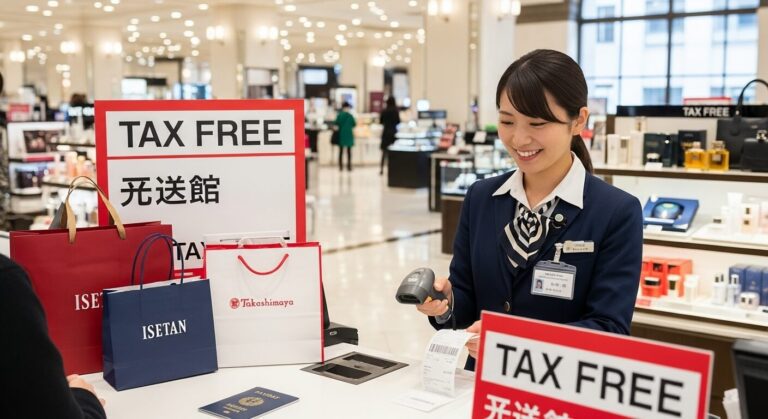
Neither Daiso nor Seria currently participates in Japan’s tourist tax-exemption (consumption tax refund) program. The 10% consumption tax applies to all purchases. For tax-free shopping, visit department stores and electronics retailers that display the “Tax Free” sign — see our Tokyo duty-free shopping guide for details.
Can I use a Suica card to pay at 100 yen stores?
Most large Daiso branches accept Suica, Pasmo, and other IC cards at checkout. Smaller neighborhood branches may be cash-only. Look for the IC card reader symbol (a stylized wave icon) near the register before queuing.
Are there English labels in Tokyo's 100 yen stores?
Daiso provides English product labels in its tourist-area flagship stores (Harajuku, Shibuya, Asakusa). Neighborhood branches typically use Japanese-only labels. A translation app with camera mode — covered in our Tokyo translation apps guide — can identify product contents and usage instructions instantly.
How many items can I realistically carry on a plane from a 100 yen store?
A standard 23 kg checked bag can accommodate 50–80 ¥110 items depending on size and weight. Compression bags (available at Daiso) recover significant space. Fragile items such as ceramics should be wrapped in clothing or bubble wrap purchased at the store. Liquids over 100 ml must go in checked luggage.
Is Daiso or Seria better for souvenir shopping?
Seria is generally better for souvenirs due to its minimalist aesthetic and cohesive product designs — items look more expensive and photograph well. Daiso is better for practical travel supplies, variety, and sheer product volume. Many travelers visit both: Seria for gifts, Daiso for travel gear.
Are there other 100 yen store chains worth visiting in Tokyo?
Three additional chains operate in Tokyo alongside Daiso and Seria. Can★Do (approximately 1,000 stores nationwide) stocks a practical range similar to Daiso with slightly less tourist-area presence. Watts (also branded as 100-yen shop Watts) focuses on household goods. Threeppy (a Daiso sub-brand) targets a younger demographic with pastel aesthetics similar to Seria. All charge ¥110 per item including tax.
What items should I avoid buying at 100 yen stores?
Electronics with safety certifications (USB chargers, power adapters) carry some risk at ¥110 price points — purchase these from certified retailers. Perishable food items have short expiry dates; check packaging before buying. Scissors and sharp tools may not meet airline carry-on rules — pack them in checked luggage or buy them at your destination.