Odaiba
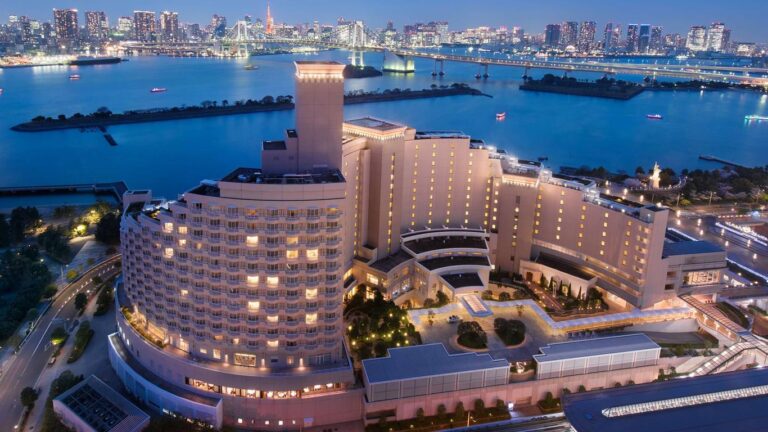
Odaiba Tokyo: Everything You Need to Know Before You Explore – Odaiba is Tokyo’s most ambitious artificial island, a sprawling waterfront playground built on reclaimed land in Tokyo Bay.
Visitors find world-class shopping malls, interactive museums, a life-size Gundam statue, relaxing onsen, and sweeping views of the Rainbow Bridge — all within a single, walkable district.
Whether you’re travelling with kids, planning a romantic evening, or hunting for Instagram gold, Odaiba delivers an utterly unique slice of Tokyo that no other neighbourhood can replicate.
What Is Odaiba and Why Visit It?
Odaiba is a man-made island in Tokyo Bay, originally constructed in the 19th century as a defensive fortification and later redeveloped in the 1990s as a futuristic urban showcase.
Today it functions as one of Tokyo’s premier entertainment and leisure destinations, drawing millions of visitors annually.
The island feels deliberately different from the rest of Tokyo — wide boulevards, open plazas, and bay breezes replace the city’s usual density.
That contrast alone makes it worth the trip. Add landmark attractions, a replica Statue of Liberty, and a glittering skyline backdrop, and Odaiba earns its place on every serious Tokyo itinerary.
Getting to Odaiba from Central Tokyo
The most scenic route to Odaiba is the Yurikamome Line, an automated, driverless monorail that departs from Shimbashi Station and crosses the Rainbow Bridge with panoramic bay views.
The journey from Shimbashi to Odaiba-Kaihinkoen Station takes approximately 12–15 minutes by local train.
The single fare is approximately ¥280–¥330 depending on how the fare is calculated (IC vs. paper ticket).
The full Yurikamome Line (16 stops, Shimbashi to Toyosu) runs ¥190–¥390 depending on distance, and a 1-day pass costs ¥820, which offers good value for multi-stop Odaiba days.
Alternatively, the Rinkai Line connects Osaki Station to Tokyo Teleport Station on Odaiba, making it convenient from Shibuya or Shinjuku.
A direct water bus (Suijo Bus) also runs from Hinode Pier, adding a leisurely ferry option.
Fares vary by route, so check your IC card balance before boarding — the Yurikamome is not covered by the JR Pass.
For a full breakdown of Tokyo rail options, the JR Pass vs. Tokyo Metro Pass comparison guide is essential reading before you travel.
Top Attractions on Odaiba
teamLab Borderless (Relocated Venue) — teamLab’s immersive digital art museum is one of the most photographed experiences in all of Japan.
The original Odaiba venue closed in 2023 and relocated to Azabudai Hills, but the brand-new teamLab Planets in Toyosu remains a short trip away. As of 2026, no teamLab experience has returned to Odaiba itself.
teamLab Borderless now operates permanently at Azabudai Hills (reopened February 2024), while teamLab Planets continues to run in Toyosu — accessible via the end of the Yurikamome Line — and significantly expanded with a major new zone in January 2025.
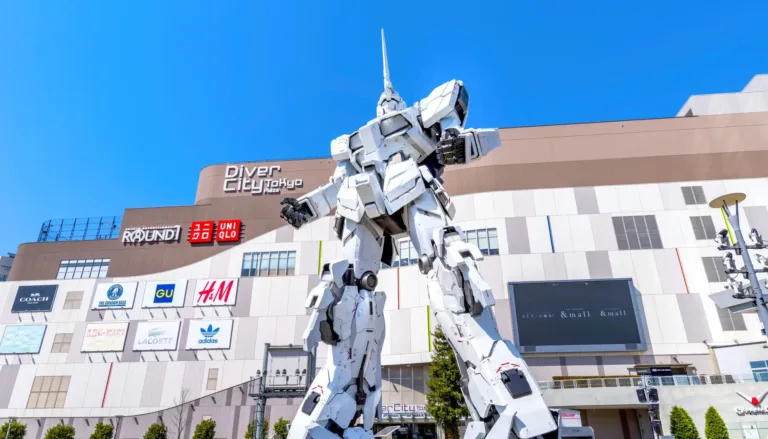
Gundam Base Tokyo — DiverCity Tokyo Plaza hosts the iconic life-size RX-0 Unicorn Gundam statue, standing 19.7 metres (64.6 ft) tall and performing light-and-sound shows at scheduled intervals. The Gundam Base Tokyo shop inside is a paradise for collectors and anime fans alike.
Palette Town / Toyota Mega Web Area — Note that the former Palette Town complex, including the giant Ferris wheel, was demolished. The Daikanransha Ferris wheel closed with the rest of Palette Town on 31 August 2022, with demolition completed by late 2023. In its place, Toyota Arena Tokyo — a 10,000-capacity multi-purpose arena — opened in the Aomi area in autumn 2025, serving as a major new entertainment anchor for the district.
Odaiba Seaside Park — This free public park stretches along the waterfront and frames the Rainbow Bridge and Tokyo skyline in one sweeping view. Sunrise and sunset visits are particularly spectacular. For the best camera angles and timing tips, explore our guide to Tokyo’s most Instagram-worthy photo spots.
Miraikan (National Museum of Emerging Science and Innovation) — Miraikan is Japan’s premier science museum, featuring ASIMO robot demonstrations, a giant globe displaying real-time Earth data, and hands-on exhibits about space exploration and AI. Admission is ¥630 for adults and ¥210 for children.
Is Odaiba Worth Visiting for Families?
Odaiba is one of Tokyo’s best family destinations, offering a dense cluster of child-friendly attractions within easy walking distance of each other. Miraikan’s interactive science exhibits, the Gundam statue, Joypolis indoor theme park, and the open seaside park keep children engaged for a full day.
Joypolis, operated by SEGA, is an indoor amusement park with VR rides, arcade games, and live-action attractions suitable for various age groups. Admission pricing is ¥1,500 for adults (entry only); an all-day Passport for unlimited rides costs ¥5,800 for adults and ¥4,800 for children, with a discounted Evening Passport (from 3:00 PM) at ¥4,800 for adults and ¥3,800 for children. Children under 7 and guests aged 60 and over enter free. Families visiting Tokyo with younger children will also find broader activity ideas in our Tokyo with kids guide.
Shopping and Dining on Odaiba
Odaiba hosts several large retail complexes that cater to every budget and taste. Aqua City Odaiba and DiverCity Tokyo Plaza are the two dominant malls, offering fashion, electronics, restaurants, and food courts under one roof.
Aqua City’s restaurant floor delivers exceptional bay views alongside its dining options — booking a window table at sunset is a genuinely romantic experience. DiverCity’s food court is reliably affordable and diverse, making it a practical lunch stop between attractions.
For shoppers interested in tax-free purchases, many Odaiba retailers participate in Japan’s consumption tax refund scheme. Our detailed guide to Tokyo duty-free shopping and tax refunds explains exactly how to claim your refund at the counter.
Odaiba Onsen: Oedo Onsen Monogatari
Oedo Onsen Monogatari was Odaiba’s beloved Edo-period-themed hot spring facility, drawing visitors who wanted a traditional onsen experience in a theatrical setting. The original venue closed permanently in 2021.
As of 2026, no replacement onsen facility has opened on Odaiba or in its immediate vicinity.
The best alternatives elsewhere in Tokyo include Spa LaQua (Tokyo Dome City, Bunkyo), a premium facility drawing natural hot spring water from 1,700 m underground; Thermae-Yu (Shinjuku/Kabukicho), open 24 hours and convenient for central Tokyo; and Maenohara Onsen Saya no Yudokoro (Itabashi), a natural flowing spring with outdoor garden baths at a budget-friendly entry fee of around ¥970 on weekdays.
Visitors seeking a genuine Tokyo onsen experience should explore alternatives in other neighbourhoods.
Our comprehensive Tokyo onsen etiquette guide covers rules, customs, and the best facilities across the city — essential reading before your first soak.
What Is the Best Time to Visit Odaiba?
The best time to visit Odaiba is on a clear weekday, ideally in spring (March–May) or autumn (October–November), when temperatures are comfortable and the skyline views are crisp and unobstructed.
Weekends draw significantly larger crowds, particularly at DiverCity and the waterfront park.
Summer evenings offer spectacular fireworks displays during Tokyo Bay’s seasonal festivals, though heat and humidity can be intense during the day.
Winter visits reward travellers with dazzling Christmas illuminations along the waterfront — Odaiba’s light displays are among the city’s most photogenic.
For seasonal planning, our Tokyo Christmas illuminations guide covers the best waterfront displays in detail.
Insider Tips for Visiting Odaiba
Arrive by Yurikamome for the view — Sit at the very front of the driverless train for unobstructed Rainbow Bridge panoramas. This is free with your fare and genuinely thrilling.
Plan around Gundam show times — The Unicorn Gundam performs light shows four times daily at 11:00, 13:00, 15:00, and 17:00, with an additional evening performance running from 19:00 to 21:30 throughout the day. Arriving 10 minutes early guarantees a good vantage point.
Carry an IC card — The Yurikamome Line and water bus both accept Suica and Pasmo. Topping up is straightforward; our Suica card top-up guide walks you through every machine option at the station.
Combine with Toyosu — The Rinkai Line connects Odaiba to Toyosu in minutes, making a combined visit to teamLab Planets and Odaiba’s attractions a logical full-day itinerary.
Check attraction closures — Miraikan closes on Tuesdays (unless Tuesday falls on a public holiday). Several Odaiba venues have irregular holiday schedules, so confirming hours online before visiting saves frustration.
Frequently Asked Questions About Odaiba
How long does a visit to Odaiba take?
Most visitors spend between four and eight hours on Odaiba, depending on how many attractions they enter. A half-day covers the waterfront park, Gundam statue, and one mall comfortably. A full day allows for Miraikan, Joypolis, dining, and a sunset stroll.
Is Odaiba free to visit?
Odaiba itself has no entrance fee — the island is a public area. However, individual attractions like Miraikan and Joypolis charge admission. The seaside park, Gundam statue viewing, and mall browsing are all completely free.
Can you walk around Odaiba easily?
Odaiba is very walkable once you arrive. DiverCity Tokyo Plaza and Aqua City Odaiba are both clustered around the Daiba Station area of the Yurikamome Line. Both are within 2–5 minutes’ walking distance of each other and from Daiba Station itself. Your guide can describe them as a single walkable entertainment cluster — no transit is needed between them.
Is there a replica Statue of Liberty on Odaiba?
Yes. Odaiba features a one-seventh-scale replica of the Statue of Liberty, originally installed as a temporary exhibit in 1998 and made permanent due to its popularity. It stands in Odaiba Seaside Park and is free to view and photograph.
Does Odaiba have good food options?
Odaiba offers a wide range of dining, from affordable food courts at DiverCity to mid-range restaurants with bay views at Aqua City. Ramen, sushi, ramen, burgers, and international cuisine are all represented. For broader Tokyo dining inspiration, our Tokyo foodie areas guide covers the city’s best culinary neighbourhoods.
Is Odaiba accessible for wheelchair users?
Odaiba is one of Tokyo’s most accessible districts. The Yurikamome stations, major malls, and Miraikan all feature elevators, ramps, and accessible facilities. The flat waterfront promenade is stroller- and wheelchair-friendly throughout.
What happened to the Odaiba Ferris wheel?
The iconic Palette Town Daikanransha Ferris wheel in Odaiba, Tokyo, permanently closed on August 31, 2022, and was demolished by November 2023. Its closure was part of a major redevelopment project of the entire Palette Town area, which will be replaced by a new, multi-purpose sporting arena, the Toyota Arena Tokyo.