
Tokyo Dome City
Major entertainment complex centered around Tokyo Dome stadium, featuring an amusement park, spa, shopping, dining, and hosting baseball games and concerts.
4.2 (7788 reviews)
Overview
Book Experience
Attraction Types
Operating Hours
Location
Things to Know
 Book Experience Now!
 Viator
 Trip.com
 GetYourGuide
 Klook
Klook
Overview
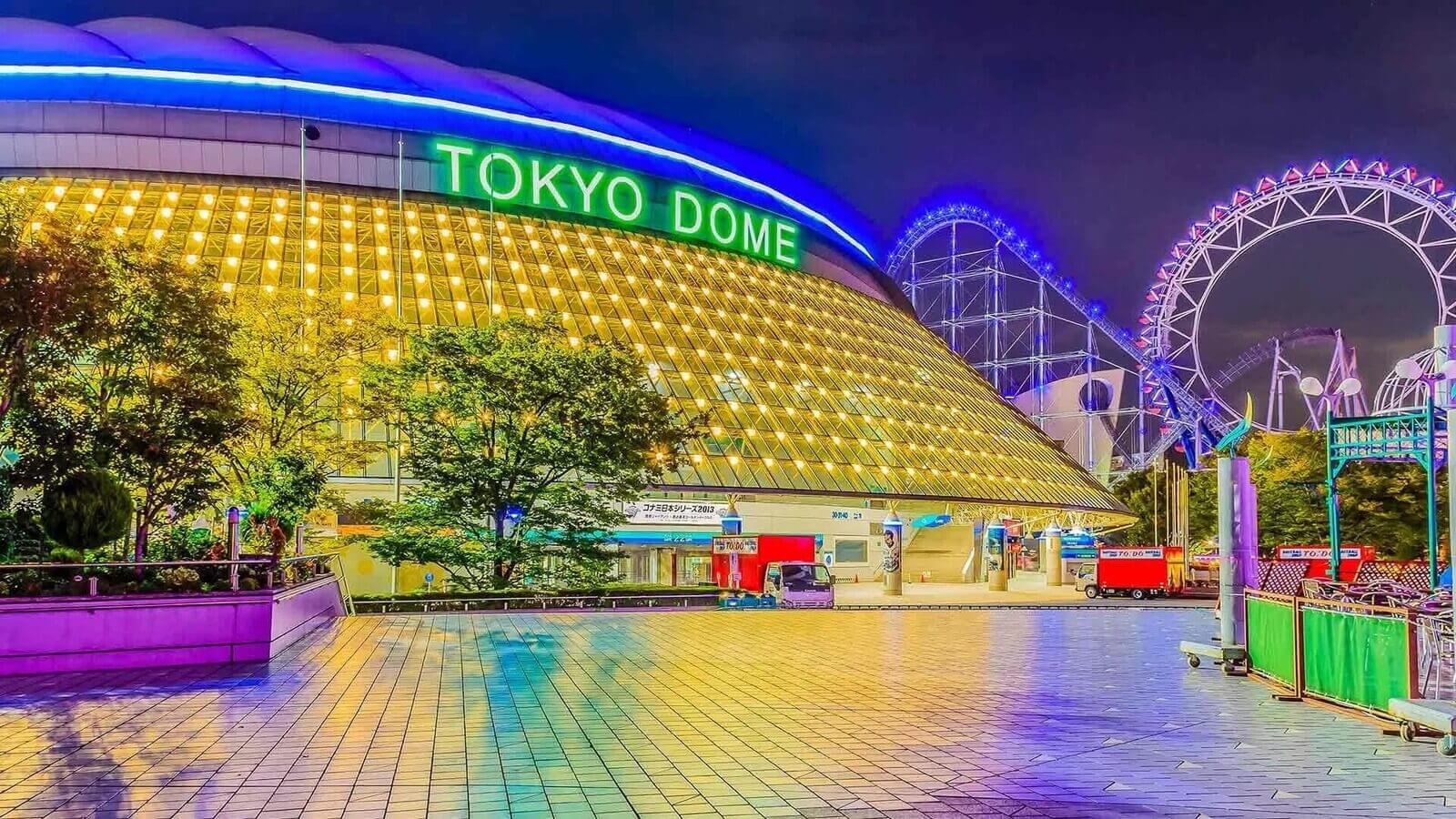
Tokyo Dome City is one of those “everything under one roof” entertainment destinations that makes you wonder if you actually need to visit the rest of Tokyo. Centered around the iconic Tokyo Dome—a 55,000-seat domed stadium that hosts Yomiuri Giants baseball games and major concerts—the complex sprawls across multiple buildings and zones including Tokyo Dome City Attractions (the amusement park), LaQua (shopping and spa), hotels, restaurants, and various entertainment venues.
The amusement park alone features over 20 rides and attractions, with the star being Thunder Dolphin, a roller coaster that reaches 130 km/h and literally pierces through the center of the Big-O, the world’s first centerless Ferris wheel.
What makes Tokyo Dome City work is how it functions for both tourists and locals. You might come for a baseball game and end up riding roller coasters, or plan an amusement park day and discover Spa LaQua—a 22-hour hot spring spa facility on floors 5-9 that lets you soak in natural mineral waters sourced from 1,700 meters underground.
The complex operates on a free-entry model for the amusement park, meaning you only pay for what you ride (individual attractions 600-1,800 yen, or day passes starting at 3,900 yen for adults). The whole setup feels designed for multi-generational visits where grandparents can shop at LaQua while parents ride Thunder Dolphin and kids enjoy gentler attractions like the carousel or teacup rides.
It’s not Tokyo Disneyland—the theming is minimal and the atmosphere leans more “urban fun zone” than “magical kingdom”—but if you want roller coasters, baseball, shopping, and hot springs all within a 10-minute walk, Tokyo Dome City delivers exactly that package.
Tokyo Dome City: Baseball, Roller Coasters, and Hot Springs All in One Place – If you’re looking for a Tokyo destination that packs multiple experiences into one location without requiring you to navigate subway transfers every hour, Tokyo Dome City is that rare entertainment complex that actually makes sense.
Centered around the iconic 55,000-seat Tokyo Dome stadium—home to the Yomiuri Giants baseball team and major concerts—the sprawling complex includes an amusement park with over 20 rides, LaQua shopping and spa facility, multiple hotels, restaurants, and enough entertainment options to fill an entire day or just a quick two-hour stop depending on your schedule.
Your Complete Guide to Tokyo Dome City’s Amusement Park and Attractions
Tokyo Dome City occupies a sizable chunk of Bunkyo-ku at 1-3-61 Koraku, Tokyo 112-0004, roughly a 5-minute walk from Suidobashi Station or literally 1 minute from Korakuen Station.
The name “Tokyo Dome City” refers to the entire entertainment district, not just the stadium itself, which confuses first-time visitors who show up expecting only baseball.
The complex breaks down into several distinct zones: Tokyo Dome (the stadium), Tokyo Dome City Attractions (the amusement park), LaQua (shopping mall and spa), multiple hotels including Tokyo Dome Hotel, various restaurants and shops, and entertainment venues like the TeNQ Space Museum.
What makes the whole setup work is the free-entry model for the amusement park.
You don’t pay admission to walk through Tokyo Dome City Attractions—you only pay for what you actually ride, with individual attractions costing 600-1,800 yen or packaged options like the Ride 5 ticket (five attractions for a discounted price) and full day passes starting at 3,900 yen for adults.
Also read:
- Late Night Transportation in Tokyo: Getting Around After Midnight
- Tokyo Earthquake Preparedness: What Travelers Should Know
- Tokyo QR Code Culture: Digital Payments & Menus Made Simple
- Tokyo Ramen Shop Etiquette: Ordering, Eating & Paying
- Tokyo Laundry Guide: Coin Laundries & Hotel Services Made Simple
- Tokyo Drinking Water: Tap Water Safety & Alternatives
This means you can wander through, grab food, watch the Thunder Dolphin roller coaster pierce through buildings, and decide whether the rides justify the cost rather than committing upfront like at Tokyo Disneyland.
The Stadium Component
Tokyo Dome itself is a massive air-supported stadium that opened in 1988, earning the nickname “Big Egg” for its distinctive shape.
The stadium hosts Yomiuri Giants baseball games during the season (typically March through October), plus major concerts, events, and conventions year-round.
Attending a Giants game is a legitimate Tokyo experience—Japanese baseball culture includes organized cheering sections, mascots, beer vendors walking the stands, and snacks you won’t find at Western ballparks.
Ticket prices vary wildly depending on seating section and opponent, ranging from affordable outfield seats to premium infield boxes.
The stadium also houses the Japan Baseball Hall of Fame and Museum if you’re deep into baseball history, though that’s admittedly a niche interest.
Tokyo Dome City Attractions: The Amusement Park
The amusement park portion occupies the outdoor and partially covered areas surrounding Tokyo Dome, featuring over 20 rides and attractions that range from family-friendly to genuinely thrilling.
The star of the show is Thunder Dolphin, an Intamin roller coaster that reaches 130 km/h, loops through the center of the Big O Ferris wheel, and literally passes through a building.
Thunder Dolphin and Major Rides
Thunder Dolphin opened in 2003 and remains the park’s signature attraction.
The coaster layout is genuinely unique—watching it pierce through the LaQua building and thread through the centerless Ferris wheel is impressive even if you never ride it, but riding it delivers that perfect mix of speed, height, and urban scenery that makes city coasters special.
Individual ride tickets cost around 1,300-1,800 yen for Thunder Dolphin, which feels steep until you realize you’re riding a world-class coaster without paying Disney-level gate admission.
The Big O Ferris wheel deserves its own mention.
As the world’s first centerless Ferris wheel, it looks like a giant ring with nothing in the middle, creating unobstructed views of Tokyo from every cabin.
Some cabins even offer karaoke, because apparently singing while rotating 80 meters above Tokyo is a thing people want to do (and honestly, it’s kind of great).
The ride takes about 15 minutes and costs around 1,000 yen, with sunset and evening rides offering the best views when Tokyo’s lights come on.
Also read:
Other notable rides include Wonder Drop (a water slide where you plunge 13 meters into a pool—bring a change of clothes or accept getting wet), Onryou Zashiki haunted house, various kid-friendly options like carousel and teacups, and seasonal attractions that rotate throughout the year.
Ticket Options and Pricing Strategy
The ticketing system requires some math if you want to maximize value.
Individual rides cost 600-1,800 yen depending on the attraction.
The Ride 5 ticket gives you five attractions for a package price (typically around 3,900-4,500 yen depending on which rides you select).
Full day passes (called “One Day Passport”) start at 3,900 yen for adults during off-peak times and go up to 4,400 yen for peak days, with child rates lower.
If you’re planning to hit 3-4 major rides, the Ride 5 or day pass makes financial sense.
If you only want Thunder Dolphin and the Ferris wheel, paying individually saves money.
There’s also a Night Discount Passport sold from 5:00 PM for reduced prices, which works nicely if you’re combining Tokyo Dome City with other daytime activities.
LaQua: Shopping, Dining, and the Spa
LaQua occupies a multi-story building adjacent to the amusement park, offering shopping, dining, and—most surprisingly—Spa LaQua, a 22-hour hot spring facility sourced from 1,700 meters underground.
The spa operates from 11:00 AM to 9:00 AM the next day, which means you could theoretically arrive late evening, soak until you’re thoroughly pruned, nap in the relaxation areas, and emerge the next morning.
The Spa Experience
Spa LaQua charges 2,640-3,230 yen for entry depending on time of day and day of week, with additional charges for special treatments, massages, or private rooms.
The facility splits into gender-separated bathing areas with multiple indoor and outdoor hot spring pools, saunas, and washing stations, plus co-ed relaxation zones where you wear provided lounge outfits and can watch TV, read, nap, or just exist in comfortable silence.
The hot springs are legitimate mineral waters rather than heated tap water, which matters if you care about authentic onsen experiences versus just getting in warm water.
The outdoor baths offer city views, which creates a surreal experience of soaking in natural hot springs while Tokyo skyscrapers loom in the background.
Many visitors combine amusement park rides with post-coaster spa recovery, which honestly makes perfect sense if you’ve just spent two hours screaming on Thunder Dolphin.
Shopping and Food Options
LaQua’s shopping floors feature about 70 stores covering fashion, cosmetics, lifestyle goods, and various specialty shops.
It’s not massive by Tokyo mall standards, but it’s convenient if you need to kill time between activities or want souvenirs without traveling elsewhere.
The dining options span Japanese, Western, and fusion cuisine across multiple floors, with casual options like Shake Shack and Taco Bell mixed in with sit-down restaurants.
Getting to Tokyo Dome City and Navigating the Complex
Tokyo Dome City’s location in Bunkyo-ku makes it highly accessible from central Tokyo.
From JR Suidobashi Station (JR Sobu Line), the East or West Exit puts you about 3-5 minutes away on foot.
From Korakuen Station (Tokyo Metro Marunouchi and Namboku Lines), Exit 2 is literally 1 minute from the complex.
Kasuga Station (Toei Mita and Oedo Lines) via Exit A1 is about 2-3 minutes away.
The GPS coordinates center around 35.7056, 139.7519 if you’re navigating by phone.
Once you arrive, the complex is straightforward to navigate—Tokyo Dome is the massive egg-shaped building you can’t miss, the amusement park spreads around it with visible roller coasters and Ferris wheel, and LaQua is the multi-story building adjacent to the rides.
Signs throughout the complex point toward major areas, and English signage is reasonably available given the tourist traffic.
When to Visit Tokyo Dome City and How Long to Allocate
Tokyo Dome City works year-round as a mix of indoor and outdoor facilities.
The amusement park operates in all seasons, though summer heat and winter cold affect how much you’ll enjoy standing in outdoor queues.
Spring and autumn offer the most comfortable weather for mixing indoor and outdoor activities.
Winter brings special illumination events (Tokyo Snow Dome City runs November-March with elaborate light displays), which creates evening atmosphere even if you skip the rides.
Time allocation depends entirely on what you’re combining.
If you’re attending a baseball game, that’s 3-4 hours.
Adding the amusement park with 4-5 rides means another 2-3 hours depending on wait times.
Spa LaQua can eat anywhere from 1-6 hours depending on how committed you are to soaking and relaxing.
Most visitors spend 3-6 hours total, though a baseball game plus full park experience can stretch to a full day.
Crowd Patterns
Weekdays see lighter crowds than weekends, especially during school hours when local families are absent.
Weekend afternoons get busy, particularly at popular rides like Thunder Dolphin where wait times can hit 30-60 minutes.
Evening hours after 5:00 PM thin out as day visitors leave, making the Night Discount Passport a smart budget and crowd-avoidance strategy.
Baseball game days bring significant crowds to the stadium area, and if the Giants are playing a popular opponent, the entire complex feels busier.
Check the Tokyo Dome event calendar if you want to avoid game-day crowds or intentionally experience them.
Budget Planning
Tokyo Dome City can range from budget-friendly to expensive depending on choices.
Walking through the complex costs nothing.
Individual amusement park rides run 600-1,800 yen each, day passes 3,900-4,400 yen.
Spa LaQua adds 2,640-3,230 yen.
Baseball tickets vary from 1,500 yen for outfield seats to 5,000+ yen for premium locations.
Food ranges from 1,000-1,500 yen for casual meals to 3,000+ yen for sit-down restaurants.
A realistic budget for a half-day visit with amusement park day pass, one meal, and maybe the spa runs about 8,000-12,000 yen per person.
Adding a baseball game pushes that higher.
You can trim costs significantly by paying per ride instead of buying passes, bringing your own snacks (allowed in the free-entry park areas), and skipping the spa.
Who Should Visit Tokyo Dome City
Tokyo Dome City appeals to travelers who want multiple entertainment options in one location without the Disney/Universal commitment of time and money.
Families with kids find value in the variety—younger children enjoy gentle rides while older siblings hit Thunder Dolphin, and parents can take spa breaks while kids ride multiple times.
Baseball fans should absolutely attend a Giants game if the season aligns with their visit, as Japanese baseball culture is genuinely different and fun compared to Western games.
Solo travelers and couples appreciate the flexibility of mixing activities based on mood—ride coasters for adrenaline, spa for relaxation, shopping for retail therapy, all without changing locations.
The free-entry model means you can treat it as a casual stop rather than a committed destination.
When to Skip Visiting Tokyo Dome City
If you’ve already planned Tokyo Disneyland or DisneySea and want a different theme park experience, Tokyo Dome City delivers that—but if you’re choosing between them, the Disney parks offer more theming, atmosphere, and overall polish.
Tokyo Dome City is more “urban fun zone” than “immersive themed experience,” which appeals to different sensibilities.
Thrill-seekers who’ve visited major international theme parks might find the ride selection limited—Thunder Dolphin is excellent, but the overall coaster count is small compared to parks like Fuji-Q Highland or Western six-flags-style operations.
If roller coasters are your primary goal, other options exist.
Visitor Reviews and Reputation
Tripadvisor gives Tokyo Dome City a solid 4.1 out of 5 stars based on 766 reviews, with the amusement park component and stadium generating additional reviews separately.
Positive feedback highlights the convenient location, variety of entertainment options under one umbrella, Thunder Dolphin’s unique layout, and the appeal of combining different activities in one visit.
Common praise points include the free-entry model that lets you explore before committing to spending, the quality of Thunder Dolphin and Big O Ferris wheel, Spa LaQua as an unexpected highlight, and the overall family-friendly atmosphere.
Many reviewers note pleasant surprise at how much there is to do beyond just the stadium.
Criticisms focus on individual ride costs adding up quickly if you don’t buy passes, occasional ride closures for maintenance creating disappointment, the somewhat dated feel of certain attractions compared to newer theme parks, and crowds during peak times.
Some visitors expected more given the “City” name and felt the amusement park was smaller than anticipated, though others counter that expectations should match reality—it’s an urban entertainment complex, not a sprawling theme park resort.
Practical Final Tips For Visiting Tokyo Dome City
Check the official website at https://www.tokyo-dome.co.jp/en/ for current operating hours, ride schedules, and special events, as these change seasonally and certain rides close for maintenance regularly.
The complex offers wheelchair accessibility throughout, with elevators, accessible toilets, and relatively smooth pathways, though some rides have physical restrictions.
Parking is available at paid lots (400-500 yen per 30 minutes), but given the excellent train access, most visitors rely on public transit.
ATMs and convenience stores are available on-site, and major restaurants accept credit cards though some smaller vendors prefer cash.
Tokyo Dome City delivers what it promises: a versatile entertainment complex where you can catch a baseball game, ride a world-class roller coaster through buildings, soak in natural hot springs, shop, eat, and generally fill several hours without needing a detailed itinerary or extensive planning.
It’s not going to blow you away with Disney-level theming or Fuji-Q Highland’s extreme coaster collection, but for convenient, flexible, multi-activity fun in central Tokyo, the complex makes a solid case for itself.
Read More
Attraction Types
Tourist Attraction
Business Park
Shopping Mall
Amusement Center
Entertainment Complex
Stadium
Arena
Spa
Things to Know
- Onsite services
- Live performances
- Wheelchair accessible entrance
- Wheelchair accessible parking lot
- Wheelchair accessible restroom
- Wheelchair accessible seating
- Arcade games
- Food
- Restaurant
- Restroom
- Wi-Fi
- Free Wi-Fi
- Family-friendly
- Good for kids
- Playground
- Paid parking garage
- Paid parking lot
Our Notes & Verdicts
Our Rating: 4.7
Our travel blog team checked out Tokyo Dome City on a Saturday afternoon, and we weren’t sure what to expect. We thought it was just a place with a big baseball dome, but we were in for a surprise. It turned out to be way more fun and had a lot more going on than we thought.
We started at the amusement park, and the first ride that caught our eye was Thunder Dolphin. Watching it zoom through buildings and right through the middle of a Ferris wheel was pretty cool, and riding it at 130 km/h was exhilarating – especially with the Tokyo skyline whizzing by. We got an adrenaline rush just watching it, and riding it was even better.
The amusement park has a free-entry model, so we could wander around, check out the rides, and decide which ones we wanted to pay for. We ended up buying a Ride 5 ticket, which gave us a discount on five different rides, including Thunder Dolphin, the Big-O Ferris wheel, and the Wonder Drop water slide.
After we were done with the roller coasters, we headed over to LaQua for lunch and stumbled upon the spa area. At first, we were like, “A spa at an amusement park? That’s weird.” But then we found out it was open 22 hours a day and had natural hot springs from way underground, so we were intrigued.
The entrance fee was between 2,640 and 3,230 yen, and that got us access to the bathing areas, saunas, and a co-ed relaxation zone where we could lounge around in comfy outfits, watch TV, or take a nap. We spent a couple of hours there, and it was just what we needed to recover from all the adrenaline at the amusement park.
For us, Tokyo Dome City was one of those places that works no matter how much time you have. You can stop by for a quick visit and ride a couple of coasters, or you can spend the whole day there and catch a baseball game or hang out at the spa. Just be sure to budget accordingly – the individual ride costs can add up fast if you don’t get a day pass.
Operating Hours
Location
1 Chome-3-61 Koraku, Bunkyo City, Tokyo 112-0004, Japan
Nearest Train Station(s)
JR: Suidobashi Station (JR Sobu Line, East/West Exit, 3-5 minute walk) | Subway: Korakuen Station (Tokyo Metro Marunouchi and Namboku Lines, Exit 2, 1 minute walk) | Subway: Kasuga Station (Toei Mita and Oedo Lines, Exit A1, 2-3 minute walk)
Nearest Bus Stop(s)
Tokyo Dome City/Korakuen area bus stops | Suidobashi Station bus stops serving local routes
 DiscoverCars
 RentalCars
Tokyo Trip Add-Ons
Equip yourself for the ultimate Tokyo adventure with the following add-ons, curated just for you.




Frequently Asked Questions (FAQs)
Tokyo Dome City is worth visiting if you’re looking for a flexible entertainment option that doesn’t require the full-day commitment and advance planning of Tokyo Disneyland or DisneySea. The complex’s free-entry model for the amusement park means you can walk through, check out Thunder Dolphin piercing through buildings at 130 km/h, ride the centerless Ferris wheel, grab food, and leave—or stay for six hours mixing rides, spa time, and shopping depending on your mood and budget.
This flexibility is the main selling point: you’re not locked into “we paid 8,000 yen admission so we have to stay all day” thinking that theme parks create.
The value depends on what you’re combining. If you only ride Thunder Dolphin and the Big O Ferris wheel, you’re paying around 2,300-2,800 yen for two attractions, which feels reasonable for the unique experience of urban coasters threading through buildings.
Add Spa LaQua (2,640-3,230 yen for natural hot springs from 1,700 meters underground), and suddenly you’ve got a half-day that mixes adrenaline with serious relaxation in one location. Attending a Yomiuri Giants baseball game adds authentic Japanese sports culture that’s genuinely different from Western baseball—organized cheering sections, mascots, and stadium food you won’t find at home make it memorable even if you’re not normally into baseball.
The “not worth it” scenario applies if you’re expecting Disney-level theming and polish. Tokyo Dome City is more “urban fun zone” than “immersive theme park,” with minimal storytelling and atmosphere that leans functional rather than magical.
If you’ve already committed a day to Fuji-Q Highland for extreme coasters or Tokyo Disneyland for the full theme park experience, Tokyo Dome City’s ride collection feels limited by comparison. But as a convenient, flexible stop that works for 2-6 hours depending on what you choose, it delivers exactly what it promises without requiring extensive planning or breaking your budget.
Tokyo Dome City is a sprawling entertainment complex in Bunkyo-ku centered around Tokyo Dome stadium, combining an amusement park, shopping mall, spa, hotels, restaurants, and the stadium itself all in one walkable area at 1-3-61 Koraku, Tokyo 112-0004. The name confuses first-time visitors because “Tokyo Dome City” refers to the entire district, not just the dome-shaped stadium—though the 55,000-seat Tokyo Dome is definitely the anchor attraction that gave the complex its name.
The complex breaks down into several distinct zones. Tokyo Dome is the massive air-supported stadium (nicknamed “Big Egg”) that hosts Yomiuri Giants baseball games during the season and major concerts year-round.
Tokyo Dome City Attractions is the amusement park portion with over 20 rides including Thunder Dolphin roller coaster and the Big O Ferris wheel, operating on a free-entry model where you only pay for what you ride. LaQua occupies a multi-story building offering shopping, dining, and Spa LaQua—a 22-hour hot spring facility with natural mineral waters sourced from 1,700 meters underground.
Beyond those main components, the complex includes Tokyo Dome Hotel, various other restaurants and shops scattered throughout, TeNQ Space Museum, and the Japan Baseball Hall of Fame and Museum for niche interests. The whole setup functions like a mini entertainment district where you can attend a baseball game, ride roller coasters, soak in hot springs, shop, and eat without needing to navigate trains between locations.
It opened gradually from the 1980s onward, with Tokyo Dome itself opening in 1988 and various additions like Thunder Dolphin (2003) and LaQua expansion continuing through the 2000s.
The cost depends entirely on what you do, which is both the advantage and complication of Tokyo Dome City’s pricing structure. Walking through the complex costs absolutely nothing—the amusement park operates on free entry, so you can explore, take photos, grab food, and leave without spending a yen if you skip the rides.
If you’re riding attractions, individual rides cost 600-1,800 yen each, with major attractions like Thunder Dolphin running around 1,300-1,800 yen per ride. The Ride 5 ticket packages five attractions for approximately 3,900-4,500 yen depending on which rides you select, while full One Day Passport access costs 3,900-4,400 yen for adults (child rates are lower).
There’s also a Night Discount Passport sold from 5:00 PM for reduced prices if you’re arriving later in the day.
Beyond rides, Spa LaQua charges 2,640-3,230 yen for entry depending on time and day of week, with additional costs for treatments, massages, or private rooms. Baseball game tickets at Tokyo Dome vary wildly from around 1,500 yen for outfield seats to 5,000+ yen for premium infield locations, depending on the opponent and seat location.
Food ranges from 1,000-1,500 yen for casual meals to 3,000+ yen at sit-down restaurants.
A realistic full experience combining amusement park day pass (3,900-4,400 yen), one meal (1,500 yen), and spa (2,640-3,230 yen) runs roughly 8,000-10,000 yen per person. You can trim this significantly by paying per ride instead of buying passes (if you only want 2-3 attractions), bringing snacks, and skipping the spa.
Or you can add a baseball game and push spending to 12,000-15,000 yen. The flexibility means you control costs based on choices, but it also means you need to do math and decide what combination makes sense for your budget and interests.
Tokyo Dome is famous primarily as Japan’s first fully covered baseball stadium and home to the Yomiuri Giants—one of Japan’s most successful and popular professional baseball teams. The dome opened in 1988 as a revolutionary air-supported structure (meaning the roof is held up by air pressure rather than physical supports), earning the nickname “Big Egg” for its distinctive white egg-shaped exterior.
The 55,000-seat stadium brought all-weather baseball to Tokyo, eliminating rain delays and creating a controlled environment that transformed how Japanese baseball operated.
Beyond baseball, Tokyo Dome became famous as a major concert venue hosting international superstars and massive events that require stadium-sized capacity. Artists from Madonna to BTS have performed there, and the venue’s central Tokyo location plus excellent train access make it a premier choice for large-scale entertainment.
The stadium also hosts the Japan Baseball Hall of Fame and Museum, various corporate events, conventions, and even food festivals, functioning as Tokyo’s multi-purpose event centerpiece rather than just a sports venue.
The broader Tokyo Dome City complex built around the stadium added to the fame by creating an entertainment destination that goes beyond just attending games. When Thunder Dolphin roller coaster opened in 2003, the image of a high-speed coaster threading through the centerless Big O Ferris wheel and piercing through LaQua building became iconic—those photos of a roller coaster weaving through urban infrastructure with Tokyo Dome in the background show up constantly in “things to do in Tokyo” guides and travel blogs.
The combination of historic stadium, dramatic roller coaster visuals, and convenient location created a landmark that represents both traditional Japanese baseball culture and modern urban entertainment. Even people who’ve never visited Tokyo often recognize photos of Thunder Dolphin piercing through the Ferris wheel, which keeps Tokyo Dome City in the conversation as a must-visit or at least must-photograph Tokyo destination.
Disclaimer
While we at Tokyo Trip Guide do our best to show you accurate prices, we just can't promise they'll stay the same. Here's why: since we're not actually selling anything ourselves - we work with partner companies who set their own prices - we can't control what deals they offer. That's why it's best to check directly with our suggested deal providers to see their latest prices for attraction tickets.
Just so you know, if you end up buying something from the providers we list here, we might get a small commission. We'd be really happy if you used our recommended links to make your bookings!