
Shiba Park
Historic public park established in 1873, surrounding Zojoji Temple with expansive lawns, Tokyo Tower views, and the scenic Momiji Valley for autumn foliage.
4.2 (15338 reviews)
Overview
Book Experience
Attraction Types
Operating Hours
Location
Things to Know
 Book Experience Now!
Check current price and availability.
 Viator
 Tripadvisor
 Trip.com
 GetYourGuide
 Klook
Klook
Overview
Shiba Park holds the distinction of being one of Japan’s oldest public parks, established in 1873 during the Meiji era when the country was opening up and modernizing rapidly.
The park spreads across roughly 122,500 square meters (about 30 acres) in Minato City, wrapping around the historic Zojoji Temple and sitting in the shadow of Tokyo Tower, which technically isn’t in the park but dominates every photo you’ll take there.
The park originally included Zojoji Temple grounds until 1945, when the separation of religion and state split them into distinct areas, though they still function as an integrated experience for visitors who wander between temple gates, park lawns, and tower views.
What makes Shiba Park worth visiting is the combination of history, nature, and that perfect Tokyo contrast of traditional and modern.
The park is home to massive camphor, zelkova, and ginkgo trees that have stood for decades, plus Momiji Valley (Momijidani)—a man-made ravine planted with maple trees in 1984 that turns brilliant red and gold every autumn.
You’ll also find Shiba Maruyama, one of the largest ancient keyhole-shaped burial mounds in Tokyo, and Shiba Toshogu Shrine tucked into the grounds.
The park functions as a genuine local green space where office workers eat lunch on benches, families spread picnic blankets, and tourists pause between Zojoji Temple and Tokyo Tower without realizing they’ve technically entered one of Japan’s first designated public parks.
It’s free to enter, open 24 hours, and requires zero planning—just show up, walk the paths, and enjoy having actual grass and trees in the middle of urban Tokyo.
Shiba Park Guide: Cherry Blossoms, Autumn Colors, and Tokyo Tower Views
Shiba Park offers something rare in Tokyo’s concrete jungle.
You get green space, history, and iconic tower views without extensive travel.
Located in Minato City, this 122,500 square meter park combines traditional temple grounds, urban nature, and modern architectural contrast into one accessible destination that serves locals and travelers equally well.
The park’s real magic lies in what it connects rather than standing alone as a grand attraction.
Walk through Shiba Park, and you’re moving through layers of Japanese history while framed by Tokyo Tower’s orange steel silhouette.
This isn’t a pristine Japanese garden demanding hushed reverence—it’s a functioning public space where office workers cut through on commutes, families spread picnic blankets, and photographers hunt for that perfect hanami-against-tower shot.
Also read:
- Tokyo Public Transportation Day Pass: Maximum Value Guide
- Tokyo Onsen Etiquette: Hot Spring Rules & Cultural Significance
- Golden Week in Tokyo: Crowds, Closures & Smart Planning Tips
- Tokyo Sakura Forecast: Cherry Blossom Predictions & Updates
- Tokyo Time Zone and Business Hours: A Traveler’s Handy Schedule
- Tokyo Pharmacy Guide: Where to Buy Medicine & Toiletries
Whether you’re spending 30 minutes between other attractions or planning a leisurely afternoon exploring historical sites, Shiba Park adapts to your timeline while delivering genuine Tokyo atmosphere that most guidebooks overlook.
Shiba Park: The Urban Green Space Connecting Tokyo Tower, Zojoji Temple, and History
Shiba Park’s story begins in 1873, placing it among Japan’s five oldest public parks alongside Ueno, Asakusa, Fukagawa, and Asukayama.
This timing placed the park at the heart of Japan’s Meiji Restoration transformation—a moment when the country was simultaneously dismantling feudal structures and adopting Western park concepts to modernize major cities.
The government converted lands that once served the Tokugawa shogunate into democratic public spaces, fundamentally reshaping how ordinary people accessed Tokyo’s green areas.
The land itself stretches back centuries before park designation.
Zojoji Temple relocated here in 1598 under the Tokugawa shogunate’s patronage, transforming the area into a religious and administrative center for centuries.
Before that religious presence, the location held even older significance—Shiba Maruyama, a 112-meter keyhole-shaped burial mound (kofun) constructed in the 5th century, still exists beneath the park’s tree cover today.
Few visitors realize they’re walking across a site where ancient Japan honored its dead, Tokugawa shoguns wielded power, and modern citizens now enjoy free access to nature.
This layering of historical periods creates something most Tokyo parks lack: a sense that you’re moving through time itself rather than experiencing a single designed moment.
Separating Temple from Park, Preserving the Connection
The year 1945 marked a turning point when post-war constitutional reforms mandated separation of religious and state institutions.
This legal distinction split Zojoji Temple grounds from the public park, creating technically separate administrative areas.
Yet walking through Shiba Park today makes this bureaucratic division feel almost invisible—you naturally flow between temple gates, park paths, and green lawns as if the space remained unified, because functionally it still operates that way for visitors.
The temple’s prominent Sangedatsu Gate (dating to 1611) serves as both temple entrance and a natural focal point that draws visitors deeper into temple grounds and surrounding park area.
Six successive Tokugawa shoguns rest in the temple cemetery, their burial sites adding profound historical weight to what could otherwise feel like just pleasant landscaping.
This integration of sacred and secular space, separated by law but connected by geography and visitor experience, reflects how modern Japan negotiates respect for both traditional religion and contemporary secular public access.
Momiji Valley’s Unexpected Addition
While the park dates back 1873, one of its most photographed seasonal features arrived relatively recently.
Created in 1984, Momiji Valley (Momijidani) represents a deliberate addition designed to enhance the park’s autumn appeal.
This man-made ravine features carefully planted maple trees, a small waterfall, and winding paths that descend below street level, creating a pocket microclimate that feels surprisingly separated from surrounding urban noise.
During November, when maple trees reach peak color, Momiji Valley transforms into a destination that rivals more famous autumn foliage sites without attracting Nikko or Kyoto’s overwhelming tour bus crowds.
The relatively small scale actually becomes an advantage—you’re not fighting through thousands of visitors to see the trees, and photography becomes feasible without waiting hours for crowds to clear.
Off-season, the ravine functions as a quiet respite where the sound of the small waterfall and rustling leaves replaces the constant urban hum.
What Actually Exists in the Park’s 30 Acres
Shiba Park resists the manicured aesthetic of designed gardens like Rikugien or Koishikawa Korakuen.
Instead, it functions as a genuine public park where locals cut through during commutes, families claim grass spaces for weekend gatherings, and tourists wander between clearly outlined attractions.
This practical, unpretentious character gives the space an authenticity that contrasts sharply with museums-quality gardens where every element serves aesthetic function.
The park’s composition centers on sprawling lawns anchored by massive trees that have occupied the space for decades—camphor trees with thick trunks wider than a person, towering zelkova trees, ginkgo trees that turn brilliant gold in autumn.
Walking paths connect various historical sites scattered throughout the grounds, creating multiple possible routes depending on what interests you.
There’s no single “correct” way to experience Shiba Park, which either appeals to visitors who enjoy organic exploration or frustrates those expecting clear wayfinding and designated viewing platforms.
Shiba Toshogu Shrine: Honoring the First Shogun
Nestled into the park grounds, Shiba Toshogu Shrine enshrines Ieyasu Tokugawa, the visionary leader who unified Japan and established the Tokugawa shogunate that would rule for 268 years.
The shrine itself is modest in scale compared to more famous Tokugawa shrines, but it houses historically significant elements that connect visitors directly to Japan’s feudal power structure.
Inside the shrine, a life-size wooden statue of Ieyasu was carved and installed when he reached 60 years old—an auspicious age in traditional Japanese culture marking transition to revered elder status.
The shrine grounds feature a massive ginkgo tree reportedly planted by the third shogun, Iemitsu Tokugawa, that now reaches approximately 22.5 meters in height with a trunk that requires multiple people holding hands to encircle.
This tree has witnessed centuries of Japanese history, standing as a living connection to Edo period governance and shogun family succession.
While Shiba Toshogu doesn’t match the architectural grandeur or visitor infrastructure of more famous shrines, its modest presence adds genuine historical depth that transforms Shiba Park from simple green space into a location where specific historical figures left tangible marks you can actually touch and observe.
Tokyo Tower: The Park’s Orange Sentinel
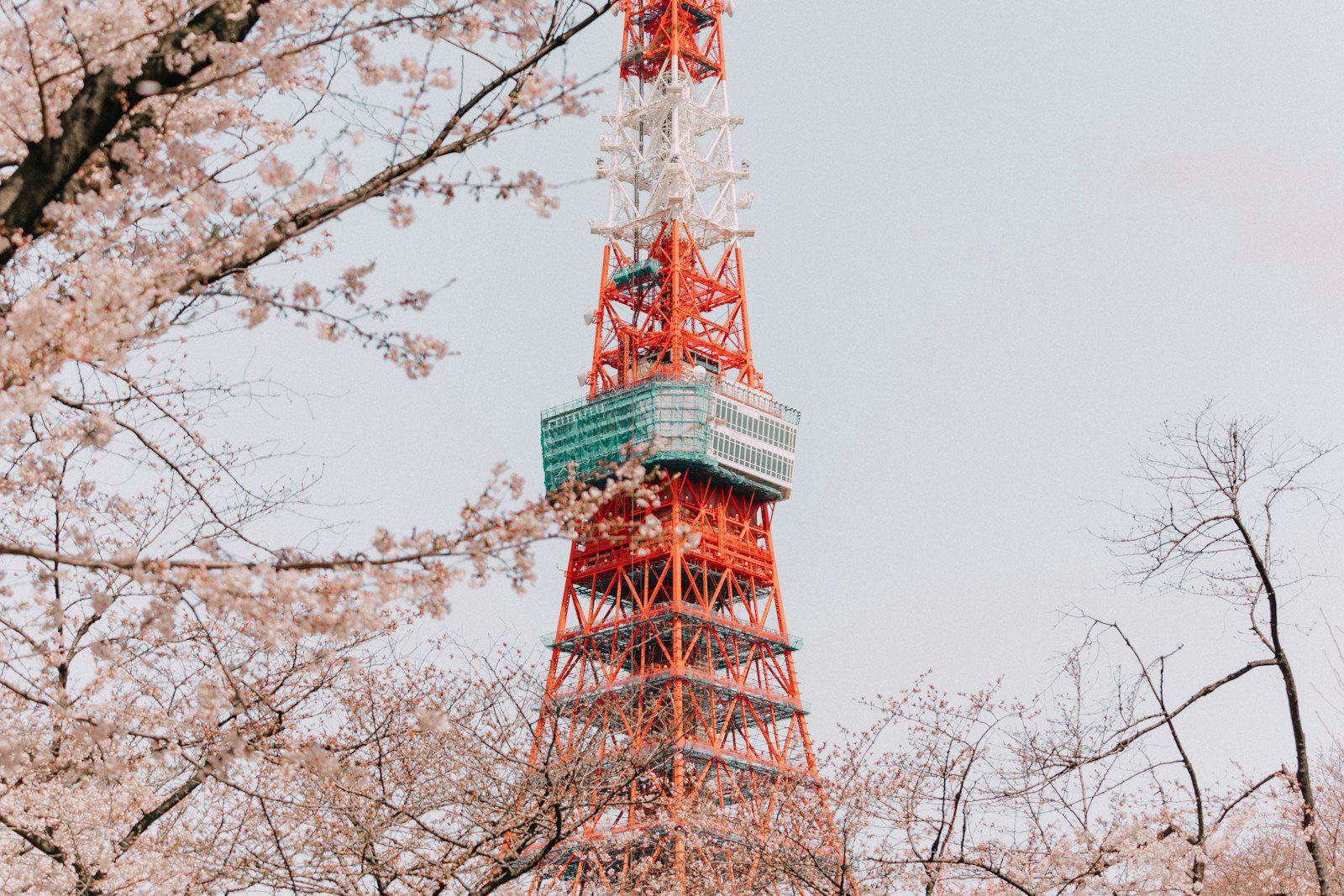
Tokyo Tower technically exists beyond Shiba Park’s boundaries, yet it so completely dominates every view and functions as the park’s defining visual anchor that ignoring it would miss the point.
This 333-meter orange tower (completed in 1958) originally served comprehensive radio and broadcasting functions, though it now operates primarily as a tourism landmark offering observation decks at 150 meters and 250 meters.
From ground level within Shiba Park, you get unobstructed tower views framed by tree branches—a compositional advantage that paid observation decks ironically can’t replicate.
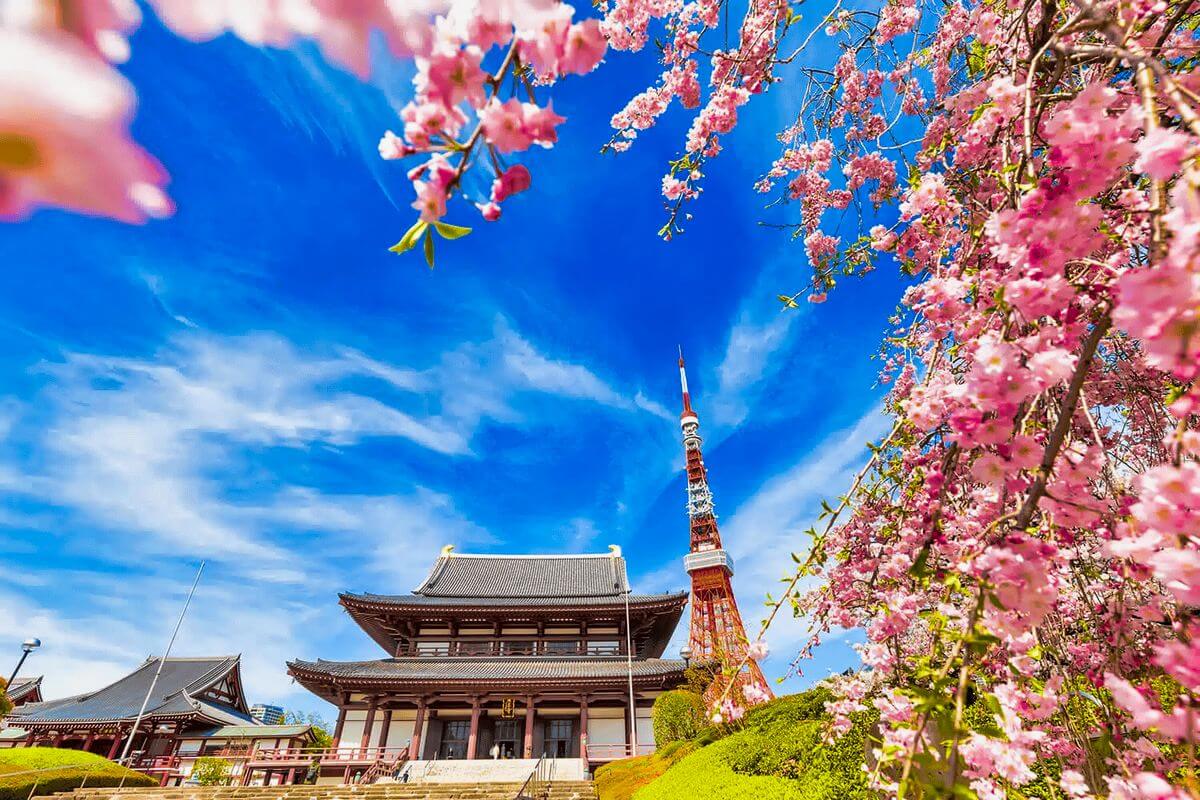
During cherry blossom season, pink petals contrast dramatically against orange steel, creating the quintessential “only in Tokyo” photograph that appears across travel blogs and Instagram feeds with remarkable regularity.
Autumn transforms the foreground with red and gold maple colors that frame the tower differently than spring’s sakura season, though with equal photographic impact.
Photography enthusiasts benefit from Shiba Park’s ground-level positioning more than Tokyo Tower’s upper observation decks, since those paid views eliminate the natural foreground elements that make the tower visually compelling.
On clear days, views from the upper deck reportedly extend toward Mount Fuji, but ground-level park photos offer compositional advantages those distant vistas can’t match.
Zojoji Temple: Religious Heritage Integrated with Park
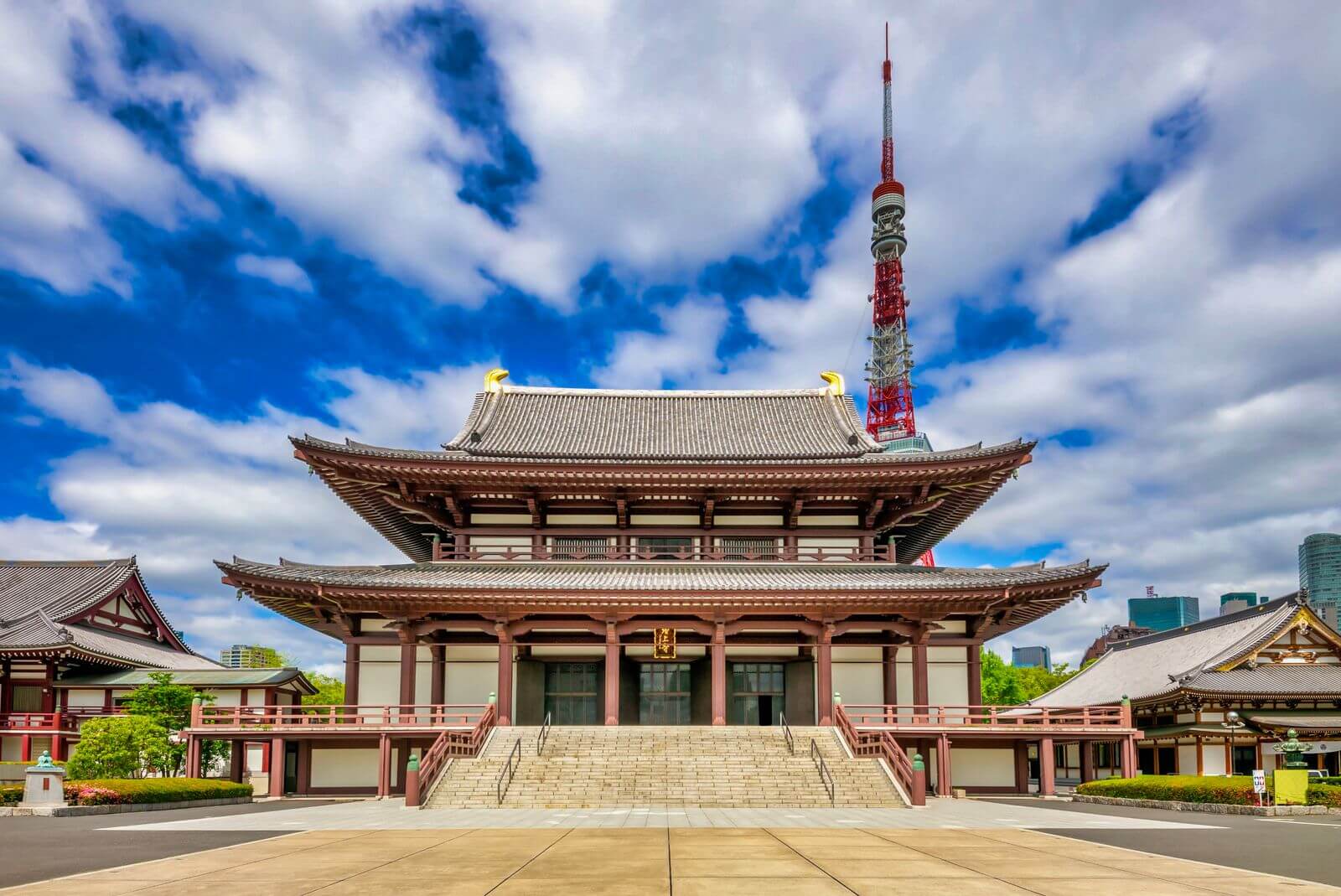
Zojoji Temple sits adjacent to Shiba Park with boundaries that feel more conceptual than physical, since the temple and park function as one integrated landscape for most visitors.
As the head temple of Jodo-shu Pure Land Buddhism, Zojoji maintains considerable religious significance beyond its role as tourist site.
The temple complex spans centuries of architectural development and contains multiple structures that reward extended exploration.
The Sangedatsu Gate, with its original construction dating to 1611, serves as the temple’s primary public entrance and architectural statement.
Inside the broader temple grounds, rows of small Jizo statues dedicated to children who died before their parents create an emotionally powerful space—these stone figures dressed in red bibs and hats, sometimes adorned with toys or tokens left by grieving families, offer a Buddhist perspective on child mortality that differs significantly from Western approaches.
The Tokugawa Shogun Family Cemetery contains burial sites for six successive shoguns and their families, a level of historical concentration that makes Zojoji one of Japan’s most historically consequential religious sites.
Walking naturally from the park through temple gates creates a seamless flow that makes the administrative separation between park and temple feel irrelevant—you’re experiencing one continuous landscape combining nature, history, and spirituality without needing to consciously transition between spaces.
Getting There: Strategic Station Options and Access Routes
Shiba Park occupies prime real estate at 1-4 Shibakoen, Tokyo 105-0011, with multiple train stations within reasonable walking distance.
This transit accessibility makes the park genuinely convenient for travelers already exploring nearby attractions.
Akabanebashi Station on the Toei Oedo Line sits closest at approximately 5 minutes’ walk from the park center via the Akabanebashi Exit.
Other viable options include Onarimon Station (Toei Mita Line, 6 minutes from Exit A1), Kamiyacho Station (Tokyo Metro Hibiya Line, 7 minutes from Exit 1), Shibakoen Station (Toei Mita Line, 10 minutes from Exit A4), and Daimon Station (Toei Asakusa Line, 10 minutes from Exit A6).
This cluster of station options means you’re likely never more than 10-minute walk away regardless of which line you’re using.
GPS coordinates around 35.6564, 139.7481 will place you at the park’s approximate center if navigating by smartphone.
If you’re already visiting Tokyo Tower or Zojoji Temple, Shiba Park essentially sits between them—you’ll encounter the green space naturally without requiring additional navigation effort.
Bus services run along Shibakoen and near Tokyo Tower as secondary options, though trains remain the most convenient approach for most visitors.
Finding Your Way Through the Park’s Organic Layout
The park lacks a formal singular entrance or marked route, which some visitors find refreshing and others find confusing.
You simply walk in from surrounding streets and follow paths that interest you, making Shiba Park function more like a neighborhood green space than a designed tourist destination with clear navigation.
Most visitors naturally enter near Zojoji Temple, walk across the open lawns toward Tokyo Tower’s visible silhouette, possibly detour toward Momiji Valley if they spot signage, and eventually drift toward Tokyo Tower’s base.
Walking steadily through the entire park takes 30-45 minutes, while leisurely exploration with photography stops and sitting extended periods stretches toward 1-2 hours.
The relatively compact size means you can’t really get lost—if you wander long enough, you’ll emerge onto a recognizable street or encounter the tower itself.
This low-stakes exploration appeals to visitors who enjoy discovering spaces organically rather than following prescribed routes.
Seasonal Rhythms and Timing Your Visit
Shiba Park functions as a 24-hour free public space year-round, but specific seasons unlock particular attractions that make timing worth considering.
Late March through early April brings the cherry blossom season (hanami) that transforms the park into a pilgrimage destination for flower viewing.
Families and office workers claim spots under blooming trees, spreading blankets and opening convenience store beers for picnics that capture something quintessentially Tokyo—mixing seasonal nature appreciation with urban informality.
The contrast of pink cherry blossoms (usually reaching peak bloom for roughly two weeks in early April, though timing varies annually) against Tokyo Tower’s orange steel represents the visual formula that appears across Japanese travel media with good reason—it’s genuinely striking and difficult to capture poorly.
If you’re visiting during cherry blossom season and Shiba Park falls within your Tokyo itinerary, the park deserves your time more than during other seasons.
Summer provides welcome shade and cooling tree cover that refuges from the surrounding concrete’s radiating heat.
Humidity often makes extended outdoor time uncomfortable, and the park loses some of its appeal when afternoon temperatures exceed 30 degrees Celsius.
Autumn (typically November) marks Momiji Valley’s moment of maximum visual impact, when maple colors transform the ravine into a display rivaling more famous destinations without the massive crowds.
Winter offers quiet visits and unobstructed Tokyo Tower views once trees lose their leaves, appealing to visitors who prioritize peaceful exploration over photogenic natural elements.
Time of Day: Morning Locals Versus Afternoon Tourists
Early morning visits (7-9 AM) reveal the park at its most authentically local.
Office workers cut through on commutes, elderly residents perform tai chi or exercise routines, and dog walkers occupy the lawns before temperature and crowds intensify.
This timing offers a genuine sense of how locals use the space rather than how tourists photograph it.
Mid-afternoon brings families, tourists, and photography-focused visitors, creating a noticeably different energy with more people stationary and more cameras visible.
Evening visits capture Tokyo Tower’s illumination against darkening sky, appealing to photographers seeking moody lighting.
The park’s 24-hour accessibility theoretically allows nighttime visits, though practical lighting becomes minimal and the appeal diminishes significantly outside standard visiting hours unless you’re specifically pursuing night photography.
Most visitors naturally cluster during daylight hours when park features remain visible and the space feels populated and safe.
What Separates Shiba Park from Designed Gardens
Shiba Park’s functional character contrasts sharply with precision-designed gardens like Rikugien or Koishikawa Korakuen, where admission fees support meticulous maintenance and every rock placement supposedly carries aesthetic or symbolic meaning.
Instead, Shiba Park functions as genuine democratic public space where locals conduct actual daily activities rather than preserving grounds as museum displays.
This authenticity brings both advantages and disadvantages depending on visitor expectations.
The park displays visible wear—established paths worn smooth by foot traffic, utilitarian benches showing age, occasional maintenance equipment scattered about rather than discreetly hidden.
This lack of pristine perfection appeals strongly to visitors seeking authentic local experience and genuinely frustrates those expecting manicured Japanese garden aesthetics that expensive admission supposedly guarantees.
Neither perspective is wrong—they simply reflect different expectations about what parks should deliver.
Shiba Park’s strength emerges through connectivity rather than standalone excellence.
The space effectively links Zojoji Temple, Tokyo Tower, Shiba Toshogu Shrine, Momiji Valley, and various historical sites into one walkable area where you can invest 30 minutes or three hours depending on depth of exploration.
It functions optimally as a pleasant connector between other attractions rather than as primary destination worth special travel.
Visitors already in the Minato area for other reasons consistently rate Shiba Park more positively than those making special trips hoping for grand garden experience.
Visitor Feedback and Realistic Expectations
Shiba Park maintains a 3.9 out of 5 star rating on Tripadvisor based on 382 reviews, reflecting a consensus of “quite nice but not extraordinary.” Positive reviews consistently emphasize convenient location, free access, pleasant green space within urban Tokyo, good tower photo opportunities, and historical elements scattered throughout.
Many visitors specifically appreciate the park as a rest stop between crowded attractions or a place to decompress and breathe after intensive Tokyo sightseeing.
Criticism typically centers on expectations versus reality—travelers expecting manicured Japanese garden aesthetics encounter utilitarian urban park instead, creating disappointment despite the space being objectively nice.
Some reviews mention underwhelming Momiji Valley when visited outside peak foliage season, since the ravine is inherently small and loses visual impact when trees are bare or fully leafed.
A few negative reviews reflect frustration with lack of clear wayfinding or disappointment that the park isn’t more developed as a tourist destination.
The most helpful reviews come from travelers who used Shiba Park exactly as it functions best—as a convenient green buffer between Tokyo Tower and Zojoji Temple, requiring minimal time and delivering solid value despite modest individual features.
Travelers expecting standalone grandeur or pristine Japanese aesthetic consistently rated lower than those treating it as contextual addition to other itinerary elements.
Practical Details: Budget, Facilities, and Logistics
Entry costs nothing, sitting on grass costs nothing, and walking paths cost nothing—Shiba Park genuinely ranks among Tokyo’s few completely free experiences, which carries considerable value when stacking multiple paid attractions into single days.
Public toilets operate throughout the park, though cleanliness standards vary compared to commercial facility expectations.
Benches and rest areas provide seating, and main paths generally accommodate wheelchair access, though Momiji Valley’s terrain includes slopes and stairs limiting mobility for some visitors.
The park contains no on-site parking, though paid lots exist around Tokyo Tower and surrounding streets at typical Tokyo rates (roughly 400-500 yen per 30 minutes).
No restaurants or cafes operate within the park itself, though Tokyo Tower’s base and surrounding neighborhood offer extensive dining within 5-10 minutes’ walking distance.
Many visitors bring convenience store snacks or prepared bento boxes for picnics on lawns, perfectly acceptable park behavior that locals regularly practice.
This approach lets you combine green space relaxation with cost-effective meals while enjoying Tokyo’s weather and the park’s unique combination of nature and urban backdrop.
Who Benefits From Shiba Park Visits
Shiba Park makes logical sense for travelers already planning Tokyo Tower or Zojoji Temple visits who want to add green space relaxation between major attractions without investing significant travel time.
If you’re staying in Minato, Roppongi, or Shibuya, a brief train ride connects you to legitimate nature access without the commitment larger parks like Yoyogi or Ueno demand.
The convenient transit access and free admission mean incorporating Shiba Park into existing plans carries minimal friction.
Photographers actively appreciate diverse tower-framing opportunities, particularly during cherry blossom or autumn foliage seasons when natural foreground elements significantly enhance composition possibilities.
The ground-level vantage points offer advantages over paid observation decks by including organic framing elements that tower views eliminate.
Families with young children benefit from open lawns where kids can run freely without traffic anxiety or crowding concerns—Shiba Park’s casual atmosphere means nobody objects to children being energetic or loud, normalizing kid-centric park usage.
History enthusiasts find genuine value in Tokugawa shogun connections, ancient burial mounds dating to the 5th century, and temple grounds that contextualize how this specific location functioned during Edo period power structures.
The concentration of historical significance within compact walkable space creates an efficient learning experience without requiring extensive research or specialized knowledge to appreciate.
When Shiba Park Should Be Lower Priority
If you’re specifically hunting manicured Japanese garden experiences with carefully designed aesthetics reflecting centuries of cultivation philosophy, places like Rikugien, Koishikawa Korakuen, or the Imperial East Gardens deliver that more effectively than Shiba Park’s functional urban greenery.
Those designed spaces justify admission fees through aesthetic precision and historical significance that Shiba Park, despite its own historical depth, doesn’t match in terms of visual refinement.
If your Tokyo schedule is extremely compressed and you’re prioritizing major attractions like teamLab museums, Senso-ji Temple, or comprehensive shopping districts, Shiba Park works best as a bonus add-on to nearby attractions rather than as independent destination deserving special allocation of limited time.
The park delivers value primarily through convenient integration rather than standalone significance that would justify rearranging other plans to accommodate it.
Planning Your Shiba Park Visit
Check current conditions before visiting if you’re specifically targeting cherry blossoms or autumn foliage, since bloom timing varies annually and arriving a week off means bare branches instead of peak displays.
The official Tokyo tourism page provides seasonal updates that help optimize timing around natural phenomena that make Shiba Park visually compelling rather than merely pleasant.
Combining Shiba Park with Tokyo Tower and Zojoji Temple creates a natural half-day experience mixing observation deck engineering marvels, Edo-period religious history, and urban nature appreciation—all within walking distance and accessible without extensive transit time.
This integration allows experiencing multiple Tokyo facets (modern technology, traditional history, contemporary urban lifestyle) without spending half your day on trains between distant attractions.
Bring a camera if visiting during cherry blossom or autumn seasons, arrive with realistic expectations about this being utilitarian public park rather than museum-quality garden, and plan for 45 minutes to two hours depending on how deeply you explore temple grounds and historical sites.
These practical elements transform a casual visit into intentional experience rather than accidental pass-through.
Shiba Park won’t become your Tokyo trip’s defining highlight or appear in future memory as most memorable experience.
What it will do is deliver exactly what good urban parks should accomplish: providing free access to grass and trees, adding historical context that deepens understanding of the location, creating photo opportunities within realistic aesthetic bounds, and offering a place to sit down and breathe between exhausting major attractions.
Read More
Attraction Types
Tourist Attraction
Public Park
Historic Site
Green Space
Things to Know
- Onsite services
- Wheelchair accessible entrance
- Public restroom
- Good for kids
- On-site parking
- Dogs allowed
- Free public access
- Walking paths
- Benches and rest areas
- Nearby parking (paid lots around Tokyo Tower area)
- No on-site restaurants or cafes (available nearby at Tokyo Tower and surrounding area)
- No dedicated parking facility for the park itself
- No free WiFi
- Limited wheelchair accessibility in Momiji Valley due to terrain
Our Notes & Verdicts
Our Rating: 4.9
Our travel blog team visited Shiba Park on a lovely spring afternoon, and we were surprised by how much we enjoyed it. We initially came for some Tokyo Tower photos, but we ended up staying an extra hour just wandering around and appreciating the greenery after being in busy Shibuya all morning. The park isn’t fancy or perfectly manicured like the Japanese gardens you see in pictures – it’s more of a regular urban park where locals hang out, not just a spot for tourists.
We saw office workers eating lunch on benches under big trees, families with kids playing on the lawn, and couples taking Tokyo Tower photos from different angles, trying to get the perfect shot with the temple gates in the foreground. We stumbled upon Momiji Valley, a small ravine with maple trees and a little waterfall, and suddenly the city noise disappeared, even though we were just minutes from Tokyo Tower.
What we liked most was how Shiba Park connects different attractions rather than being a standalone destination. We walked from Zojoji Temple through the park to Tokyo Tower, sat on the grass to rest our feet, explored the paths around Shiba Toshogu Shrine, and used the space just like locals do – as a pleasant green break between urban experiences.
We’d love to come back in autumn to see Momiji Valley with fall colors. Reviews and photos suggest it makes the park truly beautiful, not just nice. For us, Shiba Park was one of those low-key spots that doesn’t demand much but gives you exactly what you need when you need a break from Tokyo’s intensity: grass, trees, benches, and views of one of the city’s most iconic landmarks without paying or fighting crowds.
🏨 Related Accommodations
-
Futakotamagawa Excel Hotel Tokyu
1-14-1 Tamagawa Setagaya Ku, Tokyo 158-0094, Japan
Not sure which hotel to select? Try these hotel search engines below
Operating Hours
Location
4 Chome-10-17 Shibakoen, Minato City, Tokyo 105-0011, Japan
Nearest Train Station(s)
Subway: Akabanebashi Station (Toei Oedo Line, Akabanebashi Exit, 5-minute walk) | Subway: Onarimon Station (Toei Mita Line, Exit A1, 6-minute walk) | Subway: Kamiyacho Station (Tokyo Metro Hibiya Line, Exit 1, 7-minute walk) | Subway: Shibakoen Station (Toei Mita Line, Exit A4, 10-minute walk) | Subway: Daimon Station (Toei Asakusa Line, Exit A6, 10-minute walk) | JR: Hamamatsucho Station (JR Yamanote Line, JR Keihin-Tohoku Line, North Exit, 15-minute walk)
Nearest Bus Stop(s)
Shibakoen Bus Stop | Tokyo Tower area bus stops | Zojoji Temple area stops
 DiscoverCars
 RentalCars
Tokyo Trip Add-Ons
Equip yourself for the ultimate Tokyo adventure with the following add-ons, curated just for you.








Related Attractions
Tokyo DisneySea
Disney's sea-themed park featuring 7 ports of call...
Momiji Waterfall
Small landscaped waterfall and maple-filled ravine...
Tokyo Disneyland
Theme park that features various rides and live sh...
Fuji-Q Highland
World-famous amusement park at the base of Mount F...
Frequently Asked Questions (FAQs)
Shiba Park is worth visiting if you’re already in the area for Tokyo Tower or Zojoji Temple and want to add a green buffer to your day without committing extra travel time or money. The park itself is free, open 24 hours, and provides exactly what urban parks should: grass and trees where you can sit down, breathe, and reset between Tokyo’s relentless attractions.
If you’re hunting for that perfect Tokyo Tower photo with natural foreground elements, the park delivers multiple angles where tree branches, temple gates, or seasonal foliage frame the orange tower in ways you can’t get from crowded observation deck queues.
The value equation changes depending on season and what you combine. During cherry blossom season (late March-early April) or autumn foliage (November), Shiba Park becomes genuinely beautiful rather than just “nice green space,” with pink blossoms or red maples creating that iconic Tokyo contrast of nature and urban engineering.
If you’re visiting outside those peak seasons, the park still works as a pleasant 30-minute stroll connecting Tokyo Tower to Zojoji Temple, though it won’t be the highlight of your trip. The historical elements scattered throughout—Shiba Toshogu Shrine, the ancient Shiba Maruyama burial mound, connections to Tokugawa shoguns—add depth if you care about Edo-period history, but they’re not dramatic showstoppers that justify special travel.
The “not worth it” scenario applies if you’re expecting meticulously designed Japanese garden aesthetics like Rikugien or Koishikawa Korakuen. Shiba Park is a functional urban park that locals use for lunch breaks and dog walks, not a preserved cultural garden with admission fees and gift shops.
It’s also skippable if your Tokyo schedule is extremely tight and you’re prioritizing major attractions—in that case, spend your limited time at Tokyo Tower or Zojoji Temple and skip the park entirely. But if you have 30-90 minutes between activities, need to rest your feet, or want free outdoor space in central Tokyo, Shiba Park delivers exactly that without disappointing as long as your expectations match reality: pleasant urban greenery with good tower views and historical context, not a showstopping destination.
Shiba Park is known primarily for being one of Japan’s first five public parks, established in 1873 during the Meiji Restoration alongside Ueno, Asakusa, Fukagawa, and Asukayama. This historical designation carries weight—you’re walking through a park that represents Japan’s shift from feudal Tokugawa rule to modern statehood, when the government decided public green spaces mattered for citizens’ well-being rather than just serving as aristocratic or temple gardens.
The land itself carries even deeper history, originally belonging to Zojoji Temple (which the Tokugawa shogunate relocated here in 1598) and housing Shiba Maruyama, a massive 5th-century keyhole-shaped burial mound that’s now covered in trees but remains one of Tokyo’s largest ancient kofun.
Beyond historical credentials, the park is known for its proximity to Tokyo Tower and the resulting photo opportunities. The orange tower looms over the park, creating that perfect Tokyo contrast of traditional temple architecture, massive trees, and modern broadcast tower all in one frame.
Photographers specifically seek out Shiba Park for Tokyo Tower shots with natural foreground elements—cherry blossoms in spring, green branches in summer, red maples in autumn, or temple gates year-round—that you can’t get from the crowded streets or tower observation decks.
Momiji Valley (Momijidani) has also built a reputation as a seasonal attraction within the park. Created in 1984 as a man-made ravine planted with maple trees, the valley becomes a social media favorite every November when the foliage turns red and gold.
The small waterfall and winding paths that drop below street level create a microclimate where city noise fades and you get that “how is this still central Tokyo?” surprise that travel influencers love. Finally, the park is known among locals as a convenient lunch spot and dog-walking area—which sounds mundane but actually speaks to its genuine function as a working urban park rather than a tourist-only attraction that gets abandoned outside peak seasons.
There’s some confusion in your question that needs clearing up: “Prince Shiba Park” likely refers to either Prince Park Tower Tokyo (a hotel in the Shiba Park area) or the Shiba Park Hotel, both of which are accommodation businesses near the park, not the park itself. Shiba Park—the actual public park—is completely free to enter, open 24 hours a day, with no gates, admission fees, or tickets required.
You can walk in from any surrounding street, sit on the grass, use the paths, and leave whenever you want without spending a yen.
The hotels near Shiba Park charge typical Tokyo hotel rates (the Shiba Park Hotel runs around AU$250+ per night based on booking sites, while Prince hotels vary depending on specific property and room type), so if you’re asking about staying at a Prince hotel in the Shiba Park area, that definitely costs money. But accessing Shiba Park itself as a visitor—whether for 10 minutes or 3 hours—requires zero payment.
The only costs come from optional activities nearby: Tokyo Tower observation deck admission (around 1,200-3,000 yen depending on which deck and ticket type), food and drinks from surrounding restaurants or convenience stores, or parking if you’re driving (roughly 400-500 yen per 30 minutes at nearby lots).
The free access is actually one of Shiba Park’s main appeals compared to some Japanese gardens that charge admission—you can explore without financial commitment, see if it appeals to you, and leave if it doesn’t rather than feeling obligated to “get your money’s worth” from a paid entrance fee. So to directly answer: Shiba Park the public green space is free.
The hotels with “Shiba Park” or “Prince” in their names near the park are not free. If you’re just visiting Tokyo and want to walk through the park, budget exactly zero yen for park admission.
Disclaimer
While we at Tokyo Trip Guide do our best to show you accurate prices, we just can't promise they'll stay the same. Here's why: since we're not actually selling anything ourselves - we work with partner companies who set their own prices - we can't control what deals they offer. That's why it's best to check directly with our suggested deal providers to see their latest prices for attraction tickets.
Just so you know, if you end up buying something from the providers we list here, we might get a small commission. We'd be really happy if you used our recommended links to make your bookings!