Tokyo Mario Kart Tour: Complete Street Go-Karting Guide




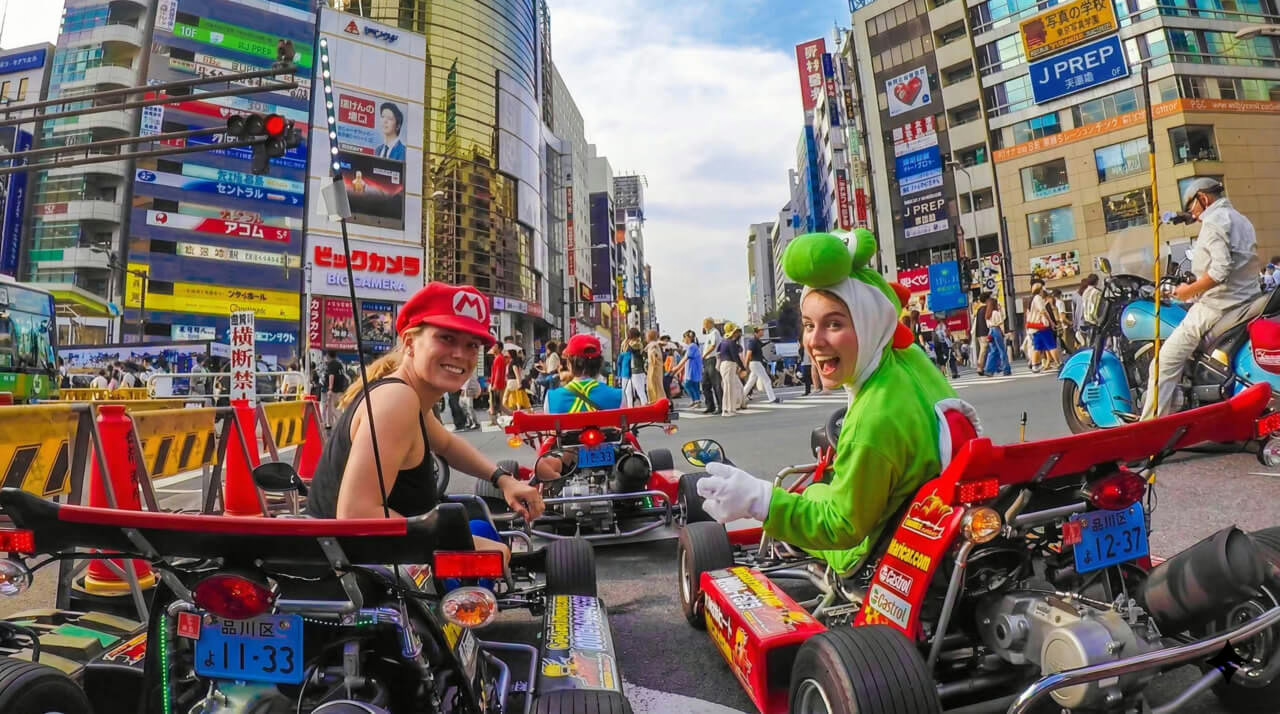
Tokyo Mario Kart Tour: Complete Street Go-Karting Guide – Picture yourself suited up as Mario, Luigi, or Princess Peach, zipping through Shibuya Crossing while tourists snap photos.
Street go-karting in Tokyo, often called the Tokyo Mario Kart tour, is one of the city’s most surreal and thrilling experiences.
You share real roads with taxis, buses, and bemused locals at up to 60 km/h, guided through neon-lit neighborhoods in convoy formation. Prices run ¥7,000–¥18,000 (approx. $47–$120), tours last one to two hours, and a valid International Driving Permit is non-negotiable.
Key Takeaways
Hide- Street go-karting in Tokyo is fully legal, regulated, and widely available through licensed operators despite past branding disputes with Nintendo.
- A valid International Driving Permit (1949 Geneva Convention) + home license (or approved alternatives) is mandatory — no documents, no ride, no refund.
- Tours cost roughly ¥7,000–¥18,000 ($47–$120), last 1–2 hours, and should be booked in advance (especially during peak seasons).
- Participants drive real roads alongside traffic at up to 60 km/h in guided convoy formation while strictly following Japanese traffic laws.
- Popular routes include Shibuya, Akihabara, Asakusa, Tokyo Tower, and Tokyo Bay — each offering a distinct atmosphere and photo opportunities.
- Safety rules are strict: drive on the left, no racing, follow the guide at all times, and wear proper footwear; basic insurance is included but comes with a deductible.
- Preparation is critical: bring all required documents, arrive early, dress appropriately, and plan timing for the best experience and photos.
This guide covers every detail: licensing, booking, routes, pricing, safety, and insider tips, so your Mario Kart Tokyo adventure goes smoothly from the first booking click to the final lap.
Is Street Go-Karting in Tokyo Legal?
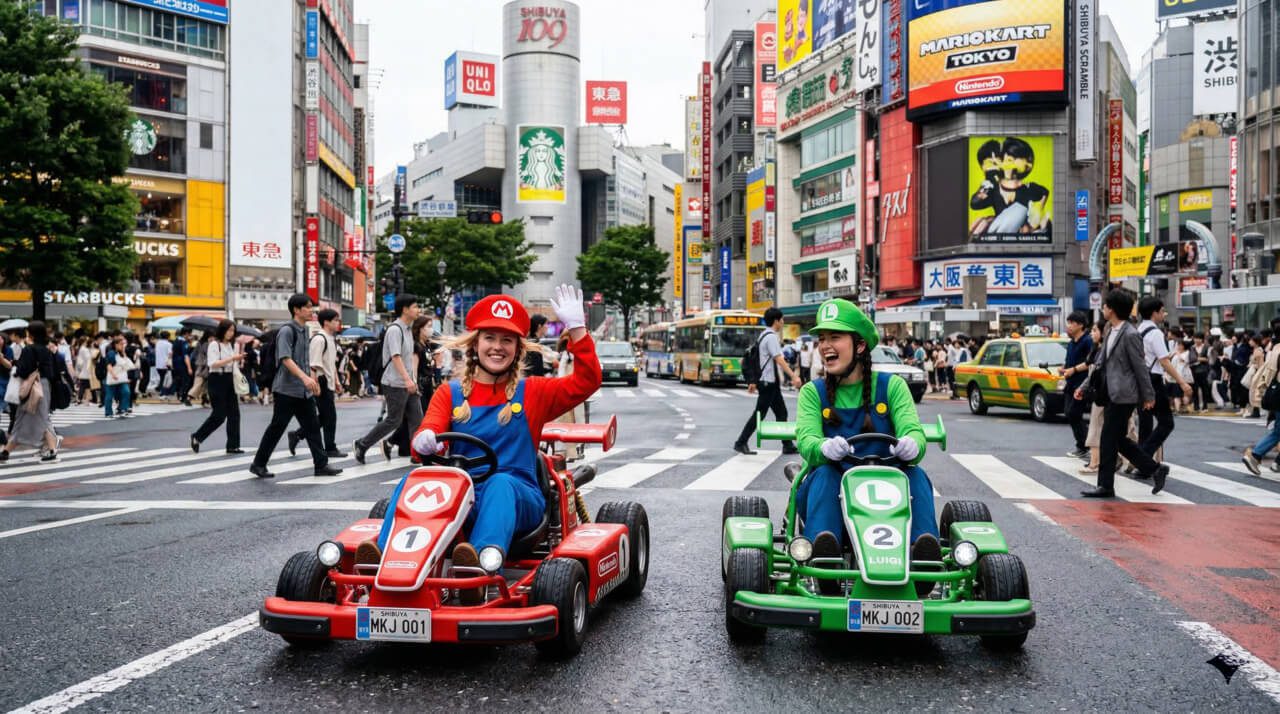
Yes, street go-karting is fully legal in Tokyo. Multiple licensed, insured operators run regulated tours daily under Japanese traffic law, treating go-karts as street-legal vehicles subject to standard road rules.
The activity has operated since roughly 2015–2016 and survived legal scrutiny.
The main court case involved Nintendo’s copyright challenge against Mari Mobility (formerly MariCar) over character costumes and branding, not over road safety or legality.
Nintendo won that intellectual property dispute. Operators rebranded and removed direct Nintendo references, but the tours themselves continued without interruption.
Today, every legitimate operator holds proper licensing, provides accident insurance, and files the necessary documentation with Japanese authorities.
Booking through established platforms like Viator, Klook, or Rakuten connects you with regulated companies.
Book Your Mario Kart Spot Now
Check the current pricing and availabity, tour options, and starting point from our most trusted travel partners.
 Book on Viator
 Book on Klook
 Book on GetYourGuide
 Book on Trip.com
What Driving License Do You Need for Tokyo Go-Karting?
You need either a valid International Driving Permit (IDP) issued under the 1949 Geneva Convention paired with your home-country license, or a Japanese driver’s license.
Both documents must be physically present at check-in, no exceptions.
International Driving Permit (IDP), the most common option:
- Issued by your home country’s automobile association (e.g., AAA in the US for ~$20)
- Processing time: approximately 10–14 business days before travel
- Valid for one year from your Japan entry date
- Must cite the 1949 Geneva Convention, permits from the 1926, 1943, or 1968 conventions are not accepted
- You must present the IDP and your original home-country license together
Country-specific license + official translation:
Drivers from Switzerland, Germany, France, Belgium, Estonia, Taiwan, Slovenia, and Monaco may use their national license with an official Japanese translation.
Translations cost approximately ¥4,500–¥7,500 ($30–$50) and take 5–7 business days through authorized organizations.
US military personnel:
SOFA driving licenses or an American license paired with military ID are accepted at most operators.
18 years old, no exceptions, no parental waivers.
Photograph every document and store copies in your email. Missing a single document cancels your booking, usually without a refund.
Planning your documents alongside your broader trip logistics? Our JR Pass vs. Tokyo Metro Pass comparison guide covers another essential pre-trip admin task.
How Do You Book a Tokyo Mario Kart Tour?
Book 2–3 days ahead for off-peak visits and 2–3 weeks ahead during cherry blossom season (March–May) and autumn foliage season (September–November). Most operators require advance reservations, walk-ins are rarely accommodated.
Step 1: Choose your route and duration
Decide between a 1-hour Akihabara-focused tour (approx. ¥7,000–¥10,000) or a 2-hour multi-neighborhood tour (approx. ¥15,000–¥18,000). Route options include Shibuya, Akihabara, Asakusa, Tokyo Tower, and Tokyo Bay.
Step 2: Compare booking platforms
Check Viator, Klook, Rakuten, and Headout for the same tour. Prices for identical experiences often vary ¥1,500–¥3,000 ($10–$20) across platforms.
Step 3: Confirm your license eligibility
Do this before paying. Operators list accepted license types on their booking pages.
If you’re unsure, email the operator directly.
Step 4: Pay and receive confirmation
Most operators accept credit cards and digital payment methods. Save your confirmation email, it contains the exact meeting address, arrival time, and operator phone number.
Step 5: Arrive 30 minutes early
Tours depart on schedule. Late arrivals are not accommodated and forfeit payment at most operators.
Cancellation policy rule of thumb
Cancel at least 24 hours ahead for a full refund. Same-day cancellations typically result in no refund.
Weather cancellations, especially during typhoon season, vary by operator, so check policy details before booking.
For peak-season Tokyo planning strategy, see our guide to Golden Week crowds and smart planning tips.
What Happens at the Go-Kart Rental Shop?
At the rental shop, staff verify your documents, walk you through a safety briefing, fit you for a costume, and run a driving tutorial, the entire check-in process takes approximately 30 minutes.
- Document check: Present your IDP, home-country license, and passport. Staff verify age (18+) and photograph your documents.
- Safety briefing: A staff member explains go-kart controls, Japanese traffic rules, hand signals your guide will use, and emergency procedures. Pay close attention, this isn’t optional entertainment.
- Driving tutorial: Go-kart foot pedals differ from cars. The accelerator and brake require separate feet, which feels unfamiliar at first. Staff demonstrate correct technique before you move.
- Costume selection: Choose from available characters, classic options include Mario, Luigi, Princess Peach, and others. Costume rental is included in most tour packages. Some operators allow personal costumes if they don’t obstruct vision or movement.
- Storage: Lock your bag, valuables, and non-essential items in provided lockers. Carry only your documents.
- Dress code restrictions: Closed-toe shoes with grip are mandatory. High heels, sandals, flip-flops, and long skirts are prohibited, they create pedal and entanglement hazards.
What Are the Best Tokyo Go-Kart Routes and Landmarks?
The five main go-kart routes in Tokyo cover Shibuya/Harajuku, Akihabara, Asakusa, Tokyo Tower/Roppongi, and Tokyo Bay/Skytree. Each route delivers a distinct atmosphere and set of landmarks at street level.
Shibuya and Harajuku Route
The Shibuya route passes the world-famous Shibuya Scramble Crossing, where up to 3,000 pedestrians flood the intersection per signal change. Driving through at kart level, when traffic permits, is a signature Tokyo Mario Kart tour moment.
Adjacent Harajuku showcases Tokyo’s most experimental street fashion. Weekends bring costumed individuals near Harajuku Station, adding to the surreal carnival atmosphere.
Approximate tour pricing: ¥11,000–¥15,700 ($79–$105) for 1–1.5 hours.
Akihabara Route
Akihabara, Tokyo’s “Electric Town,” delivers neon signs, anime billboards, and gaming arcades at street level. Driving through after sunset maximizes visual impact, LED displays in electric blue, hot pink, and green create the closest real-life equivalent to a Mario Kart race stage.
Chuo Dori becomes pedestrian-only on Sundays. Go-kart routes use side streets where vehicle traffic continues.
Approximate tour pricing: ¥7,000–¥14,000 ($47–$95) for 1–1.5 hours.
Akihabara is also Tokyo’s electronics shopping capital, after your tour, check our guide to Tokyo electronics shopping in Akihabara vs. Yodobashi Camera for the best deals nearby.
Asakusa Route
Asakusa preserves Edo-period Tokyo better than any other neighborhood. Routes approach Sensoji Temple’s Kaminarimon Gate, marked by a 700-kilogram red lantern, and pass traditional wooden craft shops and rickshaw services.
The neighborhood demands slower, more deliberate driving due to narrow streets and heavy pedestrian traffic, ideal for visitors who prefer atmosphere over adrenaline.
Approximate tour pricing: ¥9,000–¥14,000 ($60–$95) for 1–2 hours.
Tokyo Tower and Roppongi Route
Tokyo Tower stands 332.9 meters tall and was completed in 1958 as a symbol of Japan’s post-war recovery. Its bright-red lattice structure glows dramatically at night, making evening go-kart tours through this route particularly photogenic.
Routes typically pass Zojoji Temple directly in front of Tokyo Tower, a classic composition where the historic gate frames the modern tower. Roppongi’s international restaurant and nightlife district connects nearby.
Tokyo Bay and Skytree Route
Tokyo Skytree stands 634 meters tall, making it Japan’s tallest structure. Two-hour tours that venture toward Sumida and Tokyo Bay often include views of the Skytree alongside the Rainbow Bridge and waterfront skyline.
Night tours along this route are available from approximately ¥15,000 ($100) per person, city lights reflecting on the bay justify the premium.
How Much Does a Tokyo Go-Kart Tour Cost?
Tokyo go-kart tours cost between ¥7,000 and ¥18,000 per person ($47–$120), depending on duration, route, and season. Night tours start at approximately ¥15,000.
All standard packages include kart rental, costume, guide, and basic accident insurance.
| Tour Type | Duration | Approx. Price (JPY) | Approx. Price (USD) |
|---|---|---|---|
| Basic Akihabara | 1 hour | ¥7,000–¥10,000 | $47–$67 |
| Mid-range city tour | 1.5 hours | ¥11,000–¥15,700 | $73–$105 |
| Extended multi-area | 2 hours | ¥15,000–¥18,000 | $100–$120 |
| Night tour | 1–2 hours | from ¥15,000 | from $100 |
What’s typically included: Kart rental, costume rental, safety briefing, guide fee, basic accident insurance.
What may cost extra: GoPro camera rental (¥1,500–¥3,000), professional photo packages (¥1,500–¥4,500), premium costume options.
Seasonal pricing: Cherry blossom season (March–May) and autumn foliage season (September–November) command higher rates and earlier booking requirements. Off-peak months (January, February, July–August) sometimes offer 15–30% discounts.
Platform comparison tip: Viator, Klook, Rakuten, and Headout often list the same operator at different prices. A five-minute comparison check regularly saves ¥1,500–¥3,000.
What Safety Rules Apply to Tokyo Street Go-Karting?
All participants must drive on the left at or below 60 km/h, obey all traffic signals, maintain convoy formation, wear closed-toe shoes, and follow guide instructions at all times. Racing between participants is strictly prohibited.
Core rules:
- Drive on the left side of the road (opposite to US/European convention)
- Maximum speed: 60 km/h (37 mph), guides set group pace
- Obey all traffic lights, stop signs, and pedestrian crossings
- Maintain safe following distance from other karts and vehicles
- No overtaking other karts or breaking formation
- Follow all hand signals and verbal instructions from your guide
- Closed-toe shoes required; heels, sandals, and flip-flops prohibited
Left-side driving adjustment: Japan drives on the left, with steering wheels on the right side of vehicles. If you learned to drive in a right-side-traffic country, your first minutes will feel disorienting.
Most participants adapt within the first few minutes; guides account for this during initial route navigation.
Emergency procedure: Signal your guide immediately if you feel unsafe, experience a mechanical issue, or witness an incident. Guides manage traffic communication and have protocols for stopping the convoy safely.
Weather cancellations: Light rain typically doesn’t stop tours. Heavy rain, typhoons, or severely reduced visibility prompt cancellations. Check operator cancellation policies for weather-related refund terms before booking, especially if visiting during Tokyo’s typhoon season (August–October).
What Insurance Covers Tokyo Go-Kart Accidents?
Basic accident insurance is included with all legitimate Tokyo go-kart tours. Coverage typically includes medical expenses and third-party liability, but a deductible of approximately ¥50,000 applies if you cause a collision.
Key coverage details:
- Included: Medical expenses for participant injuries, third-party damage liability
- Deductible: Approximately ¥50,000 (~$330) in the event you cause an accident
- Exclusions: Reckless driving, traffic violations, and pre-existing conditions can trigger coverage denial
- Not covered: Personal belongings lost or damaged during the tour
Read the full liability agreement during the booking process, operators provide this before payment. Understanding deductible terms and exclusions prevents unpleasant financial surprises.
For broader travel protection in Tokyo, our Tokyo travel insurance guide explains which policies cover adventure activities.
Go-Karting in Tokyo With Confidence
Purchase travel insurance for your Mario Kart tour in Tokyo. Reliable providers offer protection for medical emergencies, trip cancellations, and lost luggage.
 VisitorsCoverage
Can Non-Drivers Join a Tokyo Go-Kart Tour?
Yes, most operators allow non-drivers to accompany the group in a staff-operated follow vehicle (typically a tuk-tuk or van) at reduced or no additional fee. Non-drivers can watch, photograph, and experience the route without driving.
Non-driver specifics:
- Ride in a padded, seatbelted seat in the staff vehicle
- Some operators waive the boarding fee for non-driving passengers
- Photography is encouraged from the passenger vehicle
- Non-drivers cannot operate any kart at any point during the tour
- Confirm non-driver availability when booking, not all tours or operators offer this option
What Are the Best Tips for Photos and Timing on a Tokyo Go-Kart Tour?
Book early-morning (7–8 a.m.) or late-evening (8–10 p.m.) slots for the best lighting, thinner traffic, and the most photogenic conditions. Night tours near Tokyo Tower and Rainbow Bridge offer the most dramatic photography.
Best photo spots by route:
- Shibuya Crossing, morning light before crowds arrive or after dark when neon reflects on pavement
- Rainbow Bridge, sunset or night for the most dramatic skyline backdrop
- Tokyo Tower, dusk when the city sparkles behind the illuminated red lattice
- Akihabara main street, after 7 p.m. when LED signage reaches full brightness
- Asakusa Kaminarimon Gate, early morning before tour groups arrive
Camera options:
- Mounted GoPro or action camera on your kart (rental available ~¥1,500–¥3,000)
- Handheld device operation while driving is unsafe and prohibited at most operators
- Operator photo packages capture tour highlights professionally (~¥1,500–¥4,500 extra)
Costume tip: Bright, character-specific costumes pop in every shot. Choose lightweight, stretchy fabric, avoid anything with trailing fabric, wings, or accessories that could catch in the kart mechanism.
For broader Tokyo photography planning, our roundup of Tokyo’s best Instagram-worthy photo spots pairs perfectly with your go-kart route planning.
How Should You Prepare the Day Before Your Tokyo Go-Kart Tour?
The day before your tour, confirm your booking details, verify all documents are physically in hand, plan your route to the meeting point, and check the weather forecast. Arriving unprepared risks forfeiting your full payment.
Pre-tour checklist:
- ✅ IDP + home-country license + passport, all three physically present
- ✅ Booking confirmation email saved (screenshot it offline in case of no signal)
- ✅ Operator phone number saved in your phone
- ✅ Meeting point address confirmed (use Google Maps offline download)
- ✅ Closed-toe athletic shoes packed, not sandals or heels
- ✅ Weather forecast checked, reschedule if typhoon or heavy rain is forecast
- ✅ Light meal eaten 1–2 hours before; well hydrated but not over-hydrated
- ✅ Sunscreen applied for daytime tours
- ✅ Minimal cash or card for optional extras (photos, camera rental)
If you’re navigating Tokyo’s transit system to reach your meeting point, our complete Tokyo taxi guide explains the fastest and most reliable transport options.
Frequently Asked Questions About the Tokyo Mario Kart Tour
Is the Tokyo Mario Kart tour officially affiliated with Nintendo?
No. No Tokyo go-kart operator holds official Nintendo authorization. After Nintendo’s successful copyright lawsuit against Mari Mobility (formerly MariCar), operators removed direct Nintendo branding. You can still wear character-inspired costumes, but no tour is officially a “Nintendo Mario Kart experience.”
Can I drive through Shibuya Scramble Crossing in a go-kart?
Yes, some operators route tours across Shibuya Crossing when traffic signals permit vehicle crossing. Confirm with your specific operator whether this is included — not every tour package covers this intersection.
What happens if I arrive late to my go-kart tour?
Tours depart on schedule regardless of late arrivals. Most operators do not offer refunds for no-shows or late arrivals. Aim to arrive 30 minutes before your scheduled departure time.
Do I need a helmet for Tokyo street go-karting?
Helmets are not mandatory under Japanese regulations for street go-kart operation at standard tour speeds. Most operators do not provide helmets as standard equipment, though some accommodate personal comfort requests. Confirm helmet availability with your operator before your tour date.
Can I book a private go-kart tour for a group in Tokyo?
Yes. Most operators accommodate private group bookings, typically requiring a minimum of 4–8 participants. Private tours may offer route customization and group discounts. Contact operators directly with your group size, preferred date, and route preferences for a custom quote.
What is the maximum speed on a Tokyo go-kart tour?
Go-karts on Tokyo street tours are capped at 60 km/h (37 mph). Guides set the group pace, which is typically lower in dense traffic areas and closer to the maximum on open roads. Racing or overtaking other participants is strictly prohibited.
Can children participate in a Tokyo go-kart tour?
No. The minimum age is 18 years old with no exceptions. Children cannot drive karts. Some operators permit children to ride as passengers in the accompanying staff vehicle — confirm this option when booking if traveling with kids. For family-friendly Tokyo experiences, see our guide to family activities and tips for Tokyo with kids.
What if I feel unsafe or uncomfortable during the tour?
Signal your guide immediately using the hand signals taught during the safety briefing. Guides are trained to stop the convoy and assist. Most operators allow participants to withdraw before the tour begins without penalty, though mid-tour withdrawal policies vary — review terms before booking.
Are go-kart tours available year-round in Tokyo?
Yes. Tours operate year-round, though weather can cause cancellations. Summer heat (July–August) and winter cold (January–February) affect comfort levels. Typhoon season (August–October) creates the most frequent weather-related cancellations. Spring and autumn offer the most comfortable driving conditions and the highest demand.
How is Tokyo go-karting different from a standard go-kart track?
Tokyo street go-karting uses public roads shared with regular traffic — not a closed, controlled circuit. You navigate real intersections, traffic lights, and pedestrian crossings. This creates authentic urban exploration but also genuine traffic risk, requiring full attentiveness throughout the tour.