Tokyo Izakaya Guide: How to Order and Drink Like a Local




Tokyo Izakaya Guide: Ordering, Drinking & Local Customs – Ordering at a Tokyo izakaya starts with an immediate drink request; beer, sake, or shochu, before even glancing at the food menu, since beverages set the social pace and signal you understand the unwritten rules.
Never pour your own drink; instead, keep companions’ glasses topped up while waiting for the ritual “kanpai!” toast with eye contact and your glass slightly below seniors’ level.
Expect a small otoshi appetizer (¥300-¥500) to arrive unbidden as a table fee, replace tipping culture entirely, and complement your first round.
The nuances of maneuvering entrance customs, sake temperatures, and solo-friendly counter seats separate awkward visitors from confident participants who decipher izakaya culture’s full warmth.
Key Highlights
Hide- Always order a drink before food; beer, sake, or shochu are traditional first choices to set the evening's pace.
- Never pour your own drink; wait for others to fill your glass and reciprocate while keeping glasses topped up.
- Expect otōshi, a small appetizer with ¥300-¥500 seating charge that covers table service instead of tipping.
- Remove shoes at the entrance, use provided slippers, and take slippers off before stepping onto tatami mats.
- Wait for "kanpai!" before drinking; raise your glass slightly below seniors' level and make eye contact during toasts.
What Makes an Izakaya Different From a Regular Restaurant
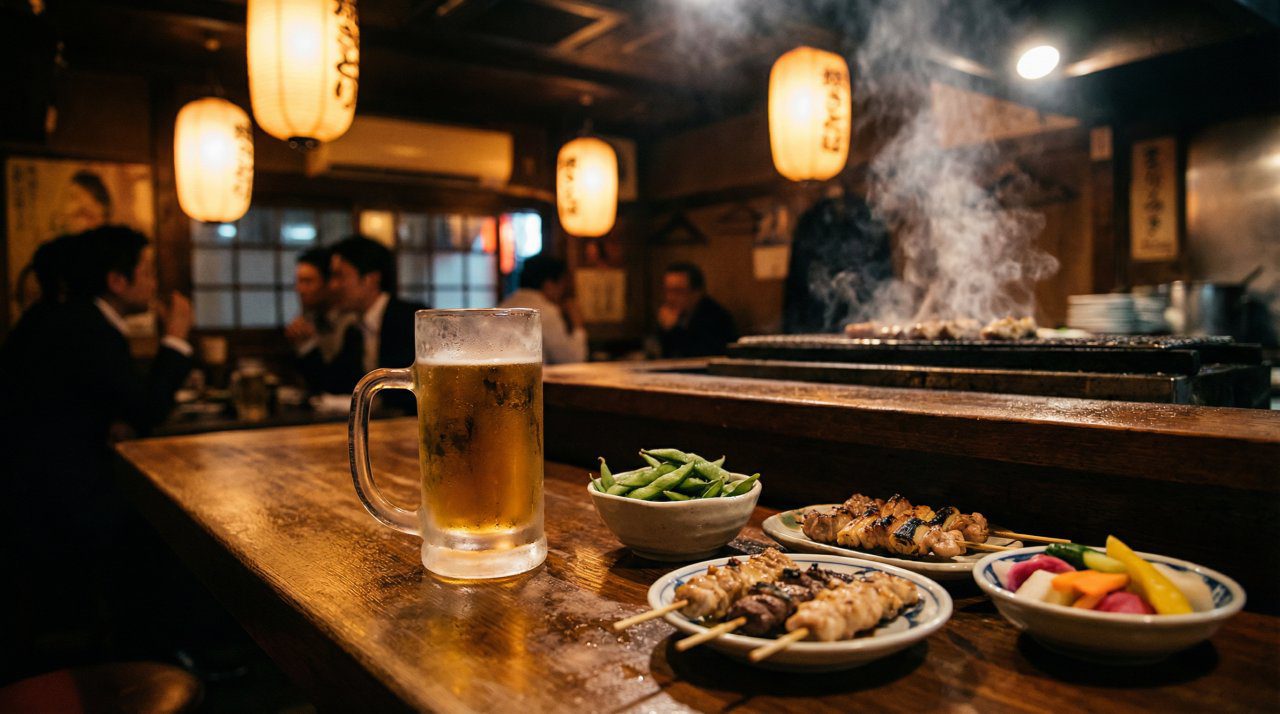
An izakaya is a Japanese gastropub where drinking comes first and food arrives as a supporting act.
Unlike sit-down restaurants built around a single meal, izakayas are designed for long evenings of grazing, drinking, and conversation that can stretch two to five hours.
The food arrives in small shared plates rather than individual portions. Dishes come out gradually as you order, not all at once.
This structure encourages the table to keep talking, keep ordering, and keep the glasses topped up.
Understanding the pricing tiers helps you pick the right spot.
Budget chain izakayas run around 2,000 to 3,000 yen per person. Mid-range independent spots cost 3,500 to 5,000 yen.
- When to Visit Ueno Park for Cherry Blossoms: A Complete Guide
- Tokyo Department Store Tax-Free Shopping Made Simple
- Tokyo Typhoon Season: Safety Tips & Indoor Backup Plans
- Complete Guide to Topping Up a Suica Card in Tokyo
- Tokyo Autumn Food Guide: Seasonal Specialties & Where to Find Them
- Tokyo Emergency Numbers and Phrases Every Traveler Should Know
Premium craft sake lounges can reach 6,000 to 10,000 yen.
Every bill includes an otoshi cover charge of 300 to 500 yen regardless of tier.
Tokyo Trip Add-Ons
Equip yourself for the ultimate Tokyo adventure with the following add-ons, curated just for you.








The Social Role of Izakayas in Japanese After-Work Culture
Japanese office workers flood into izakayas every evening because of a cultural phenomenon called nominication, a portmanteau of nomu (to drink) and communication.
Izakayas serve as pressure valves where workplace hierarchies blur over shared plates and clinking glasses.
The reserved junior employee finally speaks freely. The stern manager reveals her karaoke enthusiasm.
Office camaraderie transforms from polite formality into genuine connection.
This after-work bonding is how deals get sealed, grievances get aired, and teams actually become teams.
For visitors, understanding this context explains why izakayas feel so alive compared to ordinary Tokyo restaurants.
Tour the Most Popular Izakayas in Tokyo
Experience how locals enjoy the evening drinks and foods with selected Izakaya tours on TripAdvisor.
 Book Shibuya Local Bar & Izakaya Crawl Tour
Chain Izakayas vs. Independent Spots
Chain izakayas like Torikizoku and Watami deliver predictable, budget-friendly experiences with standardized menus and tablet ordering systems available in multiple languages.
They are the safe landing pad for first-timers who want reliability over discovery.
Independent izakayas showcase intensely personal cooking styles.
Family-run spots source fresh seafood daily, prepare house-made pickles, and guard recipes passed through generations.
The flavor difference is immediately obvious.
Think of chains as your entry point and independent joints as your gateway to understanding why locals return to the same counter seat for decades.
Is There a Cover Charge at Izakayas?
Yes. Almost every izakaya charges an otoshi fee of 300 to 500 yen per person.
This small appetizer arrives automatically before you order anything and functions as a combined seating fee and amuse-bouche.
The otoshi is not a scam. It replaces tipping culture entirely, covering your table service for the whole evening.
Common otoshi dishes include edamame, pickled vegetables, seasoned tofu, or potato salad.
Technically you can refuse the otoshi at some establishments by mentioning it immediately upon sitting.
Most locals simply accept it. At upscale izakayas in Ginza or Roppongi, the otoshi charge can reach 1,500 to 3,000 yen and arrives as a restaurant-quality small plate. Chain izakayas frequently waive it altogether.
Oshibori Towels: Your First Interaction
Before the otoshi appears, a steaming hot cloth called an oshibori arrives the moment you sit down. Unfold it, wipe your hands thoroughly, then refold it neatly.
Do not use it as a napkin throughout the meal.
Face and neck wiping is acceptable during summer when you are genuinely overheated.
Most izakayas provide disposable oshibori, though traditional establishments offer cloth versions. This small ritual signals you are ready to dine.
Do You Need to Order a Drink Before Food at an Izakaya?
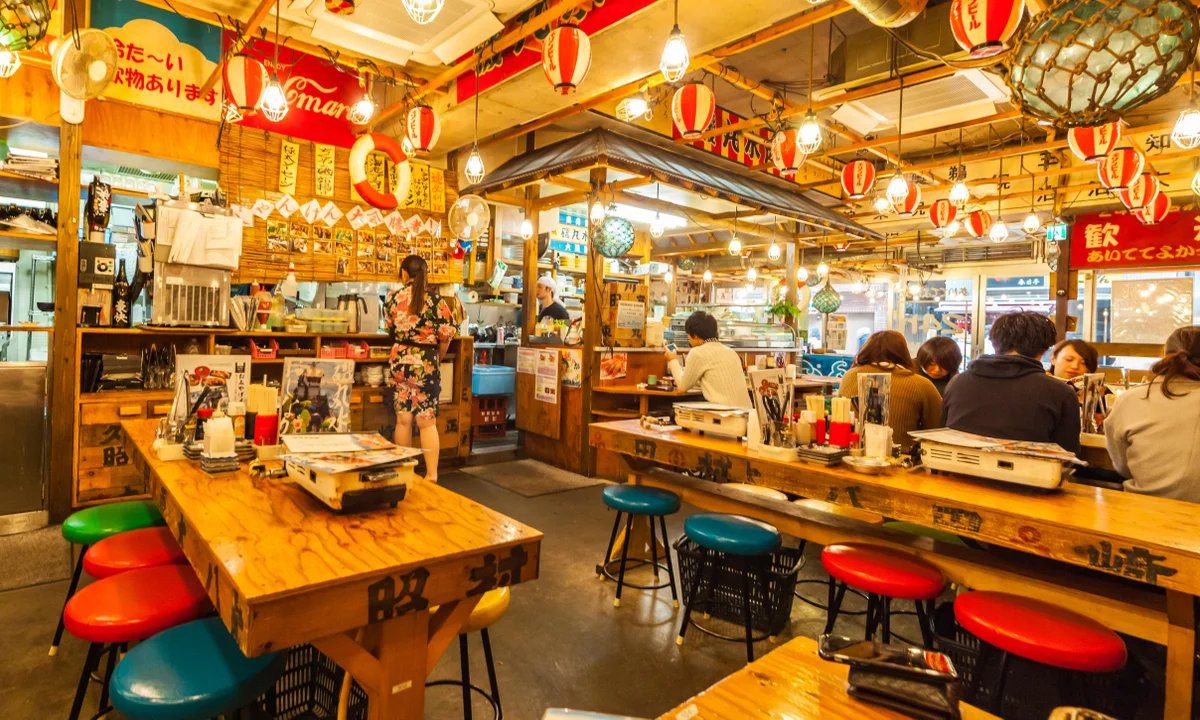
Yes. Staff expect a drink order before you look at the food menu.
This is not a quirky preference you can sidestep; it is the fundamental protocol that keeps the evening flowing correctly.
Beer, sake, shochu, and highballs are the four standard first choices.
Ordering a drink first sets the pace, gives the kitchen time to prepare dishes, and signals you understand how izakayas work. Browse the food menu while your first drink arrives.
Beer, Sake, Shochu, and Highball: What Locals Actually Order
Beer kicks off most evenings. Order a nama biiru (draft beer) and specify the size: shou (small), chuu (medium), or dai (large). Medium is the most common choice.
Sake flows when the night turns contemplative. Serve it hot or cold depending on quality and season.
Premium ginjo and daiginjo styles taste best chilled. Budget table sake transforms when heated, releasing earthy warmth.
Shochu is distilled from sweet potato, barley, rice, or buckwheat. It runs lower in congeners than sake, making it a popular choice for those managing tomorrow’s schedule.
Drink it straight, on the rocks, with hot water (oyuwari), or with soda.
Highballs, whisky and soda over ice in tall glasses, have become the dominant izakaya drink of the past decade.
They keep you sharp through long rounds of conversation and pair with almost every dish on the menu.
Is the All-You-Can-Drink Option Worth It?
Nomihoudai (all-you-can-drink) is worth it if you plan to have four or more drinks. The typical price is 1,500 to 3,000 yen for a 90 to 120-minute window.
Time limits are enforced strictly. Staff announce last orders 30 minutes before the session ends. Premium sake and craft beers are usually excluded from the selection. Food ordering is required alongside the drink package.
If you are having two or three drinks, ordering individually gives you better quality and zero time pressure. If you are settling in for a long night, nomihoudai pays for itself quickly.
Lemon Sours and Chuhai: The Drinks Foreigners Often Skip
Shochu mixed with soda and fresh citrus is called a chuhai, and lemon sours are the most popular version. Every izakaya in Japan stocks them, often in multiple house variations.
Fresh-made chuhai at an izakaya costs 400 to 600 yen and uses real squeezed citrus. Canned convenience store versions cost 150 to 250 yen but use artificial flavoring. The difference in quality is significant.
Lemon sours pair brilliantly with oily karaage and salty yakitori. Each establishment customizes the recipe, adjusting sweetness and citrus intensity, so you will never taste the same version twice.
Sake Drinking Done Right
Sake at an izakaya is a ritual with its own vocabulary, temperatures, and serving vessels. Understanding a few basics transforms ordering from a guessing game into an exciting exploration.
Premium sake (ginjo, daiginjo) should be served cold to preserve delicate floral aromatics. Budget table sake improves when heated, masking imperfections while releasing earthy depth. Junmai styles work at both temperatures.
When your server places a glass inside a wooden masu box and pours until sake overflows the rim, you are witnessing mokkiri, a gesture of abundance and hospitality. Sip from the glass first, then pour the overflow back in, or drink from the box corner for a cedar aroma.
How to Ask for Sake Recommendations
Describe what you normally drink at home: wine, beer, or cocktails. Staff will translate your flavor preferences into sake terms instantly. Mention whether you want something light and crisp or rich and bold.
Ask about temperature options. Ask if you can try a small sample before committing. Many izakayas pour tasting pours on request.
Also ask what is local. Jizake, sake brewed within the prefecture, often outshines nationwide brands in character and value. You will pay less and drink something most tourists never discover.
Entering an Izakaya and Getting Seated
Walking into an izakaya follows a reassuring pattern once you know the sequence. Slide open the door or push through the noren fabric curtain. Staff will call out irasshaimase (welcome). Hold up fingers to indicate your party size.
You may be asked if you have a reservation. Most small groups do not need one. Staff will indicate wait times with fingers or a clipboard if the place is full. Popular spots fill quickly between 6 and 8 PM on weekdays.
The Shoe Situation and Tatami Rooms
Some izakayas, particularly those with traditional tatami mat seating areas, require shoe removal at the genkan entrance step. Remove shoes and place them in designated cubbies with toes facing outward.
Wear provided slippers in non-tatami areas. Remove slippers entirely before stepping onto tatami mats. Socked or bare feet only on tatami. Staff will not scold you, but observant locals will notice.
Many modern izakayas skip this entirely and use standard flooring throughout. If you see a step-up at the entrance and a row of shoes, the shoe removal rule applies.
What to Do When the Place Is Full
Position yourself near the entrance without blocking traffic. Make eye contact with staff and wait to be acknowledged. Do not wander in and claim a table yourself.
Most popular izakayas do not take reservations for small groups, so showing up is the standard approach. Late-night seating opens around 9 PM when salaryman groups head home, transforming a packed house into available counter seats.
Must-Order Foods at Any Izakaya
Certain dishes appear on nearly every izakaya menu across Japan. These staples are the social lubricants that keep conversations flowing and pair perfectly with round after round of beer and sake.
Knowing what to order on your first visit removes the anxiety of staring at an unfamiliar menu and lets you focus on the experience rather than the logistics.
Edamame, Karaage, and Yakitori
Edamame arrives salted and often appears before you even order it. Squeeze the beans directly into your mouth and toss the pods into the communal bowl. They are protein-packed, low-effort, and perfect for pacing your drinking.
Karaage is Japanese fried chicken marinated in soy sauce, sake, ginger, and garlic before being coated in potato starch and double-fried. The result is a shatteringly crisp exterior with juicy meat inside. Squeeze the lemon wedge generously and use the accompanying mayo.
Yakitori skewers showcase nearly every part of the chicken over a charcoal grill. Order negima (thigh and spring onion), tsukune (chicken meatballs with tare glaze), kawa (crispy chicken skin), or hatsu (chicken hearts). Specify shio (salt) or tare (sweet soy glaze) seasoning.
Gyoza, Potato Salad, and Agedashi Tofu
Gyoza arrive pan-fried with crispy bottoms and tender tops. Dip them in soy-vinegar sauce. Varieties range from classic pork to shrimp or vegetable. Every izakaya nails these.
Japanese potato salad differs from Western versions. The potatoes are mashed while warm, creating a creamy consistency, then mixed with cucumber, carrot, and sometimes ham or corn. It cuts through the richness of grilled and fried foods beautifully.
Agedashi tofu features silky custard-like tofu encased in a delicate fried exterior, served in savory dashi broth. It is vegetarian-friendly, shareable, and impossible to order wrong.
Adventurous Items for Brave Eaters
Beyond the staples, izakayas offer dishes that separate cautious tourists from genuinely adventurous eaters. Chicken hearts (hatsu) are tender and surprisingly mild. Gizzards (sunagimo) deliver a satisfying chew. Chicken liver (reba) melts on the tongue.
Some izakayas serve basashi, thinly sliced raw horse meat, particularly those with connections to Kumamoto or Nagano regional cuisine. It arrives with grated ginger, garlic, and soy sauce.
Fermented items include shiokara (fermented squid guts with intense oceanic flavor) and nuka-zuke (vegetables buried in rice bran paste). Start with nuka-zuke pickles before graduating to shiokara.
If something proves too challenging, discreetly leaving food is not catastrophic. Avoid wasting rice, which carries cultural significance.
Proper Drinking Etiquette at a Tokyo Izakaya
Japanese drinking culture operates on a set of unspoken rules that locals follow almost automatically. They are not formal ceremonies but practical ways to stay connected with your group and show basic respect.
Master these gestures and you will blend right in with the after-work crowds who have been perfecting this social rhythm since their first company nomikai.
Never Pour Your Own Drink
The most important rule: never pour your own drink. Watch your neighbor’s glass and refill it when it dips below half-full. Hold your glass slightly raised when someone pours for you, showing gratitude. Use both hands when pouring or receiving, especially with seniors.
This reciprocal choreography transforms drinking into a communal ritual. It keeps everyone connected and creates genuine bonds faster than any conversation starter.
The Kanpai Toast and What Comes After
Wait for all drinks to arrive before anyone sips. Make eye contact with your companions. Raise your glass slightly below those of senior colleagues or hosts as a sign of respect. Shout kanpai with genuine enthusiasm.
Only then do you take that first sip. Post-toast drinking is relaxed. Pour for others generously, accept refills graciously, and let the night unfold naturally.
Drinking before the kanpai is one of Japan’s most noticeable social faux pas. Do not do it even if your drink has been sitting there for two minutes.
Pace Matching and Group Rhythm
Once the toast is done, people subtly sync their drinking speeds. Racing ahead while tablemates nurse their beers creates an awkward mismatch that signals outsider status.
Order your next round when others do. Pause for bites of karaage between drinks. Let the collective flow guide you.
This natural synchronization transforms drinking from individual consumption into shared experience, which is the entire point of izakaya culture.
Group Dynamics and Sharing at the Table
Navigating an izakaya dinner involves more than knowing which sake to order. It is a system of shared ordering, communal eating, and bill-splitting that follows a predictable rhythm once you understand the basics.
From the first plates of yakitori to the final check, everyone participates in a rotation of generosity and reciprocity that makes the evening feel cohesive rather than transactional.
How Bills Get Split at the End
The standard Japanese practice is warikan: splitting the bill equally among everyone at the table.
No calculator apps, no awkward negotiations. Someone announces the total, divides by headcount, and everyone contributes their share in cash.
Credit cards rarely split at traditional izakayas. Carry enough yen to cover your tab.
The per-person total typically lands between 3,000 and 5,000 yen for a standard evening including drinks and food.
Senior colleagues or hosts sometimes insist on covering everything. Offer a polite protest once or twice, then accept gracefully with a sincere bow and gochisousama deshita (thank you for the meal). You reciprocate next time.
Eating From Shared Plates Without Looking Rude
Use serving chopsticks (tori-bashi) or flip your personal chopsticks around before taking from communal dishes.
Never eat directly from shared plates with the end you put in your mouth.
Take modest portions initially, allowing everyone their first taste before going back for seconds.
Avoid hovering or rummaging through a platter. Pick decisively. Leave the last piece for others unless someone offers it to you.
Smoking Rules at Tokyo Izakayas
Tokyo’s smoking landscape changed dramatically in 2020 when stricter health promotion ordinances took effect.
Most izakayas now fall into one of three categories: completely smoke-free, equipped with a designated smoking room, or smaller owner-operated venues that still permit smoking throughout.
Large establishments that employ staff must be smoke-free or maintain separated smoking rooms with heavy-duty ventilation.
Smaller owner-operated venues can still permit smoking but must post visible warnings at the entrance. Heated tobacco devices face identical restrictions to traditional cigarettes.
Before sitting down, ask kinen-seki arimasu ka? (Do you have non-smoking seats?) at the entrance.
Staff will direct you to the right section immediately. Chain izakayas typically operate as fully smoke-free, while some independent spots still offer smoking sections.
How the Nomihoudai Time Limit System Works
Nomihoudai (all-you-can-drink) sessions run for a fixed window, typically 90 to 120 minutes, enforced with clockwork precision. When your time is up, it is genuinely up.
Staff announce last orders at the 90-minute mark for a two-hour session. Empty glasses disappear faster than usual.
Your bill materializes on the table without being requested. These are your cues to wrap up.
Maximize your session by ordering your first drink immediately upon sitting. Request your next round before finishing your current glass.
Sample premium options that would cost significantly more individually. Pace yourself strategically.
After closing time, the local move is shifting to a nearby convenience store for post-izakaya drinks in a park. It extends your evening without overstaying your welcome.
Paying Your Bill the Japanese Way
Most izakayas expect you to take your check to the register near the entrance rather than paying at the table.
Modern chains sometimes offer table-side payment through tablets or QR codes, but traditional spots use the register system.
Never leave cash on the table. It is considered impolite and will not get processed.
Your receipt arrives in a small dish or folder. Pick it up and walk to the front counter to pay.
For digital payment options at izakayas and other Tokyo venues, our guide to Tokyo QR code payments and digital menus covers which apps work where.
Does Tipping Exist at Japanese Izakayas?
No. Tipping is not practiced at izakayas and can genuinely offend your server. Excellent service is considered standard practice in Japan, not something requiring extra compensation.
Leave cash on the table and your server will chase you down the street to return your “forgotten” money.
The price you see includes everything: service, warm towels, water refills, and the otoshi. Express appreciation with a sincere gochisousama deshita as you exit.
Cash vs. Card at Izakayas
Cash remains king at neighborhood izakayas in 2024. Chain establishments and modern spots accept credit cards.
That cozy hole-in-the-wall you discovered in a back alley almost certainly does not.
Digital payments like PayPay and Suica are gaining ground in Tokyo’s trendier districts, but traditional mom-and-pop operations have not made the leap.
Always carry enough yen to cover your tab plus drinks. Running to an ATM mid-meal kills the atmosphere.
Popular Izakaya Chains Worth Visiting
Japan’s izakaya chains offer surprisingly good experiences ranging from ultra-budget yakitori joints to sprawling nationwide operations.
Each has its own cult following and signature quirks that make them worth visiting at least once.
Torikizoku: The Uniform-Price Yakitori Chain
Torikizoku built its entire empire on one brilliantly simple premise: nearly everything on the menu costs exactly 360 yen plus tax.
The chain specializes in yakitori and casual drinking without the stress of budget calculations.
Quality rivals pricier establishments, with perfectly charred chicken skewers and a lively atmosphere buzzing with salarymen, students, and adventurous travelers.
Tablet ordering is available in multiple languages, making it ideal for first-timers. Torikizoku locations scatter across Tokyo and stay open late.
Watami, Monteroza, and Regional Chains
Watami and Monteroza Group dominate through variety and convenience. Monteroza operates multiple brands including Shirokiya, Uotami, and Yoronotaki, catering to every mood and budget.
Watami flagship locations blend traditional wooden aesthetics with modern comfort.
Both chains feature extensive drink menus with prefecture-specific sake alongside shochu and craft beer.
They accept walk-ins readily, open late, and maintain consistent quality across Tokyo locations.
Regional chains that expanded to Tokyo include Osaka-born concepts and Kyushu-rooted seafood specialists.
These Tokyo branches maintain regional authenticity while adapting to the capital’s demanding palate.
Tokyo’s Best Izakaya Neighborhoods and Drinking Alleys
Tokyo’s izakaya culture comes alive in its narrow drinking alleys called yokocho, where strings of lanterns illuminate smoky corridors lined with matchbox-sized bars.
Each neighborhood brings its own distinct flavor to the after-work drinking scene.
For a broader look at where to eat and drink across the city, our Tokyo foodie areas and dining districts guide covers every major neighborhood.
Shinjuku’s Omoide Yokocho
Omoide Yokocho, tucked behind Shinjuku Station’s West Exit, is a warren of approximately 60 miniature izakayas crammed into two narrow alleyways.
Nicknamed Memory Lane (and less politely, Piss Alley), it survived the postwar era and remains fiercely authentic.
Arrive after 6 PM when smoke starts billowing and crowds thicken. Duck under noren curtains without hesitation.
Point at neighboring plates if the menu baffles you. Cash only, always. You will leave smelling of charcoal with unforgettable stories.
Shibuya’s Nonbei Yokocho
Nonbei Yokocho, Drunkard’s Alley, sits minutes from the world’s busiest pedestrian crossing but remains gloriously overlooked.
This narrow warren of wooden shacks survived both war and redevelopment, preserving traditional atmosphere that Tokyo developers could not kill.
Eight-seat bars hide behind vending machines and underneath stairwells. Regulars have claimed the same stools for thirty years.
The magic happens after 10 PM when locals pack shoulder-to-shoulder. Nobody speaks much English here, which keeps it authentically chaotic.
Yurakucho’s Under-the-Tracks Scene
Yurakucho’s drinking district tucks cramped, smoky venues into railway arches beneath commuter train lines. Beer starts at 300 yen.
Hidden alleyways connect tiny standing bars where locals genuinely outnumber tourists. Late-night bars serve until dawn.
The vibe is raw and unfiltered. Corporate warriors decompress before facing tomorrow’s grind. Zero pretension, dirt-cheap prices, and an atmosphere that screams authentic Tokyo.
Ebisu and Nakameguro
Ebisu and neighboring Nakameguro represent Tokyo’s izakaya scene after it got a tasteful renovation. Exposed brick replaces plastic menus. Craft beer selections read like doctoral dissertations. Rooftop bars overlook the Meguro River.
The izakayas here skew younger and more Instagram-ready, attracting designers and creative professionals.
But locals still pound whisky sodas and argue passionately about baseball. The working-class grit traded for creative-class sophistication without losing the soul.
When Is the Best Time to Visit a Tokyo Izakaya?
The best time depends on the experience you want. The after-work rush from 6 to 8 PM delivers maximum energy and authenticity.
Late night from 10 PM onward offers deeper conversations and more relaxed service. Weekend afternoons from 2 to 6 PM provide a quieter, more intimate atmosphere.
The after-work rush is the most authentic but also the most chaotic. Standing-room-only crowds pack popular chains near major stations.
Service feels frantic. The atmosphere pulses with genuine liberation as office workers decompress.
Late night transforms the same space. Crowds thin to dedicated drinkers. Conversations deepen.
Bartenders share premium sake they keep off the main menu. This is when izakaya culture reveals its truest form.
Weekend afternoons offer a completely different personality. Natural light streams through windows. No stressed salarymen.
Slower service means better conversations with bartenders who actually explain menu items. Couples and mixed groups dominate rather than all-male work crews.
To avoid peak crowds, arrive around 5 PM before the salaryman wave hits, or after 9:30 PM when tables start opening up.
Weekday lunchtimes offer another escape: many izakayas now serve affordable lunch sets in uncrowded dining rooms.
Language Barriers and How to Handle Them
Do not let the language barrier keep you from the best izakaya experiences. A few smart strategies transform potential confusion into confident communication, even in dimly lit, sake-fueled spaces where everyone is talking over each other.
Our guide to must-have Tokyo translation apps covers the best tools for non-Japanese speakers, including apps that work offline and in low-light conditions.
Useful Japanese Phrases That Actually Work
Mastering five phrases transforms the entire experience from nerve-wracking mime show to genuinely fun cultural exchange.
- Toriaezu nama de! (Draft beer for now!) is the quintessential izakaya opener every regular uses.
- Osusume wa nan desu ka? (What do you recommend?) unleashes the chef’s hidden specialties.
- Okawari kudasai (Another round, please) keeps the good times flowing.
- Oishii! (Delicious!) creates instant rapport with staff.
- Kinen-seki arimasu ka? (Do you have non-smoking seats?) handles the smoking question at the door.
Staff immediately recognize you are making genuine effort, which typically earns extra hospitality and insider recommendations.
Picture Menus, English Listings, and Translation Apps
Most izakayas in Tokyo’s tourist-friendly neighborhoods, including Shibuya, Shinjuku, and Asakusa, now feature picture menus with glossy photos and English labels.
Chain izakayas like Torikizoku and Watami excel at this.
Independent izakayas in residential areas present more adventure. Some display plastic food models in window cases, letting you point and order without speaking.
Download Google Translate’s camera function beforehand. It transforms indecipherable kanji into readable English instantly.
For translation apps that work in dark, noisy spaces: Google Lens offline mode downloads Japanese language packs in advance.
Papago’s flashlight integration cuts through dim lighting better than standard camera apps. VoiceTra’s conversation mode handles verbal orders when pointing fails.
Hand Gestures That Do Not Offend
Point with your whole hand, palm up, never with a single finger. When beckoning staff, wave your hand downward, not upward.
To request the check, make an X with your fingers or mime writing on your palm.
To indicate yourself, touch your nose rather than your chest. These small adjustments show cultural awareness and work better than frantic finger-pointing. Servers respond with warm smiles and noticeably faster service.
What Not to Do at a Tokyo Izakaya
Japanese hospitality is genuinely forgiving of tourist mistakes, but certain behaviors cross from charmingly clueless into actually disrupting everyone’s night.
Knowing these unwritten rules means blending in rather than sticking out.
For a broader overview of Tokyo social customs, our Tokyo etiquette guide for first-time visitors covers do’s and don’ts across every situation.
Phone Calls, Volume, and Food Waste
Conducting a full phone conversation at the table is the social equivalent of setting off a car alarm in a library.
Step outside or into the entrance area for urgent calls. Switch your phone to silent upon arrival. Your physical companions deserve undivided attention.
Volume expectations follow collective harmony. Everyone gets to enjoy themselves without one group monopolizing the sonic landscape.
Read the room’s energy and match it rather than dominate it.
Wasting food signals disrespect in Japanese culture, where the concept of mottainai (regret over waste) runs deep.
Order conservatively at first. Leaving rice in your bowl or abandoning half-eaten dishes quietly insults everyone involved in preparing it.
Instagram Photos: When It Is Fine and When It Is Not
Food and drinks on your own table are always acceptable to photograph. Wide room shots that include other diners require asking staff first.
Pointing cameras at strangers or neighboring tables without permission is intrusive.
For staff portraits, ask politely with shashin ii desu ka? (Is a photo okay?). Most will oblige. The golden rule: when in doubt, ask before you shoot.
Izakaya Tips for Solo Travelers
Going solo to an izakaya is one of the most authentic ways to experience Japanese drinking culture. Counter seats are your golden ticket.
These spots create natural solo dining environments where chatting with neighbors feels organic rather than forced.
Tachi-nomi (standing bars) represent peak solo freedom. Grab a spot, order what strikes your fancy, pay as you go, then move on whenever you feel like it.
Chain izakayas like Torikizoku also nail the solo experience with tablet ordering systems that eliminate language barriers.
How Long Can You Stay at an Izakaya Alone?
Solo diners enjoy remarkable freedom at izakayas. Counter seats are specifically designed for independent visitors, and there is no magic timer counting down your welcome.
A quick visit of 45 to 60 minutes with two or three dishes works perfectly. A standard stay of 90 minutes matches most groups.
An extended evening of two to three hours is totally acceptable on slower weekdays.
During peak hours, consider wrapping up within 90 minutes if there is a queue forming at the door.
Solo Female Travelers: Safety and Comfort
Japan’s izakaya scene is one of the safest nightlife options for women traveling alone.
Staff actively monitor customer interactions and intervene if anyone crosses boundaries. Solo women eating, reading, and drinking alone receive zero judgment, just attentive service.
Counter seating provides a strategic advantage, offering prime people-watching while creating natural barriers against unwanted conversation.
Choose well-lit neighborhood izakayas over late-night party spots for maximum comfort.
Tokyo’s late-night transportation options are reliable and safe for getting home after an evening out.
Taking the Izakaya Experience Home
The magic of izakaya culture does not have to end when you board your flight.
Tokyo offers excellent opportunities to pack a piece of that convivial drinking experience into your luggage.
Buying Sake and Shochu to Bring Back
Hasegawa Saketen in Tokyo Station offers curated selections with English-speaking staff who guide newcomers through regional varieties. Yamaya discount chains stock affordable everyday bottles.
Imadeya in Hatchobori caters to serious collectors seeking rare small-batch productions. Airport duty-free shops provide last-minute options, though selection skews mainstream.
Customs regulations allow most travelers two bottles per person. Pack carefully in checked luggage wrapped in clothing or bubble wrap.
If you are shopping for Japanese goods to bring home, our Tokyo souvenir guide covers unique gifts beyond the standard tourist traps, including food items and specialty drinks.
Ingredients, Bar Tools, and Glassware
Hit Tsukiji Outer Market or Kappabashi Kitchen Town for dried, shelf-stable ingredients: bonito flakes, kombu, dried shiitake, specialty salts, Japanese mayo, furikake seasoning blends, and yuzu kosho paste.
These form the backbone of authentic izakaya small plates at home.
Kappabashi Street is also the destination for barware. Highball glasses, jiggers with precise sake measurements, cobbler cocktail shakers, and wooden muddlers for crushing shiso leaves are all available at professional quality and surprisingly reasonable prices.
Your Quick-Reference Izakaya Phrase and Ordering Cheat Sheet
Keep these essentials in your pocket for your first izakaya visit.
- Ordering drinks: Toriaezu nama de! (Draft beer to start). Osusume no osake wa? (Recommended sake?). Nomihoudai arimasu ka? (Do you have all-you-can-drink?).
- At the table: Kanpai! (Cheers). Oishii! (Delicious). Okawari kudasai (Another round please). Sumimasen! (Excuse me, to call staff).
- Paying and leaving: Okaikei onegaishimasu (Check please). Gochisousama deshita (Thank you for the meal, said when leaving).
- Key food terms: Edamame (salted soybeans). Karaage (Japanese fried chicken). Yakitori (grilled chicken skewers). Shio (salt seasoning). Tare (sweet soy glaze). Nama (raw or draft). Otoshi (cover charge appetizer).
For a deeper dive into Tokyo’s dining scene beyond izakayas, check our guide to Tokyo ramen shop etiquette and ordering for another essential local dining experience.
Wrapping Up
Mastering the Tokyo izakaya guide transforms a simple night out into an authentic slice of Tokyo life, where salarymen decompress and friends bond over sizzling yakitori and cold beer.
Armed with proper etiquette, ordering confidence, and a willingness to try something unfamiliar, anyone can slide into those worn wooden seats like a regular.
The izakaya is not just a restaurant. It is Tokyo’s living room, and now you know how to walk right in.
Frequently Asked Questions (FAQs)
Can foreigners walk into any Tokyo izakaya without a reservation?
Yes. Most izakayas accept walk-ins for groups of two to four people.
Larger groups of six or more should call ahead, especially on Friday and Saturday evenings.
Some popular independent spots fill by 7 PM on weekdays, so arriving before 6 PM or after 9 PM avoids the longest waits.
Are there vegetarian or vegan options at Tokyo izakayas?
Vegetarian options exist but require careful ordering.
Edamame, agedashi tofu, pickled vegetables, and some salads are reliably meat-free.
However, many dishes use dashi broth made from fish, so strict vegans should ask about ingredients.
Larger chain izakayas increasingly label vegetarian items on their menus.
What is the minimum spend expected at a Tokyo izakaya?
There is no formal minimum spend, but the otoshi charge of 300 to 500 yen per person applies automatically at most establishments.
A realistic minimum for a comfortable evening is around 2,000 to 3,000 yen per person including two to three drinks and a few shared dishes.
Is it acceptable to visit an izakaya without drinking alcohol?
Yes, though it is worth knowing that izakayas are primarily drinking establishments.
Most offer soft drinks, non-alcoholic beer, and oolong tea.
Ordering at least one drink of any kind is expected.
Staff will not refuse service to non-drinkers, but arriving at an izakaya and ordering only food without any beverage would be unusual.
How do you handle dietary allergies at a Tokyo izakaya?
Communicating allergies in Japanese significantly improves your chances of a safe meal.
Write your allergy on a card in Japanese before your visit.
Common phrases: watashi wa ebi arerugi ga arimasu (I am allergic to shrimp).
Chain izakayas with tablet ordering sometimes include allergen filters.
Our guide to Tokyo translation apps includes tools that help communicate medical needs clearly.
What should you wear to a Tokyo izakaya?
Izakayas have no dress code. Smart casual is perfectly appropriate everywhere from budget chains to upscale independent spots.
Avoid overly formal attire at neighborhood joints, as it creates an awkward contrast with the relaxed atmosphere.
If you are visiting a tatami room, wear socks without holes since you will remove your shoes.
Can you leave an izakaya between rounds and come back?
Generally no. Once you vacate your table, it is considered available for other customers.
If you are on a nomihoudai package, leaving and returning resets the clock in most establishments.
If you need fresh air, step just outside the entrance and return quickly.
Izakaya evenings work best when the group stays together at the table throughout.